Thursday, 22 November 2012

Tribal warfare

Most of us identify with somewhere, a place we call home. And while we tend to have a strong sentimental attachment to where we were born as well as the family we belong to, we, of course, had no say in either case.

However, whether we like it or not, our place of birth is an important decoder for many people as to what we’re about, our view of the world and suchlike. 

Moreover, because we tend to be only ever seen as being from one place regardless of how well travelled we are, if we settle in another location for a time our views and opinions on certain things are often considered less important than those of the natives.

One of the more innocent ways this can manifest itself is in the ‘what would you know, you’re not from here’ jibe from locals. 

In a Colombian context, normally that statement of fact doesn’t bug us – appearances apart, our general honesty tends to mark us out as different. 

But if it’s said in a mind-your-own-business context when the discussion is centred on areas where perhaps this country could do better – environmental, social and other such borderless issues in a sense – then we can get quite animated.
Tribal warfare: Colombian soccer tribes go to 'war' — in a positive way that is.
Not much time left to save ourselves. Or is the game already up?
You see, despite how small the world may have become thanks to advancements in technology as well as travel, we human beings are still quite tribal.

In some ways, this tribalism can be positive and even enjoyable. 
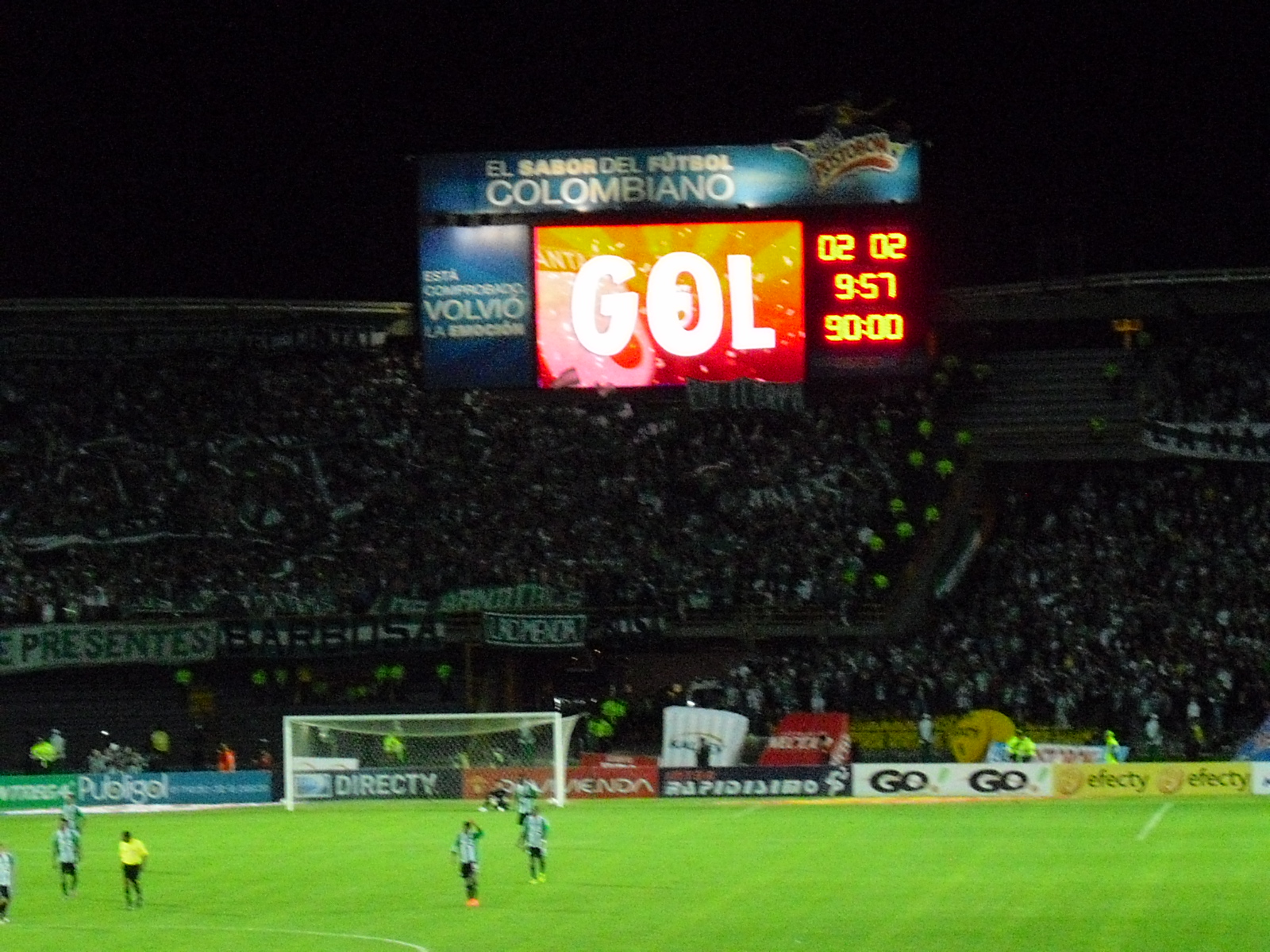
Sport is one, in its truest form – a bit of healthy competition where clubs or regions or nations or whatever go head to head to see who is the best within a certain sphere. Heck, we could even put the Eurovision Song Contest into this positive (although, perhaps not enjoyable) tribalism.

But even within the sport bubble, the more insidious elements of this particular ‘ism’ frequently surface. Hatred of the ‘others’, racism, violence – the world’s soccer terraces and indeed playing fields are particularly adept at fostering such feelings and subsequent actions.

It is within the fields of both nationalism – or land ownership in its earlier form – and religion, though, where tribalism has been at its most brutal and deadly. 

From man’s earliest battles to the world’s current conflicts these two afflictions have been to the forefront. 

Considering the origins of the human race, perhaps it should come as no surprise that the Middle East continues to be the global epicentre of these wars. We may live in a more "advanced" age than ever before, dealing on a daily basis with people who are not of our tribe, but old habits die hard.
Orange Men setting out to march in Belfast
'Thou shalt not cross' - Orangemen about to march in Belfast.
To deal with the problems we face – be they economic, environmental, health, etc. – most of us now realise that cooperation and close partnership on a global scale is what is needed. 

What’s more, as a species we have done more to damage our natural environment than any other, something, again the majority of us are finally aware of. 

Yet despite a lot of talk about trying to limit our destructive ways, progress on this front appears to be painstakingly slow.

In times of uncertainty or danger, we tend to retract into the comfort of our tribe. Again, we may outwardly know that we’re all interconnected but a lot of the time our actions betray that.

Take the current EU economic crisis. Now, while many wrongs have been made by many parties across the currency "union" – in both the euro’s formation and its operation – the best, indeed only, way to solve the problems is through greater alliances and collaboration. 

The desire in a number of quarters, however, is to go on solo runs, to withdraw to the national boundaries that we know and love so well. Europe doesn’t need reminding of the problems that can emerge when jingoistic tendencies spring up.

From time immemorial, powerful political and religious leaders have been able to mobilise the masses under their control to fight for a relatively abstract state or belief in order to butcher their fellow man. For in individual terms, a few psychopaths aside, most human beings do not have an inherent desire to kill. 

However, throw in a perceived dehumanised, monstrous enemy, with associated misplaced fear and ignorance and it’s surprising how that can change.

Modern warfare, where thousands of people can be killed at the touch of a button in an almost nonchalant way, has balanced out any developments we may have made in the last few hundred years to be a more enlightened, peace-seeking species. The lives lost don’t seem real, the damage and pain is very often removed from the doers' sight.
'Wrong Way' seeing the world from a different angle
Time for us to change our view of the world.
Two, seemingly paradoxical, mindset changes are needed. One is to step outside our small tribal base and think of the global, inter-dependent, inter-connected tribe as well as this planet being our shared home. 

The second is to think of those others, fellow people that is, as individuals – living, breathing beings with similar worries, concerns and aspirations as ourselves.

The usual argument against all this is that it’s wishy-washy, idealistic, utopian rubbish. 

Yes, it is idealistic, but what's wrong with having lofty aspirations? The easiest option is to just accept things as they are. Make no attempt and, of course, nothing will change. For some, that is perhaps the way they want it.

But for the human race to truly evolve it demands more. As does the quest to protect our shared global home.
___________________________
* For related articles see: 'Phantom freedom' http://bit.ly/SOQUl0 and 'Whose land is it anyway?' http://bit.ly/NQIsTr

Thursday, 15 November 2012

The ayahuasca 'trip'

As the saying goes, ‘All good things come to those who wait.’ 

It is over four years ago now since we first heard of the psychedelic brew ayahuasca (or yagé, as it is also known), a drink taken by many Amazonian tribes for its believed healing and spiritual properties. 

That introduction came via a BBC documentary with Bruce Parry – his experiences with the vine-based concoction resonated deeply with us at the time (for more on that see http://bit.ly/TA9Vrw). Not deep enough, though, to make us go in pursuit of having our own ‘enlightening’ experience with the plant during our first trip to South America a few years back.
The ayahuasca 'trip': A large pot of dark brown gold - the ayahuasca/yagé in the brewing stage.
'Kids, come & get your yagé before it gets cold ...'
In one sense the opportunity never really presented itself throughout that initial jaunt here. This time around, however, it did. 

Firstly, through a weekly private student of ours who is a frequent taker of the brew, a fully signed-up member to its supposed powerful, positive, life-enhancing properties. 

Our second avenue to it came from a network of Dutch friends (who else would you bank on to lead you to a hallucinogenic substance?), with one of these deciding to get away from the ‘big smoke’ of Bogotá and move to a forested commune a few hours south-west of the Colombian capital. 

There, they take ayahuasca on at least a weekly basis, frequently joined by guests wanting to sample the sacred drink themselves in relatively easy-to-reach yet idyllic surrounds.

It might not be as ‘authentic’ as getting down and dirty with an indigenous tribe in the Amazon heartland but it beats taking it in an urban setting. We were, after all, out in the wilds of nature together with getting all the old-native ceremony trappings from our Taita, or Shaman if you will.

So it was to this remote commune in the hills outside the town of Apulo that we were to have our own Bruce Parry moment – he was our most visual reference point anyway on what this plant drink might do to us.

A special-guest, curtain-raising performance from a number of Krishna worshippers (a Hindu deity) was as unexpected as we felt it was unwarranted. At least it killed an hour or so while we waited for the main event. And sure aren’t we all one and the same in any case – Hindu, Christian, Muslim, Indigenous tribes and what have you? If only the majority of subscribers to these different sects thought the same. We live in hope on that front.

Once we got that opening gig out of the way, the stage was set to commence ‘operation fulfilment’. 

After some form of prayers and blessings headed by our Taita – a prerequisite for all spiritual ceremonies regardless of creed – we finally got to take something. We had, after all, been fasting since breakfast at 8 am and the time was now 10 pm (the more stringent ayahuasca takers recommend not eating at least 24 hours before consumption).
The ayahuasca 'trip': The ritual gets underway.
Taita Nelson gets the night's main proceedings underway.
The first part of the process was to have powdered tobacco blown up our nostrils. Now, we’re not accustomed to taking substances via our nose (honestly, we’re not) so just the thought of having this done to us was a little off-putting. 

The reason for the tobacco is, apparently, to clear out the air passages of your body – the ayahuasca clears out the rest. It certainly didn’t disappoint on this front. 

Next time our nasal passages are stuffed we know what to reach for. And despite our pre-uneasiness, we actually found it reasonably satisfying. It left a pleasantly surprising dark-chocolatey taste in our throat. 

Seconds might have been pushing it but we did take the option of sampling the tobacco paste afterwards along with puffing on a big cigar. All things tobacco complement ayahuasca – or so we were told.

Now, we must warn that tobacco powder may not be to everyone’s taste. It does pack a punch as a friend of ours discovered to his, literally speaking, downfall. He panned out after taking it – receiving a nasty bang on the head in the process. Not before, though, he got to down the drink we had all come for.

It certainly doesn’t help when you see previous takers of ayahuasca turning their eyes away in discomfort as others commence consumption. You’d think the more you take it, the more accustomed to its taste you’d become. Not so, it seems. 

So we were preparing ourselves for something practically unpalatable. We were given the standard cupful, a nice amount to put back. 

Sticking with the chocolate theme, it resembled the delicacy in its melted form. Alas, the taste was nothing like that but, by the same token, it wasn’t unbearable. One way to describe it would be like a thick, stale Guinness.

Once downed, it was a case of playing the waiting game. Some people vomited straight away and thereby required another shot as the initial one wouldn’t have kicked in before it was ejected by the body. We were told to try and keep it in for at least an hour so that the spiritual/psychedelic properties could show their face.

That proved, surprisingly, not to be a problem. Normally, when we see or hear other people getting sick this makes us very queasy even if we’re feeling in the best of health. So considering you’d dozens of people all spewing their guts and we were less than fighting fit we figured we’d be joining them in no time. But no, nothing of note happened early on.

The more experienced, fully believing (yes, perhaps we have some ‘hidden’ doubts about all this) members say you have to let the ayahuasca/yagé take over your body, let it control you. There are a couple of things, then, on this front that we must mention as having worked against us. 

Firstly, we have always associated vomiting as a negative practice, a sign of weakness. However, in this process, it’s a fundamental part of the experience. Subconsciously then, maybe we were putting up too much of a fight? It is, though, quite difficult for us to do otherwise.
Apulo, Cundinamarca: The picturesque setting where the commune is located.
Always reliable - the spectacular Colombian landscape.

Another thing which was slightly off-putting was the fact that it was far from an intimate experience on the night in question. 

There were at least twenty people there, the majority of whom were complete strangers. Contrast this with Bruce Parry. He was getting personal assistance from his Taita throughout the process. 

If you equate it to losing your sexual virginity, it was like we lost ours in a group orgy – not the most comfortable experience we think.

Plus, the sight of a 12-year-old girl going through what must have been a horrific ‘trip’ also surely played its part in us not having the experience we were looking for. 

You can dress ayahuasca up whichever way you want to but allowing somebody so young to take a hallucinogenic is questionable, to say the least.

Despite all this, we did eventually get something out of it, however slight. We saw some interesting colours and shapes for a time and, just before we did actually vomit, the ground became luminous green, with vine/snake shapes present – one of the apparent standard visions. 

You could say we did go on a short trip after we purged ourselves – our mind certainly wandered anyway having passed out on our vomit. Lovely.

The best vote of confidence we can give to the whole experience at this stage is that we are willing to do it again. As the song goes, ‘things can only get better’. Well, here’s hoping.

____________________
* If you're interested in experiencing this for yourself, you can leave a comment after this piece and we can give you further details on the commune and who to get in contact with.

Monday, 5 November 2012

Bogotá's simple pleasures

It should come as no surprise to you that we’re far from high-maintenance here at Wrong Way. It’s the simple, small things in life that we tend to derive most pleasure from.

Keep it simple, stupid

That’s why, for example, we like to do our grocery shopping in Bogotá at La 14 – the supermarket that feeds you for ‘free’ while you stock up. 

It is said that you should never shop on an empty stomach but having something to eat before you hit for La 14 (on weekend afternoons anyway) will only spoil your experience. Between the various complimentary servings on offer – meat, pasta, biscuits, cereal, fruit, ice-cream, you name it – you generally leave there quite satisfied. 

We’d nearly (nearly that is) pay a little bit more for such customer service. But get this, it’s about the best value supermarket around – as close to a win-win scenario you’ll get in these parts.
Bogotá's simple pleasures: Service with a smile. Our local barman dishing out the booze
'Me regalas 'una grande' Servio, por favor.' Quality service with a smile.
When it comes to our favourite vice of alcohol we’re more than happy out knocking down a few 750 ml bottles of the national brews Aguila or Poker in a local tienda (‘old man’s bar’, as we’d refer to them in Ireland) for the very agreeable price of 2,300 pesos (about €1 or so). 

Go to the more upmarket Bogotá Beer Company (BBC) chains or the "Irish" Pubs and you’ll pay at least four times more for just three-quarters the quantity of booze. 
 
Plus, in those places you tend to be just another number. In our local tiendas, we’re greeted with a handshake and a smile each time we visit. It’s nice to feel welcomed (the fact we tend to polish off a nice few bottles plays its part in our being gleefully greeted. We do, after all, have to play up to the Irish stereotype).

The same goes for our regular café visits – we find the simple, rough-and-ready local ones far more agreeable in price, atmosphere and customer service (the latter we refer to in Latin American terms – the standards are pretty low on that front. See ‘Doing Business in SA’ http://bit.ly/LVpK8p for more). 

What’s more, we don’t tend to see a major difference in the quality compared to a "fancy" Juan Valdez or an Oma coffee house.
Bogotá's simple pleasures: Our bog standard local café - basic yet brilliant
Simple, cheap & very satisfying - the local café.
For many Bogotanos, though, it’s not hip to be seen in your bog-standard café – the same goes for drinking in the tiendas. Such an approach is usually fine for the women because they don’t expect to pay anyway. 

You would think, then, that they’d allow the men choose the location, but no. We, however, are quite principled on this one, usually. 

Forking out greater-than-European prices to drink in places where, firstly, you're treated no better than dirt and, secondly, the clientèle and environment are generally very fake is not our thing. We can happily live without the people who frequent such places.

The above simple pleasures are ones we now know and expect. They still, of course, do the trick but it’s always nice to get treated from an unexpected source every now and again. 

However, such unplanned random experiences can be hard to come by in this city. We had one, though, on a recent buseta/colectivo journey.

OK, we have expressed before (see ‘Bogotá’s Transport Truths’ http://bit.ly/N68gKL and ‘Dulling Down Bogotá’ http://bit.ly/XdUg5U) our preference for these old-school city transport buses but that was more because we felt they were the least-bad option, not because we found taking them overly pleasurable.

What made this particular commute to one of our classes a stand-out experience was the conduct of our conductor or bus driver, if you will. 

As it was initially unclear from the colourful but confusing route display (nothing unusual there) if this bus we’d flagged down was going in the direction we needed, we had to ask the driver to make sure. 

Once Señor Conductor realised we were native English speakers, he immediately ushered us into his screened-off zone – a place usually reserved for family members or very, very good friends. 

This is the business class/VIP section of Bogotá public transport. A front-row seat right next to the driver, out of view from the "commoners" in the back. How privileged we felt.
Bogotá's simple pleasures: The Colectivo VIP treatment - we were privileged to be invited to sit next to the driver
The 'special' bus seat next to the driver - usually only reserved for family.
The reason he invited us in to his sanctuary was because he has a desire to learn English (although, our conversation was all in Spanish). We’ll let the fact slide that he has so far failed to follow up on his offer of inviting us to dinner – sure you can’t win them all. 

In any case, the special bus journey was enough to put is in a positive mood for the rest of the morning.

So as you can see we tend to be easily pleased here - very much subscribers to the 'keep it simple, stupid' principle. Alas, it can be hard to get the ladies to sign up to the same programme. We'll keep trying, though.

Sunday, 28 October 2012

'¿Por qué Colombia?'

One of the most popular questions we get thrown at us here by some of the locals when they realise we’ve been in the country for a bit is ¿Por qué Colombia?, ‘Why Colombia?’ 

Many are quick to suggest an answer themselves with ‘a girlfriend’. But no, that’s not the reason for us. 

In this land of ‘beautiful and plenty’ on the ladies' front – granted that many of them fall firmly into the crazy category even more so than the average woman (see ‘Colombia’s Locas’ http://bit.ly/XzHltA, amongst others) – we’ve yet to be overly enthused to commit to just one. A lot of that is really down to our honesty – and frugality – to be honest. 

For if we were to play it the Colombian men’s way we’d commit to a number of women at the same time – indeed, most of the girls here expect as much (you could, in a sense, equate this kind of behaviour as taking the "best bits" out of the Muslim and Christian religions). 

However, we’re just not in the commitment mood at this moment in time, full stop.
'¿Por qué Colombia?': A dull, overcast day in Bogotá
Bogotá has its charms. The weather, though, isn't usually one of them!

So then, why indeed Colombia? Well, sticking with the reasons why we didn’t come here, making sack-loads of money is one of them. There are plenty of other countries across the globe we could hit for – we think, anyway – where we could make and save much more money doing more or less the same thing. 

In terms of Bogotá specifically, our home for the best part of a year, we’re not here for the glorious weather and/or laid-back coastal lifestyle. The fact that we’re in a gas-guzzling construction-site of a city, with a population of about eight million, perched well inland at an altitude of over 2,600 metres accounts for that.

It would certainly be untrue to say, though, that we’re here against our will or wholly by accident. 

What is a fact, though, is what we’ve termed our second coming to South America, in June 2011, was aimed more at Chile than here. 

That was because we wanted to give ourselves a more concrete reason to return to this continent than just willy-nilly travelling and we found the grounds for that in signing up as a volunteer for an English media group in Santiago. 

Yet, tellingly enough, perhaps, we firstly spent two weeks in Bogotá and its surrounds before hitting overland for Chile. Now, that wasn’t just because it was far cheaper to fly here compared to Santiago – the chance to catch up with some friends from our first visit to Colombia (February 2009) was a much greater reason.

Cheap flights back to Ireland were, though, the biggest factor in our brief return to Colombia in October last year – a visit that was a more sobering experience of the country than previous ones, a few days in the company of a good friend in Cartagena excepted. 

That ‘sobering experience’ was our first taste of how crazy Colombian women can turn for no apparent reason – what we thought was a good friend aggressively blanking us from her life.
A quite stunning view from 'The Rock' Guatapé, a couple of hours' drive from Colombia's second city, Medellín
Landscape-wise, Colombia is up there with the best of them.
However, after a necessary four-week stop in the home country, back we came, like suckers for punishment in a see-what-happens approach. 

An initial spell of wandering around to less-visited spots in this physically stunning country with its amazing and diverse wildlife helped us get over that aforementioned ‘defriending’ by someone who had been a strong initial reason in tempting us back in the first place (she is part of our life once more, however – we can be quite forgiving and lenient at times).

It was always likely that we’d return to Bogotá – Colombia’s ‘city of opportunity’, the best place for a local or expat to find work. It wasn’t that we were really stuck and needed money but we figured we’d give living here a go for a bit. 

So after a slow, admittedly reluctant start, we did manage to find ourselves some steady, semi-profitable English teaching work (for more on this see ‘The Money Tongue’ http://bit.ly/V8ELH4). Not forgetting the odd bit of relatively enjoyable TV extras work – something different anyway (see ‘Giving just a little bit ‘Extra’’ http://bit.ly/NrbPc3) – a change being as good as a break.

After a while, though, like in any place, city living can become quite stale – even here in Bogotá. A lot of this is probably more to do with our own itchy-feet nature, especially when we have very few serious ties to a place and are relatively free. 

The return of a very good local friend to this city after a 12-month absence coupled with our already existing good friends here is making it harder for us to take flight once more. 

The Colombian authorities have also played their part – they make it pretty easy to stay on a mid- to long-term basis. If we had to put more effort and cost into staying here we might reconsider.
Sunset in the city of Cartagena, on Colombia's Caribbean coast
Is the sun setting on our time in Colombia?
There is, of course, much more to Colombia than Bogotá and while we have seen a fair bit of the country there are still many other places worth discovering. With the seasonal slow-down in teaching work upcoming that may give us the opportunity to get moving.

After that, perhaps our subconscious reasons for staying will abate somewhat and we’ll have less of a reluctance to leave? 

One thing is for sure, at this remove anyway, the Colombian tourist board's slogan of ‘the only risk is wanting to stay’ – be that subconsciously or not – is certainly ringing true. We just don’t really know why that is.

Thursday, 18 October 2012

Computer says "no"

There have been numerous movies in recent years – too many to mention – that depict scenarios where computers/technology take over the human race. Most people put such stories very much in the realm of science fiction: How could the creators of these machines be mastered by them?

Computer says "no": The 'Computer says no' lady from Little Britain.
"Eh OK, but what do you say?"
Well, you don’t have to go too far out of your way to see that this process has already begun. 

Something you can call the traffic light approach to life. That is, an inability to do anything unless a system gives you permission to do so. It’s a phenomenon that was brilliantly parodied by the ‘computer says no’ lady from the British comedy sketch show Little Britain.

Now, while it might be humorous to mock, being on the receiving end of such behaviour is generally quite the opposite. 

As a rule, those who live their lives this way tend to ignore the physical realities staring them in the face if they don’t match up to what their piece of machinery tells them. 

Of course, it’s always good to have a scapegoat or to relinquish all responsibility whatsoever, and in this technology age many people shove all the blame and accountability on to the computer screen sitting in front of them should there be any problems.

Take the following example. Having commenced a new twice-weekly class for a client here in Bogotá, we had been entering the industrial estate where the company is located trouble-free for weeks, registering with security staff at the main reception each time, as is required. 

Then, one day, one of the security staff who had been dealing with us regularly tells us that we can’t enter. 

“Why so?” 
“Well I’m sorry but the system doesn’t recognise your document number” (well, it was said in the gruff Spanish equivalent of the same). 
“But it’s us, standout extranjeros/foreigners (and thereby infinitely more trustworthy than locals) and we’ve been coming here for weeks – we teach a class for 90 minutes and then we’re out again. Surely you can let us in?” 
“Nope, you’re not on the system and therefore you cannot enter.”

'Thinking outside the box'
Crap!
Cue a few choice expletives from ‘Team Wrong Way’ aimed at the controlled-by-technology security man (perhaps that should be robot) and that was that. 

The students didn’t get a class that morning, although, thankfully we still got our payment. Cheers to BSR Idiomas for that – the best English language institute in Colombia bar none (we’re still good for that 20K Colombian pesos plug deal Robert, right?).

The above instance is just one of a number of similar experiences we’ve had in the last few months since we started work here in Bogotá. This is not to say that it’s solely a Bogotano or Colombian occurrence – though, it does seem quite endemic here. 

It’s just that due to the nature of our work (see The money tongue http://bit.ly/V8ELH4 for more) we’ve been unlucky enough in having to face it in these parts more regularly than in any other location. 

However, more or less by definition many in the developed world are much more ‘corrupted’ by computers.

That ambiguous phrase, ‘to think outside the box’, may be doing the rounds for some time but thanks to the rise of technology, it has taken on a whole new, clearer, meaning. 

That is, try and use your own brain from time to time rather than letting a square lump of wires and chips sitting in front of you dictate your actions. Perhaps, though, judging by the way some people behave it’s best that a computer makes the decisions for them.
Frankenstein's Monster from the 1930's movie
The monster cometh — beware.

In our Unsocial media post a few weeks back, we wrote about how people’s overuse of social networking sites may see them living like hermits but with technology. At least, in this regard, they may still be able to use their own initiative. With the computer-says-no mentality, however, we run the risk of severely hampering people’s innovative skills.

So, while technology – arguably – has vastly improved the way we live our lives and has put previously difficult-to-obtain information at the fingertips of billions of people, there are obvious drawbacks.

It has been argued before that laziness, not necessity, is the real mother of invention. So is the human race on the cusp of being consumed by what can only be described as true, suicidal laziness? That is, to submit the use of our brains to technology.

‘Frankenstein's monster’ walks menacingly amongst us.

Sunday, 7 October 2012

Time for change

These are heady times in international politics. Top billing is, of course, the race for the White House, where it’s difficult even for those with a limited interest in it not to get caught up in the whole fanfare. Pretty much all media outlets across the globe are following the unfolding story. 

Meanwhile, closer to us here in Colombia, there's the Venezuelan presidential election – perhaps as equally important, if not more so, for this region than the USA one.
Time for change: Current Venezuelan President Hugo Chávez and challenger Henrique Capriles
Will Venezuelans go left again or take a slight move to the right?
The fact that both countries are having leadership contests within a few weeks of each other is about as far as you can go with the comparisons between them. 

For one, Venezuela’s incumbent, Hugo Chávez appears to be in a more comfortable position as regards his re-election compared to Barack Obama – although the challenger, Henrique Capriles, is putting up a pretty impressive fight against the 14-year-long rule of the current administration. 
 
Part of Chávez’s appeal is that rather than just talk about it and despite his many detractors and questionable methods, he has arguably done more for the poor and vulnerable in his jurisdiction than Obama has in the "land of the free". 

Of course, the Venezuelan leader has had much more time and less interference in implementing his vision – ‘socialism for the 21st century’ – than the under-fire United States chief-of-staff.

The word vision here is key. Barack Obama entered the Oval Office just under four years ago promising much and offering a different path – remember, ‘change we can believe in’. For many US citizens, though, it has been far from the fairytale term they were hoping for. 
 
Once the bounce of having a novel, coloured president that was anything but George W. Bush wore off, things began to get a bit more serious for Obama. As many democratically bound and elected politicians discover, implementing change can be slow, mightily slow. 

Throw in the fact that no sooner is a new government sworn in then it begins thinking of its re-election, usually four to five years down the line. So even if you have a visionary leader or administration, the ‘must not harm my chances of getting back in’ mindset takes hold early on.

This sort of thinking is usually to the detriment of a leader’s or administration’s vision, assuming, that is, one exists. 

Ideally, elected governments should make decisions based on a clear plan that they have for the area they govern – regardless if this means that they might alienate or upset some potential voters. This is what doing things in the national interest or, perhaps of greater consequence is these times, the global interest should be about. 

Alas, what we regularly see nowadays are electorally charged policies and decisions, ones aimed at garnering the most votes. Or worse still, we get no clear policies or decisions at all.
Mitt Romney & President Barack Obama after their first Presidential debate
The first debate went to Romney (L). Can he deny Obama four more years?
Take the first of the presidential debates between Obama and the Republican challenger Mitt Romney. 

The Obama strategy – we’ll assume he had one – appeared to be about talking specifics, giving hard facts and figures where he could. Romney on the other hand went down the catchy, well delivered but rehearsed, soundbite route – attacking the President on borrowing billions from China was certainly playing to the gallery. 

The actual amount of real substance and truth there was to all Romney’s utterances is questionable. He stuck to the ‘keep it simple, stupid’ mantra and it worked for him. The masses seemed to love it.

The masses, though, are not always right. As Winston Churchill reputedly once said, 'The best argument against democracy is a five minute conversation with the average voter.' 

Collectively, we don’t always make the best decisions on far-reaching issues. On occasions, consensus is a luxury we should avoid. 

Put it this way, a global survey of popular restaurants would put McDonald’s high up on the list, but is it the best food for us to be eating regularly?

Furthermore, when it comes to elections, many democratic nations implore us to vote – ‘it doesn’t matter how you vote, just make sure you do’ is regularly trumpeted. 

So going by that advice, even if you know absolutely nothing about what you’re doing, just go and do it anyway. That’s not a very smart way of going about things, is it? 

If you really don’t have an opinion or an interest or knowledge on the vote at hand then it’s best to stay at home on polling day. Just because you are entitled to have your say doesn’t mean you must.

That aside, time will tell if the undecided US electorate has been swung by Romney’s smooth talking in the first debate. He may have what it takes to be a good president but relinquishing Obama of his duties right now would seem to be a little premature. 

Legally freed of the four-more-years syndrome we might get a better idea of Obama’s vision – he can go gung-ho in implementing policies without the worry of re-election hanging over him. At least that should be the case.
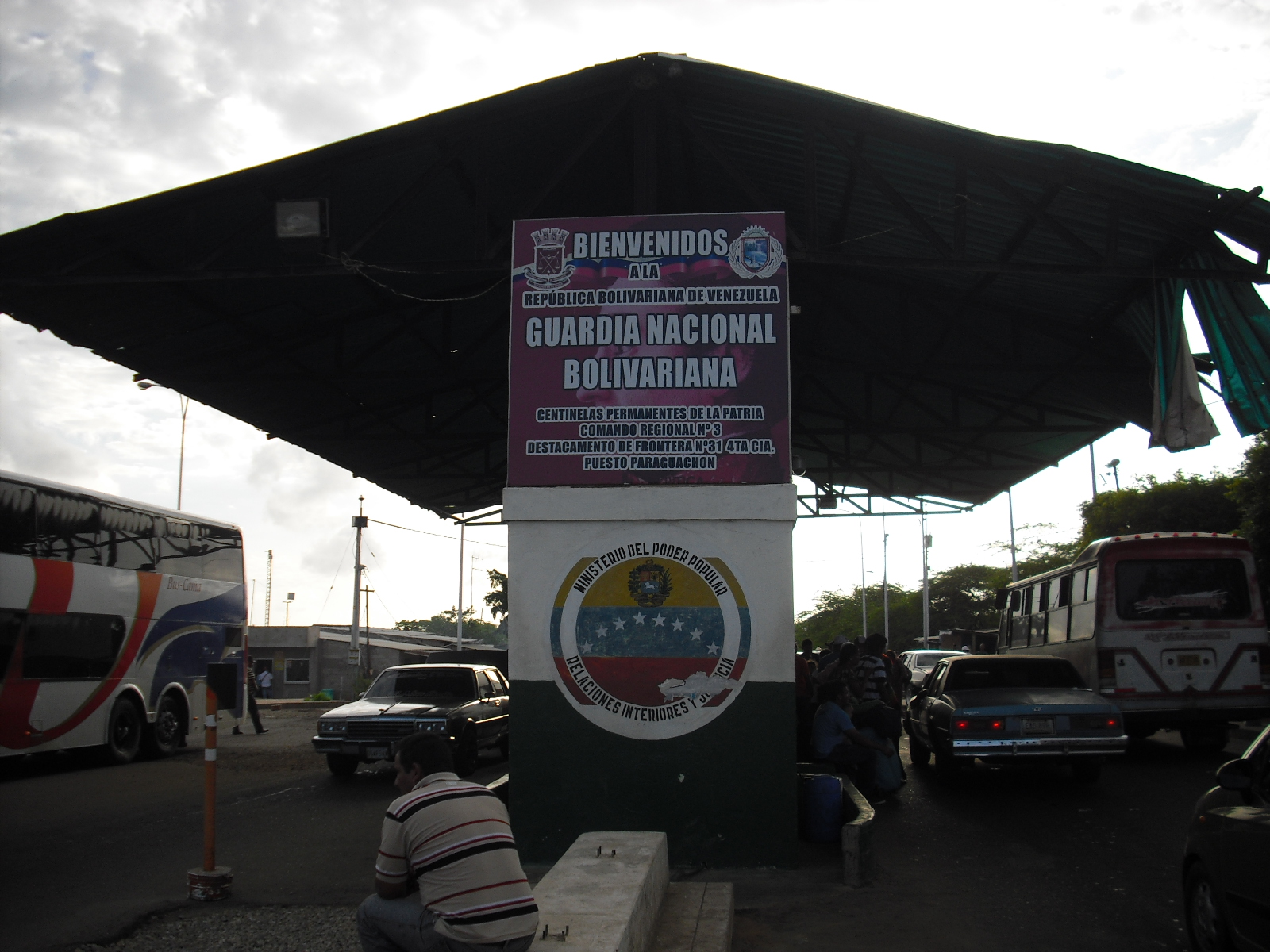
A border crossing from Colombia into Venezuela. Is the political landscape about to change in the 'Socialist Republic'
Will it be exit stage left for Venezuelan President Hugo Chávez?
So while the current White House administration is looking for more time to implement its changes, in Venezuela, as far as most outside observers are concerned, it appears well and truly time for change. 

Even if you agree with Chávez’s Bolivarian Revolution, one man at the top for 14 years is long enough. What he should have done is stepped aside and appointed a mouthpiece successor, Vladimir Putin style. 

That way the revolution could continue and he could still call the shots. It’s obviously hard, though, to walk away from the power drug. And, for better or worse, the Venezuelan electorate look set to continue to feed his habit.

*For an earlier take on our thoughts about Venezuela, see: http://bit.ly/OLR2Ev

Monday, 1 October 2012

'Dulling down' Bogotá

Outside of its natural beauty, another thing that attracts many Westerners or those from the developed world (whatever that means) to Latin America is the difference of the place compared to home. The not-very-organised confusion if you will. It can be refreshingly chaotic, at least for a time.

'Dulling down' Bogotá: One of Bogotá's antique public transport vehicles in 'full-flow'
Die-hards: Bogotá's old-school, diesel-guzzling buses.
In a more specific sense, we highlighted previously (see ‘Bogotá’s Transport Truths’) this kind of chaos in terms of transport here in Bogotá, our home, on and off, for the best part of a year. 

We mentioned then, that despite its many flaws, we preferred the colourful colectivo/buseta public transport system over the more modern Transmilenio (the city’s ‘far from efficient but getting there’ tram service on wheels). 

This attraction, however, with the old-school buses, their colourful handcrafted route displays and devil-may-care way of operating may, sadly in some respects, be coming to an enforced end. 

It’s all to do with the rolling-out of the city’s SITP or integrated public transport system.* In a bid to modernise the metropolis, the old way of doing things is being phased out. 

So, over the next few months and years residents of Bogotá must learn to catch a bus at an actual bus stop, which means the bus drivers will have to get out of the habit of aggressively braking to pick up passengers at random locations. 

With the introduction of a cashless, card system the days of waving a 1,000 peso note at the driver – the accepted sign that you are only willing/able to pay two-thirds of the fare – will be numbered. If your card isn't charged with the sufficient amount, you won’t be able to board. 

Well, that’s the theory anyway. No doubt a few crafty Bogotanos will find a way around this. 

Besides, what about the steam of individuals boarding the current buses, without paying, selling things such as DVDs and pens to books and chocolate and everything else in between? Surely they're not just going to disappear.
The soon to be illegal ass-and-cart struggles for position on a Bogotá street
Facing the axe: the ass-and-cart is fighting for its future.
The travel-card system will also mean that the bus drivers will only have to concentrate on actual driving. 

The admirable skills they have required of managing to, more or less, keep the bus on the road while dishing out the correct change to an endless string of passengers will become defunct. Getting around Bogotá will no doubt be a far duller experience for all these changes.

However, for those of you with a soft spot, like us, for the simple, more rustic way of doing things you’ll be glad to know that old habits and buses die hard around these parts. 

You just need to take a look north to the more ‘cosmopolitan’ Panama City to see how the old-school system refuses to go away despite the city’s rush towards ‘modernisation’. Although Panamanians have got used to using assigned bus stops.  

Now, of course, there are obvious positives in this attempt to ‘clean up’ Bogotá’s transport system. A new, modern fleet of buses should mean that they are cleaner and more fuel efficient than most of the old-guard monsters currently on the prowl. 

In fairness, that’s not stating a lot considering the choking emissions from the archaic buses resemble those of a decent-sized factory. Anything that might do even the slightest bit to freshen up the city’s light, oxygen-deprived air has to be welcomed.

But while it might be one step forward for the seemingly progressive Mayor Gustavo Petro in the above regard on reducing carbon emissions from transport, it’s at least a sixth of a step back in another way: t
he banning of the ass-and-cart from the city’s thoroughfares in the coming months. 

Come on, the emissions from the humble ass (that’s the animal we’re referring to here) are nothing compared to those gas-guzzling vehicles, the old or new ones.  
The newly pedestrianised Carrera Septima (7th Street) in down-town Bogotá
The changing face of Carrera Septima.

Perhaps, though, they’ll still be allowed to mosey on down Carrera Septima (Seventh Street), now that its partial pedestrianisation is up and running. 

As one of Bogotá’s most iconic and important arteries, leading right into the main square, Plaza Bolívar, this move is welcome, despite the opposition by some local traders. 

Indeed, in the long run, it’s these very same local traders who may benefit the most from taking the traffic off this street.

All these new developments are an attempt to bring Bogotá in line with the very best cities, not just in South America, but across the globe. And as the chief urban centre in a country that is changing – ever so slowly, but changing nonetheless – its negative, dangerous image to the outside world, all the above can be seen, in general, as positive. 

For those of you who fear the city and its inhabitants may lose a little bit of their uniqueness, there’s much more to this place and its people than how they commute.  

However, on a broader scale, modernisation does not always mean ‘cleaner and greener’ — on the contrary, in some cases it can mean quite the opposite. 

So as many ‘developing countries’ try to play catch-up with the ‘developed’ ones, it’s worth bearing in mind the following stat we came across recently: If the world’s poorest four-fifths were to live like the richest one-fifth, at current consumption levels, we would need four planet earths to sustain us.

Some food for thought that.


_________________________
*SITP stands for Sistema Integrado de Transporte Público de Bogotá, or Bogotá's Integrated Public Transport System.