Monday, 28 December 2020

Christening conservative Colombia

@wwaycorrigan

[Listen to an audio version of this blog entry here.]

'I'm glad to see that all of the children being baptised today have been given saints' names.' 

That was the opinion of the priest who presided over a recent group christening that I attended in Bogotá's Verbenal neighbourhood.

Christening conservative Colombia: Baptising in Colombia; best business around?
'Do as I say, not as I do.'

Name of shame

The authoritarian, haughty man of the cloth — I thought the Catholic Church's foot soldiers were meant to act more humbly these days? — had been, um, pontificating about some of the more bizarre names people give their offspring nowadays (in between berating attendees, people who had paid good money for a service in which they were being talked down to, for glancing at their phones and allowing their children to wander about the outdoor gathering).

Apparently, so Padre Wilson informed us, somebody was christened Covid of late. I agree with him on the silliness of that one — although if he (or she, I'm not sure) goes on to hold the world to ransom despite being quite a weak individual all things considered, well then it will be an apt name.

That aside, the priest's line may help to explain why Colombians tend to be rather conservative when it comes to naming their children. 

With the odd exception, something we discussed in a Bogotá Nights episode, name-giving here follows very traditional lines. In contrast, one only needs to look at neighbouring Venezuela to find a more, let's say adventurous attitude to this whole area.

Colombia's conservative approach fits in nicely with the nation's overall psyche. As I've touched on before, someone who might be seen as a leftist liberal in these parts would be considered as being on the other side of the political spectrum in many other countries.
'Listening to Padre Wilson belittle the congregation at the baptism was like a primary school teacher addressing unruly yet naive pupils.'

What's more, there is often unquestioning respect for figures of authority. Like Ireland up until a couple of generations ago, what the Catholic Church says here carries considerable weight, outside of affairs in the bedroom that is.

Toe the line

Listening to Padre Wilson belittle the congregation at the baptism was like a primary school teacher addressing unruly yet naive pupils. 'Follow my lead and you'll be saved, little ones.'

With heads bowed in shame, the flock accepted its shortcomings. Father knows best. (And to underscore this superiority, the seven families in attendance, each having already paid for the christening, were encouraged to hand over more cash when the collection basket was passed around. Great work if you can get it.)

Of course, actions speak louder than words and all that. It's not like the majority of Colombians are pious Christians, even if they are still genuine believers in Christ. It's more a case that the less taxing, what we could call more superficial elements of the Church's teachings are, um, religiously followed. With that, very few seem willing to go against the power-wielders, even if it may be in their interests to do so.

On a broader societal level, every now and again we'll have protest movements. At times it even feels like something might change. Yet with the same energy and speed with which they start, they also peter out. The reality is that there seems little genuine enthusiasm to alter the status quo, despite what might be said.

Compliant, conservative Colombia dominates. Change is fraught with danger. It's best not to do it.

Remember, it's not just the crazy names that you risk importing from Venezuela. It might start innocently enough with a Geoberty or a Rolangeli or the like, but where would it all end? Father knows best indeed.
_______________________________________________________________
Listen to Wrong Way's Colombia Cast podcast here.

Facebook: Wrong Way Corrigan — The Blog & IQuiz "The Bogotá Pub Quiz".

Wednesday, 9 December 2020

Wrong Way's Loser and Winner of the Year Awards

@wwaycorrigan

[Listen to an audio version of this blog entry here.]

Yes, it's that moment you've all been waiting for, the Wrong Way Corrigan Loser and Winner of the Year Awards 2020. We've had plenty of contenders for the former, the latter has been much more difficult to choose. Basically, we've had a dearth of outstanding candidates.

Wrong Way's Loser and Winner of the Year Awards: Xi Jinping — the Chinese president dropped the ball on coronavirus.
Our Loser of the Year brought about our Winner of the Year. (Photo from Facebook.)

Amazon high

It has, of course, been a year that most people will probably want to erase from memory. Not everybody, though. There's Amazon founder Jeff Bezos, for example. He's had a bumper 12 months. Ditto for those holding the purse strings at Facebook, Netflix and Zoom.

Also, a fair few folk in the First World's comfortable classes — their public mutterings of enduring an annus horribilis aside — have seen their lot actually improve, from a financial perspective in any case.

OK, it's not all about money. I've certainly had to keep on telling myself that this last while in any case. Alas, it doesn't tend to wash with many Colombian women. 'Instead of that fancy restaurant, how about a litrazo of Poker in the barrio tienda? No? Really?!' They'll come round, they will.

Anyway, let's get to the awards, starting with our Loser of the Year.

Xi's the man

The obvious choice for many here is outgoing US President Donald J. Trump. He certainly, um, trumps the lot for sore loser of the year. Indeed, he didn't actually lose the presidential election so he and many of his supporters tell us. 

Whatever the case, he won't be residing at the White House after 20 January, we can be pretty sure of that. Thus, he is a loser, but it's not enough for him to take our gong.

No, the Wrong Way Corrigan Loser of the Year Award is going east, to China to be precise. As the head of a country that initially buried its head in the sand when news emerged of a novel, easily transmitted and somewhat lethal virus at large, Xi Jinping is our top failure.

Not only that, but once coronavirus was let out of the bag (or is that lab? Or wet market?) and reached the four corners of the globe, Xi did what the Chinese Communist Party does best at home: suppression. 

Thus, contagion was curtailed in China while it flourished outside, aided and abetted by a dithering World Health Organisation kowtowing to Beijing.
'Our Loser of the Year and other world leaders did much to ensure Alan scooped the top prize, but credit where credit is due.'

This dithering behaviour proved to be as contagious as coronavirus itself, as governments across the world followed suit. Cue pandemic pandemonium and cures more damaging to society as a whole than covid-19, the infection coronavirus can bring about.

For all that, together with China's backfiring wolf-warrior diplomacy which is only serving to deepen mistrust abroad about the CCP's intentions, Xi Jinping is a worthy Loser of the Year.

Crowning glory

And now for the big one, our Winner of the Year. Many have waxed lyrical about the darling of world leaders, New Zealand's Jacinda Ardern. She's done well in some areas for sure, but in terms of being a global champion, that's stretching things.

There can really be only one winner. Some will accuse me of picking this individual simply because he appeared on my podcast.

For sure, I was delighted to have him on as a guest, but it's disingenuous to say this played a part in my decision. I'm far more balanced than that.

So, our Winner of the Year 2020 is — no, not Niall Ferguson — it's "Alan", aka coronavirus.

For sure, our Loser of the Year and other world leaders did much to ensure Alan scooped this accolade, but credit where credit is due. It may have been an open goal of sorts, but he still had to tuck it away. And that he did with gusto.

He has, quite literally, touched the hearts and minds of millions of people across the planet. At the risk of being facetious, his modus operandi hasn't been to everyone's liking and there are many who certainly wouldn't put him in the winner's enclosure.

Nonetheless, in terms of world dominance in 2020, be that good, bad or indifferent, no one else comes close.

What's more, his emergence may have just given humanity a timely heads-up to get our act together before something far more deadly comes along.

In a divided world, one doesn't hold out much hope that we'll take great heed of this warning.

_______________________________________________________________
Listen to Wrong Way's Colombia Cast podcast here.

Facebook: Wrong Way Corrigan — The Blog & IQuiz "The Bogotá Pub Quiz"


Wednesday, 2 December 2020

Western leaders' crimes against humanity

@wwaycorrigan

[Listen to an audio version of this blog entry here.]

Each year throws up its surprises that catch us off guard, leave us badly exposed. From a global perspective, this year has, um, trumped them all since, arguably, the end of World War II.

Western leaders' crimes against humanity: French President Emmanuel Macron with Irish Taoiseach Micheál Martin.
Guilty of crimes against humanity? (Photo from Facebook.)

Covid contradictions

Along came a relatively mild, easily transmitted virus from the east that overwhelmed much of the world, save for a few savvy Asia-Pacific countries.

It's not like those who are meant to be calling the shots weren't warned, however. Larry Brilliant, for one, had been sounding the alarm bells well over a decade ago — if only we'd listened and taken heed.

We didn't. Leaders and public health officials in heretofore respected developed nations showed their complete lack of preparedness for something that, despite what they like to tell us, is not 'unprecedented'. Pandemics are nothing new.

Of course, the unprecedented nature of this coronavirus has been how those nations reacted to what is, mercifully, not a terribly lethal killer for the vast majority of the population. Initial inaction was and continues to be followed by overreaction.

What's more, the best comedy writers in the world couldn't have come up with some of the contradictory, unfathomable measures that have been imposed on the masses in order to curb the spread of the virus.

'Instead of continuing to play fast and loose with the lives of so many whilst enjoying six-figure sums in their own comfortable bubbles, our leaders should be in the Hague for crimes against humanity.'

In Ireland, for example, they've had restrictions on the number of households that can mix contrasted with children going to school where they mingle with an untold number of others.

Then there's the fact that you can have an alcoholic beverage in a public establishment as long as you're eating something with it. A pint of beer in a pub without a meal that costs over nine euros is a big no-no.

As most epidemiologists will tell you, coronavirus doesn't like those flashy types who dine out — "he" is a more modest character. Those having nothing more than a liquid lunch, though, prime targets. It would seem our microscopic visitor is more intelligent than most of our leaders.

Making a killing

It's a tad amusing listening to and reading about all this from a relatively relaxed Colombia. The powers that be here seem to have come to the conclusion that while deaths attributed to covid-19 will continue there are so many other life-or-death issues to contend with that we just have to get on with things.

The coronavirus monomania that had afflicted Colombia's leaders in the early days of the pandemic appears to have subsided somewhat.

You see, death comes to us in a variety of ways. When our governments and health officials overly focus on one aspect, the result is that other life-taking conditions prosper.

So, while we can chuckle from afar at the incompetents imposing absurd, harmful restrictions in my home country and elsewhere, there are very serious elements to it.

The mortgaging away of the futures of our young and active ages, the countless — as opposed to the very much "counted" deaths attributed to covid-19 — life years lost, the deepening of the divide between the haves and have-nots.

Instead of continuing to play fast and loose with the lives of so many whilst enjoying six-figure sums in their own comfortable bubbles these leaders, Messrs Johnson, Macron, Martin, Varadkar et al., should be in The Hague for crimes against humanity.

Maybe that's one pleasant surprise 2021 can bring us. One can only hope.

_______________________________________________________________
Listen to Wrong Way's Colombia Cast podcast here.

Facebook: Wrong Way Corrigan — The Blog & IQuiz "The Bogotá Pub Quiz".

Wednesday, 25 November 2020

Bogotá's cocaine barrios

@wwaycorrigan

[Listen to an audio version of this blog entry here.]

A common complaint you'll hear from Colombians when the C-bomb gets dropped in their company is that the biggest, most problematic issue at play is the drug's use by foreigners in developed nations.

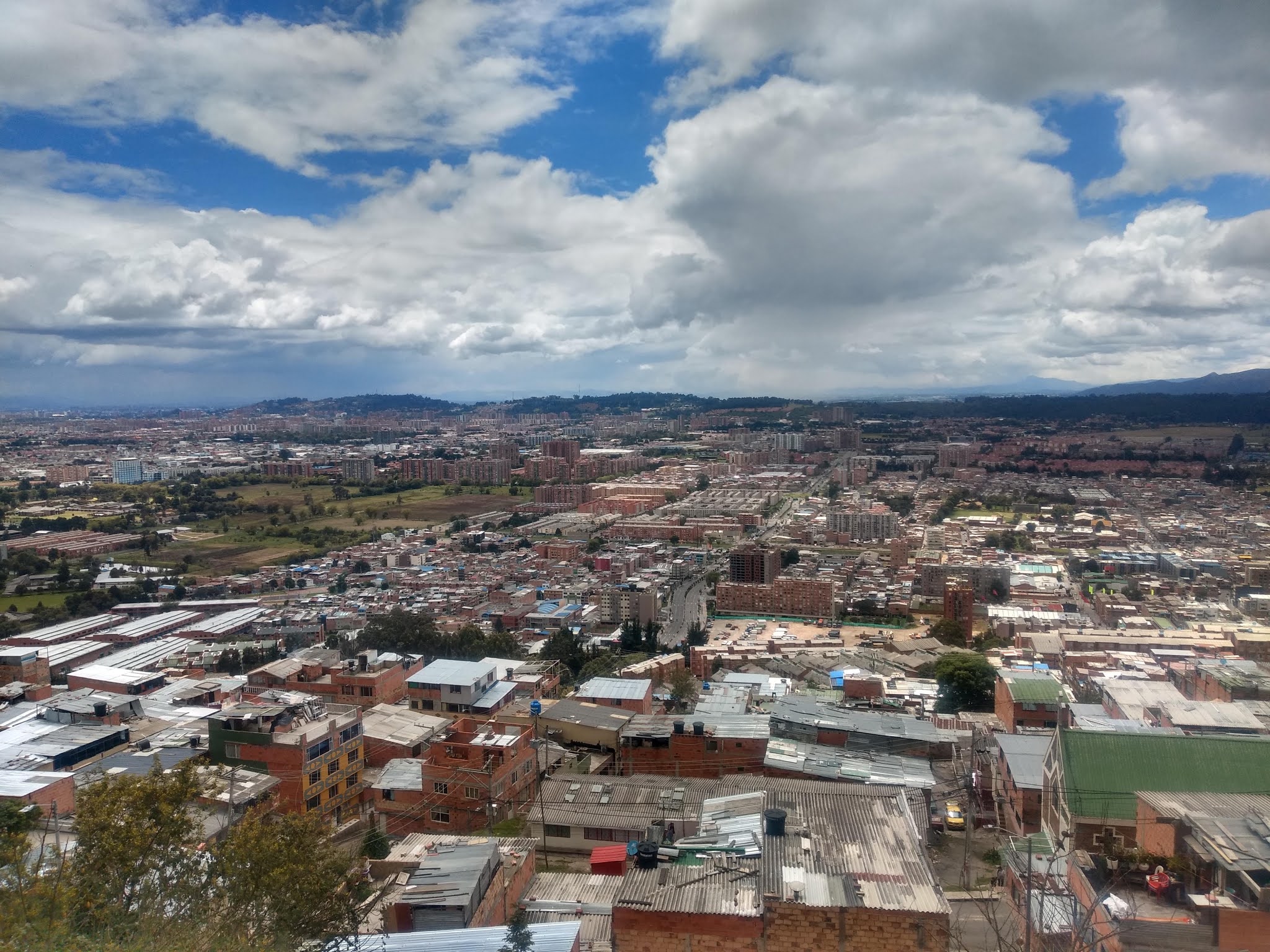
Bogotá's cocaine barrios: North Bogotá at dusk, as viewed from Codito.
Sin city?
Figures on cocaine consumption across the globe support this stance. What's more, from the perspective of those producing the "white gold" here in Colombia, ensuring it remains popular in the richer countries is vitally important for revenues. In financial terms, the local market is very minor in comparison.

Snow comforts

Nonetheless, there is a home demand. From my own observations, it's certainly not insignificant, although it seems more prevalent in neighbourhoods of a lower socio-economic standing. By all accounts, in high-income nations, the opposite is the case.

You might counter that I'm generalising when I say cocaine use is relatively commonplace across Bogotá's working- to lower-class barrios, that I shouldn't assume that what happens in one sector is replicated in another. It's a fair point. Yet, I've socialised in various parts of the city to know that it's certainly not just limited to one particular area.

In what I imagine is similar to the rest of the world where cocaine is popular, it's men under 50 who appear to be the chief consumers. For Colombia, unsurprisingly, availability and price are big factors in this popularity.
'There's a belief — not without foundation — that Colombia's "best" cocaine is sent for export. It's difficult to know if this is good or bad for the local consumer.'

For example, as a very rough guide, products in Ireland are generally four times more expensive than Colombia. Yet, one can purchase a gram or so of cocaine in Bogotá for the equivalent of 2.50 euros. I'm pretty sure you can't get the same amount in Ireland for ten euros. Try, so my research tells me, about eight times that.

Easy money

Now, the majority of those I know here who are occasional consumers are not what I would class as addicts. It appears to be a weekend indulgence solely.

What's more, it's not like nieve — snow, for the uninitiated — is the first thing on their minds. No, it's usually the world's most popular gateway drug, alcohol, first. Then comes the cocaine. A global trend really.

One could also question the purity of what Colombians are sold.

Like the country's coffee, there's a belief — not without foundation — that the "best" cocaine is sent for export. It's difficult to know if this is good or bad for the consumer. Less pure may mean less addictive and less harmful. However, it could also mean the complete opposite.

Another striking feature of the cocaine business I've observed is the involvement of adolescents. Lads who should be at school are instead low-intensity dealers. The thing is, they've no classes to go to right now as schools have been closed since March due to the pandemic.

OK, considering the profit margins — they can double their money on each unit sold — they probably deal around the college gates in normal times anyway.

With all that in mind, in my early days in this country, echoing a call from then Colombian President Juan Manuel Santos, I wrote about the need to seriously debate the legalisation of the cocaine trade. Alas, in most of the richer nations where consumption is high, such a proposal doesn't appear to have been given any proper consideration.

Thus, we continue with prohibition across much of the world which, it can be said, does more harm than good on a number of levels. No surprises there. As a society, we're adept at applying the wrong solutions to our problems.

_______________________________________________________________
Listen to Wrong Way's Colombia Cast podcast here.

Facebook: Wrong Way Corrigan — The Blog & IQuiz "The Bogotá Pub Quiz"


Thursday, 19 November 2020

Broadening the horizons, both mentally and physically

@wwaycorrigan

[Listen to an audio version of this blog entry here.]

'Choose where you want to live and then find ways to make your life sustainable there.'

Broadening the horizons, both mentally and physically: Traffic heading north on Bogotá's Autopista Norte.
Does the answer lie to the north? Perhaps ...
In those pre-coronavirus days that now seem like a lifetime ago, for many open-minded people with internationally transferable skills or in jobs that required no fixed abode, and with nothing too emotional tying them to one particular place, that epigraph made a lot of sense. The world was, to all intents and purposes, their oyster.

Wealth is health

With the pandemic, while the (relatively) free movement of people hasn't completely ground to a halt, it is much more restricted than it was just nine months ago. 

In addition, there is the moral element at play in relation to the risks associated with unnecessary travel and mixing with strangers.

This can be even more of a burden considering the direction of travel in a live-anywhere-because-I-can context is heavily weighted towards emerging market countries and away from more developed nations. The latter — in theory, although this current pandemic hasn't exactly borne this out — is much better equipped to handle a health emergency.
'Many will have to reinvent themselves to survive in the new landscape.'
So, using that as a guide, it's quite understandable that a country such as Colombia appears to be making it more difficult for digital nomad types to pitch their virtual tents in its territory. 

Unless it can clearly be demonstrated you're of benefit to the state and its people, away with you. (For the record, I can't really call myself a digital nomad, if this is classed in terms of making money doing online work.)

Of course, the pandemic will pass and restrictions on movement — for tourism and some wishing to be economic migrants in any case — are likely to ease. What will take longer to get over is the fallout from it.

Work the location

For some, in terms of living standards anyway, little has changed. Indeed, in certain aspects, their lives may have even improved.

For others — and for the large part, those who were already struggling before this coronavirus — things are much more difficult. Many will have to practically reinvent themselves to survive in the new landscape.

I can't really blame the pandemic for my current imbroglio. OK, the virus ("Alan", you owe me money!) certainly hasn't helped my situation, but I took a decision to try to 'go it alone' before our enemy from the East arrived. The results thus far are nothing to write home about.

Coming back to our opening quote, if I continue to choose Colombia as the country in which I live — a decision that I have less control over today than previously — then it looks like I need to reappraise how I can "make it" here. 

Certain things that I've said no more to, specifically English teaching and marketing agency work, may have to come back into play.

Yet, if the strategy is all about finding gainful employment that I consider more meaningful and suited to my skills, then perhaps I need to reconsider the location.

There is no ideal — even Colombia purely as a location has its negatives — yet my current approach isn't exactly paying dividends.
_______________________________________________________________
Listen to Wrong Way's Colombia Cast podcast here.

Facebook: Wrong Way Corrigan — The Blog & IQuiz "The Bogotá Pub Quiz"

Tuesday, 10 November 2020

Living with a destructive parasite

 @wwaycorrigan

[Listen to an audio version of this blog entry here.]

'As everyone does, I have microorganisms on my skin. However, one has become particularly irksome of late.

Living with a destructive parasite: The parasite's breeding ground (this is Bogotá, Colombia, but it could be anywhere you have humans).
Parasite central.

Health hazard

Its rapidly increasing numbers is one reason for this. As unpleasant as that is, I can cope with it, the occasional treatment to reduce the tingling sensation notwithstanding.

Of greater annoyance is its destructiveness, not only to my physical appearance but also to the demise of other more symbiotic organisms that live off me. In fact, many have completely disappeared, which has adversely affected my overall health.

For one, I find myself getting fevers more regularly than before. In the past, I could quickly cool down with some ice treatment, but that's becoming increasingly difficult these days.

While as far as I can remember I've always had patches of dry skin, especially in the greater crotch area, these have been spreading to other parts where I used to have a good covering of hair.

'Maybe the best natural solution is to get close to the fire for an extended period of time.'
I'm also sweating in greater amounts. What's more, the small irregular skin growths that this parasite seems to bring about in proximity to sweat glands have increased in size over the years.

I tend to find a good ice-cold shower helps to reduce its impact. Yet, it's only a temporary respite. It seems this organism has evolved to find a way to combat any water-based treatment I apply to my body.

The heat is on

It does seem much less resistant to extreme heat. I've had a few bad burns over my lifetime — I'm a bit clumsy that way — and this parasite appears to avoid those parts of my skin that have been scalded, the most recent ones in any case.

Indeed, when this "lodger" is at its most irritating, I feel like covering my whole body in flames. That mightn't be the best idea, all the same.

Linked to that, when I'm in smokey areas, this also helps to reduce its activity levels. Again, though, I can't be doing that all the time.

Maybe the best natural solution — I'm not a fan of manufactured chemicals — is to get close to a fire for an extended period of time. Or at least apply intense heat patches to my skin. It'll get uncomfortable, but I can bear it.

Actually, such a strategy worked before, ridding me of bigger, but less annoying parasites. If I immediately follow this up with an ice bath for as long as I can endure it, I should be fine.

Sure look, I've survived various heavy blows from other bodies since birth. I won't let this little creature, "human" as it's called, get me down. I'm sure it won't be plaguing me for much longer.'
_______________________________________________________________
Listen to Wrong Way's Colombia Cast podcast here.

Facebook: Wrong Way Corrigan — The Blog & IQuiz "The Bogotá Pub Quiz".


Thursday, 5 November 2020

'Cry me a river?' 'Eh, no thanks'

@wwaycorrigan

[Listen to an audio version of this blog entry here.]

In the 1972 classic, Godfather, there's an early scene where Don Corleone berates his godson, Johnny Fontaine, for crying because 
he didn't get a part in a movie. 'Godfather, I don't know what to do', a sobbing Fontaine mutters.

Cue a slap in the face and a violent retort, 'You can act like a man', followed by a gentle mocking of his behaviour from the Don.

'Cry me a river?' 'Eh, no thanks': People who cry regularly get on Wrong Way's nerves.
'Let it all out, good lad.' (Image from emojipedia.org.)

Crying times

That scene is set in the late 1940s, a quite different world from that which we inhabit today, to state the obvious. 

These days, it's all about being in touch with one's emotions. It's OK to cry, whether you're a man, woman, child or however else you define yourself. Don't suppress your feelings, let it all out.

I don't completely disagree with that approach. For one, for the most part, it's good to be honest about how you feel — at least if you're asked that is.

What I don't like, what irritates me, is when the waterworks start, especially — although not exclusively — when it's men who are shedding the tears. This is where I side with Don Corleone.

It's not that it makes me uncomfortable, it's more a case that I find it hard to take seriously men who cry with regularity.

As for women, whether the tears are genuine or not, they often, um, precipitate a granting, justified or not, of whatever they may be looking for.

I generally make an exception for death, but even in that there seem to be people who let flow more than really appears "necessary". (Perhaps we could introduce a tear scale. 'Careful now, you're close to your limit.')

Bidding adieu to loved ones for an indefinite period of time is another "acceptable" tear-jerker. Alcohol-induced crying is also excepted, meaningless as it often is.
'When the tears in others come they invoke a negative, cold reaction in me. Rather than wanting to help, I have a desire to walk away.'

This aversion towards, bordering on utter contempt for crying has something to do with, it's safe to assume, my childhood. I was, after all, a serial crier into my mid-teens.

Then, from about 15 onwards, I started to develop a strong dislike when seeing others well up for reasons that I would have considered rather inconsequential.

During that time, no doubt having to deal with me, her last born, I recall my mother crying for what seemed like the merest of reasons. It used to get my blood up.

Even if I'd been told it was all largely down to the menopause, it's unlikely I would have been sympathetic to her plight. Selfish teens, eh.

Dry your eyes, mate

This clearly left its mark. For in my current abode, the landlady, a nice woman I hasten to add, cries on an almost-daily basis.

It's not only, as has happened a fair few times, a headache when she does it speaking directly to me about some grievance or another (these grievances have nothing to do with me, by the way!). It also irks me simply when I can just hear her sobbing away in her room.

I know I should probably be a little more empathetic considering she suffers from depression, it's just when the tears in others come they invoke a negative, somewhat cold reaction in me. Rather than wanting to help I have a desire to walk away.

It's not that I lack understanding. In fact, I'd wager I take the time to listen to and empathise with other people's gripes as much if not more so than the next person. I just wish they'd leave the crying out of it.

The British-Irish band The Pogues sang in Streams of Whiskey, 'there's nothing ever gained by a wet thing called a tear'. That's not fully true, but I wish it was.
_______________________________________________________________
Listen to Wrong Way's Colombia Cast podcast here.

Facebook: Wrong Way Corrigan — The Blog & IQuiz "The Bogotá Pub Quiz"