Wednesday, 25 November 2020

Bogotá's cocaine barrios

@wwaycorrigan

[Listen to an audio version of this blog entry here.]

A common complaint you'll hear from Colombians when the C-bomb gets dropped in their company is that the biggest, most problematic issue at play is the drug's use by foreigners in developed nations.

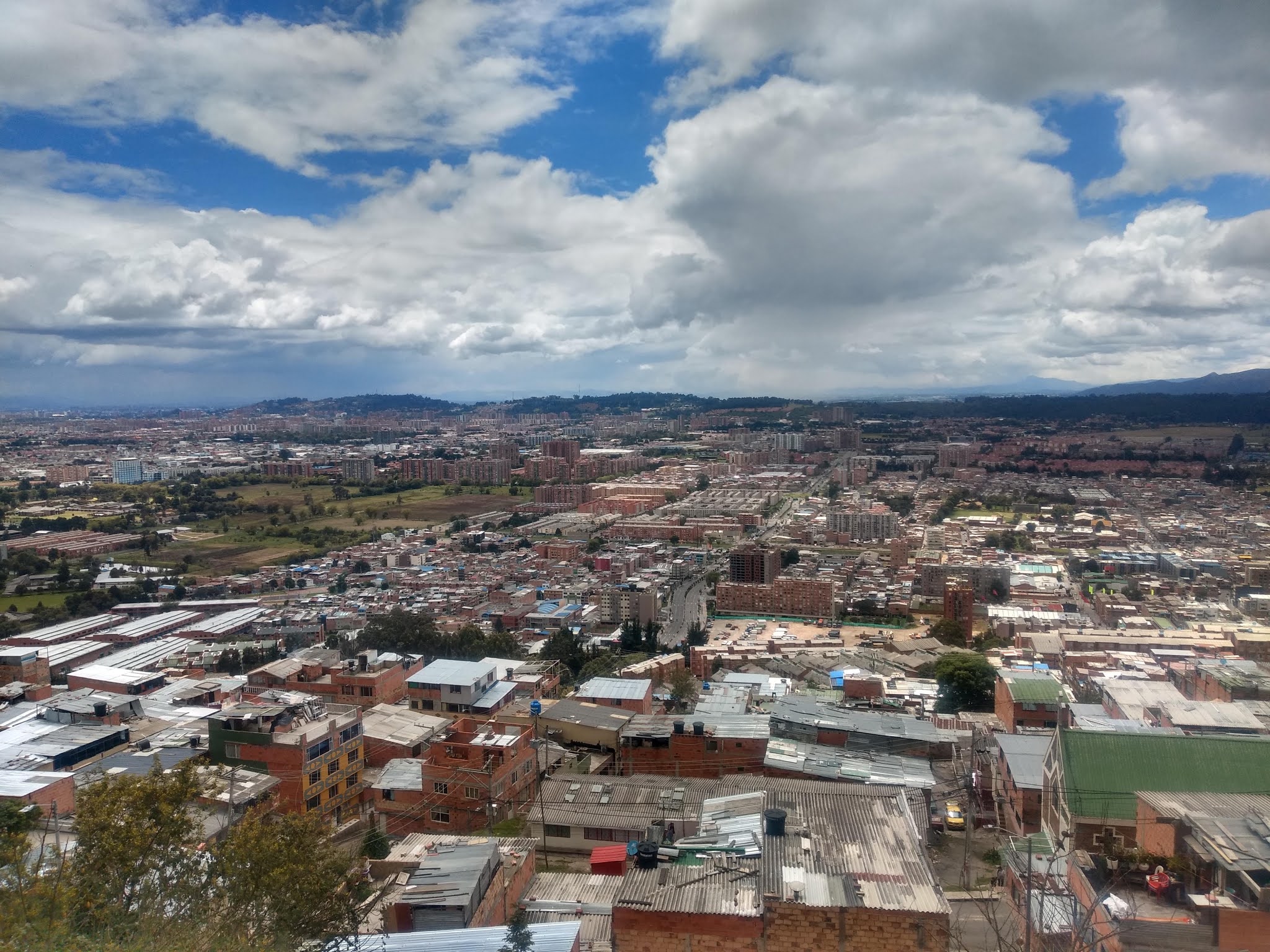
Bogotá's cocaine barrios: North Bogotá at dusk, as viewed from Codito.
Sin city?
Figures on cocaine consumption across the globe support this stance. What's more, from the perspective of those producing the "white gold" here in Colombia, ensuring it remains popular in the richer countries is vitally important for revenues. In financial terms, the local market is very minor in comparison.

Snow comforts

Nonetheless, there is a home demand. From my own observations, it's certainly not insignificant, although it seems more prevalent in neighbourhoods of a lower socio-economic standing. By all accounts, in high-income nations, the opposite is the case.

You might counter that I'm generalising when I say cocaine use is relatively commonplace across Bogotá's working- to lower-class barrios, that I shouldn't assume that what happens in one sector is replicated in another. It's a fair point. Yet, I've socialised in various parts of the city to know that it's certainly not just limited to one particular area.

In what I imagine is similar to the rest of the world where cocaine is popular, it's men under 50 who appear to be the chief consumers. For Colombia, unsurprisingly, availability and price are big factors in this popularity.
'There's a belief — not without foundation — that Colombia's "best" cocaine is sent for export. It's difficult to know if this is good or bad for the local consumer.'

For example, as a very rough guide, products in Ireland are generally four times more expensive than Colombia. Yet, one can purchase a gram or so of cocaine in Bogotá for the equivalent of 2.50 euros. I'm pretty sure you can't get the same amount in Ireland for ten euros. Try, so my research tells me, about eight times that.

Easy money

Now, the majority of those I know here who are occasional consumers are not what I would class as addicts. It appears to be a weekend indulgence solely.

What's more, it's not like nieve — snow, for the uninitiated — is the first thing on their minds. No, it's usually the world's most popular gateway drug, alcohol, first. Then comes the cocaine. A global trend really.

One could also question the purity of what Colombians are sold.

Like the country's coffee, there's a belief — not without foundation — that the "best" cocaine is sent for export. It's difficult to know if this is good or bad for the consumer. Less pure may mean less addictive and less harmful. However, it could also mean the complete opposite.

Another striking feature of the cocaine business I've observed is the involvement of adolescents. Lads who should be at school are instead low-intensity dealers. The thing is, they've no classes to go to right now as schools have been closed since March due to the pandemic.

OK, considering the profit margins — they can double their money on each unit sold — they probably deal around the college gates in normal times anyway.

With all that in mind, in my early days in this country, echoing a call from then Colombian President Juan Manuel Santos, I wrote about the need to seriously debate the legalisation of the cocaine trade. Alas, in most of the richer nations where consumption is high, such a proposal doesn't appear to have been given any proper consideration.

Thus, we continue with prohibition across much of the world which, it can be said, does more harm than good on a number of levels. No surprises there. As a society, we're adept at applying the wrong solutions to our problems.

_______________________________________________________________
Listen to Wrong Way's Colombia Cast podcast here.

Facebook: Wrong Way Corrigan — The Blog & IQuiz "The Bogotá Pub Quiz"


Thursday, 19 November 2020

Broadening the horizons, both mentally and physically

@wwaycorrigan

[Listen to an audio version of this blog entry here.]

'Choose where you want to live and then find ways to make your life sustainable there.'

Broadening the horizons, both mentally and physically: Traffic heading north on Bogotá's Autopista Norte.
Does the answer lie to the north? Perhaps ...
In those pre-coronavirus days that now seem like a lifetime ago, for many open-minded people with internationally transferable skills or in jobs that required no fixed abode, and with nothing too emotional tying them to one particular place, that epigraph made a lot of sense. The world was, to all intents and purposes, their oyster.

Wealth is health

With the pandemic, while the (relatively) free movement of people hasn't completely ground to a halt, it is much more restricted than it was just nine months ago. 

In addition, there is the moral element at play in relation to the risks associated with unnecessary travel and mixing with strangers.

This can be even more of a burden considering the direction of travel in a live-anywhere-because-I-can context is heavily weighted towards emerging market countries and away from more developed nations. The latter — in theory, although this current pandemic hasn't exactly borne this out — is much better equipped to handle a health emergency.
'Many will have to reinvent themselves to survive in the new landscape.'
So, using that as a guide, it's quite understandable that a country such as Colombia appears to be making it more difficult for digital nomad types to pitch their virtual tents in its territory. 

Unless it can clearly be demonstrated you're of benefit to the state and its people, away with you. (For the record, I can't really call myself a digital nomad, if this is classed in terms of making money doing online work.)

Of course, the pandemic will pass and restrictions on movement — for tourism and some wishing to be economic migrants in any case — are likely to ease. What will take longer to get over is the fallout from it.

Work the location

For some, in terms of living standards anyway, little has changed. Indeed, in certain aspects, their lives may have even improved.

For others — and for the large part, those who were already struggling before this coronavirus — things are much more difficult. Many will have to practically reinvent themselves to survive in the new landscape.

I can't really blame the pandemic for my current imbroglio. OK, the virus ("Alan", you owe me money!) certainly hasn't helped my situation, but I took a decision to try to 'go it alone' before our enemy from the East arrived. The results thus far are nothing to write home about.

Coming back to our opening quote, if I continue to choose Colombia as the country in which I live — a decision that I have less control over today than previously — then it looks like I need to reappraise how I can "make it" here. 

Certain things that I've said no more to, specifically English teaching and marketing agency work, may have to come back into play.

Yet, if the strategy is all about finding gainful employment that I consider more meaningful and suited to my skills, then perhaps I need to reconsider the location.

There is no ideal — even Colombia purely as a location has its negatives — yet my current approach isn't exactly paying dividends.
_______________________________________________________________
Listen to Wrong Way's Colombia Cast podcast here.

Facebook: Wrong Way Corrigan — The Blog & IQuiz "The Bogotá Pub Quiz"

Tuesday, 10 November 2020

Living with a destructive parasite

 @wwaycorrigan

[Listen to an audio version of this blog entry here.]

'As everyone does, I have microorganisms on my skin. However, one has become particularly irksome of late.

Living with a destructive parasite: The parasite's breeding ground (this is Bogotá, Colombia, but it could be anywhere you have humans).
Parasite central.

Health hazard

Its rapidly increasing numbers is one reason for this. As unpleasant as that is, I can cope with it, the occasional treatment to reduce the tingling sensation notwithstanding.

Of greater annoyance is its destructiveness, not only to my physical appearance but also to the demise of other more symbiotic organisms that live off me. In fact, many have completely disappeared, which has adversely affected my overall health.

For one, I find myself getting fevers more regularly than before. In the past, I could quickly cool down with some ice treatment, but that's becoming increasingly difficult these days.

While as far as I can remember I've always had patches of dry skin, especially in the greater crotch area, these have been spreading to other parts where I used to have a good covering of hair.

'Maybe the best natural solution is to get close to the fire for an extended period of time.'
I'm also sweating in greater amounts. What's more, the small irregular skin growths that this parasite seems to bring about in proximity to sweat glands have increased in size over the years.

I tend to find a good ice-cold shower helps to reduce its impact. Yet, it's only a temporary respite. It seems this organism has evolved to find a way to combat any water-based treatment I apply to my body.

The heat is on

It does seem much less resistant to extreme heat. I've had a few bad burns over my lifetime — I'm a bit clumsy that way — and this parasite appears to avoid those parts of my skin that have been scalded, the most recent ones in any case.

Indeed, when this "lodger" is at its most irritating, I feel like covering my whole body in flames. That mightn't be the best idea, all the same.

Linked to that, when I'm in smokey areas, this also helps to reduce its activity levels. Again, though, I can't be doing that all the time.

Maybe the best natural solution — I'm not a fan of manufactured chemicals — is to get close to a fire for an extended period of time. Or at least apply intense heat patches to my skin. It'll get uncomfortable, but I can bear it.

Actually, such a strategy worked before, ridding me of bigger, but less annoying parasites. If I immediately follow this up with an ice bath for as long as I can endure it, I should be fine.

Sure look, I've survived various heavy blows from other bodies since birth. I won't let this little creature, "human" as it's called, get me down. I'm sure it won't be plaguing me for much longer.'
_______________________________________________________________
Listen to Wrong Way's Colombia Cast podcast here.

Facebook: Wrong Way Corrigan — The Blog & IQuiz "The Bogotá Pub Quiz".


Thursday, 5 November 2020

'Cry me a river?' 'Eh, no thanks'

@wwaycorrigan

[Listen to an audio version of this blog entry here.]

In the 1972 classic, Godfather, there's an early scene where Don Corleone berates his godson, Johnny Fontaine, for crying because 
he didn't get a part in a movie. 'Godfather, I don't know what to do', a sobbing Fontaine mutters.

Cue a slap in the face and a violent retort, 'You can act like a man', followed by a gentle mocking of his behaviour from the Don.

'Cry me a river?' 'Eh, no thanks': People who cry regularly get on Wrong Way's nerves.
'Let it all out, good lad.' (Image from emojipedia.org.)

Crying times

That scene is set in the late 1940s, a quite different world from that which we inhabit today, to state the obvious. 

These days, it's all about being in touch with one's emotions. It's OK to cry, whether you're a man, woman, child or however else you define yourself. Don't suppress your feelings, let it all out.

I don't completely disagree with that approach. For one, for the most part, it's good to be honest about how you feel — at least if you're asked that is.

What I don't like, what irritates me, is when the waterworks start, especially — although not exclusively — when it's men who are shedding the tears. This is where I side with Don Corleone.

It's not that it makes me uncomfortable, it's more a case that I find it hard to take seriously men who cry with regularity.

As for women, whether the tears are genuine or not, they often, um, precipitate a granting, justified or not, of whatever they may be looking for.

I generally make an exception for death, but even in that there seem to be people who let flow more than really appears "necessary". (Perhaps we could introduce a tear scale. 'Careful now, you're close to your limit.')

Bidding adieu to loved ones for an indefinite period of time is another "acceptable" tear-jerker. Alcohol-induced crying is also excepted, meaningless as it often is.
'When the tears in others come they invoke a negative, cold reaction in me. Rather than wanting to help, I have a desire to walk away.'

This aversion towards, bordering on utter contempt for crying has something to do with, it's safe to assume, my childhood. I was, after all, a serial crier into my mid-teens.

Then, from about 15 onwards, I started to develop a strong dislike when seeing others well up for reasons that I would have considered rather inconsequential.

During that time, no doubt having to deal with me, her last born, I recall my mother crying for what seemed like the merest of reasons. It used to get my blood up.

Even if I'd been told it was all largely down to the menopause, it's unlikely I would have been sympathetic to her plight. Selfish teens, eh.

Dry your eyes, mate

This clearly left its mark. For in my current abode, the landlady, a nice woman I hasten to add, cries on an almost-daily basis.

It's not only, as has happened a fair few times, a headache when she does it speaking directly to me about some grievance or another (these grievances have nothing to do with me, by the way!). It also irks me simply when I can just hear her sobbing away in her room.

I know I should probably be a little more empathetic considering she suffers from depression, it's just when the tears in others come they invoke a negative, somewhat cold reaction in me. Rather than wanting to help I have a desire to walk away.

It's not that I lack understanding. In fact, I'd wager I take the time to listen to and empathise with other people's gripes as much if not more so than the next person. I just wish they'd leave the crying out of it.

The British-Irish band The Pogues sang in Streams of Whiskey, 'there's nothing ever gained by a wet thing called a tear'. That's not fully true, but I wish it was.
_______________________________________________________________
Listen to Wrong Way's Colombia Cast podcast here.

Facebook: Wrong Way Corrigan — The Blog & IQuiz "The Bogotá Pub Quiz"


Wednesday, 28 October 2020

Christmas, the one thing that arrives early in Colombia

@wwaycorrigan

[Listen to an audio version of this blog entry here.]

Back in my largely innocent childhood days one of the most depressing times was when Christmas came to an end. In fact, the painful comedown started to kick in shortly after 25 December.

My current Bogotá abode rolls out the Christmas decorations in, wait for it, October.
Decking out the place for Christmas ... in October.
Everything was building up to the giddy excitement of early on Christmas morning, discovering all the goodies Santa had delivered — they were never in doubt, seeing how I was such a little angel all year.

Quick-fire Christmas

So, while the afterglow lasted for a period, the sad realisation that I'd have to wait another year for Mr Claus' arrival didn't take long to set in. Within a couple of days, the spectre of a return to school and 'normal' times began to play on my mind.

Now, I do recall the official — that is to say, putting up the decorations — Corrigan run-in to Christmas being fairly short. 

Amongst my village friends, our household would invariably be one of the last to be decked out. It wasn't unusual for some frantic decorating to still be happening on the 24th. 'Time enough for it', was the thinking, I guess. I'm pretty sure if it was left to my father, decorations wouldn't go up at all.

At the height of the Celtic Tiger years as Ireland embraced US-style flashiness, or superficiality you might say, and as I moved on from Santa, it pretty much became unacceptable for any respected family not to have their house 'Christmas ready' by mid-December. (At about the same time, again mimicking our Yankee cousins, Halloween decorations appeared to have become mandatory in many households.)

That being so, for what I assume is the majority of Irish people, rolling out the Christmas decorations before December is still a no-no. Five weeks of Christmas is enough, almost one-tenth of the year as it is. The fact that most radio stations hold off on playing festive tunes until at least 01 December is a sign of that.
'As a sufferer of depression, I can't help but think of her state of mind when she has to take down all these Christmas decorations, in mid-January at the earliest as it most likely will be.'
For a fair number of Colombian families, in contrast, the Yuletide yearning tends to show itself in earnest in October. While some might follow the 'let's at least get Halloween out of the way first' mantra — do note, the 'night of the dead' is a lively affair here — others have their sights set on Christmas.

Radio stations are complicit. The end-of-year hits are being banged out as soon as September ends.

In my current house share, the landlady is very much in this bring-on-Christmas brigade. For the last week, she's been, slowly but surely, kitting out the place. By the looks of things, not one inch of the house, the ground floor anyway, will be free from a festive covering.

Emotional moment

It doesn't bother me, as long as I don't have to do any of the decorating. I'm kind of indifferent to Christmas at this stage.

I do, however, slightly worry for the landlady herself. As somebody who appears to suffer from depression, I can't help but think of her state of mind when she has to take down all these decorations, in mid-January at the earliest as it most likely will be.

Of course, we all have downers after highs, it's natural. 'What goes up' and all that.

Yet, the lady of my current 'manor', considering her condition, seems to be putting herself through an unnecessary emotional high. I just hope she can manage the inevitable comedown when it's all over, when everything from the Santa dolls to the glittery balls has to be packed away.

You might say I'm being a bit of a curmudgeon, a Grinch even. I beg to differ. I like a party as much as the next person.

It's just that experience has taught me to try to not get too lost in the moment when surfing the high waves. That way, you'll generally be in a better position to manage the crash when it envelops you, you'll be able to avoid being drowned by emotions.

That's the theory, anyway. As ever, executing it in practice is usually much more difficult. At least we've covid-19 to keep us all in check this year.
_______________________________________________________________
Listen to Wrong Way's Colombia Cast podcast here.

Facebook: Wrong Way Corrigan — The Blog & IQuiz "The Bogotá Pub Quiz".  
Wednesday, 21 October 2020

Colombia's tough love

@wwaycorrigan

[Listen to an audio version of this blog entry here.]

'Sure this lad will clearly do anything to stay in Colombia. Just look at his record. Nine visa applications in the last seven years plus three salvoconductos. We could ask him to submit a big, juicy papaya next time, and no doubt he'd do it.'

Colombia's tough love: Wrong Way's love for Colombia, although not unconditional, has been apparent these last few years. Colombian officialdom is putting a big strain on the relationship now.
Alas, it appears to be unrequited love. (Image from Facebook.)

Social media diplomacy

It's stretching it somewhat to think that officials at La Cancillería Colombia have actually ever uttered words similar to the above. 

It's highly unlikely that there's a red line under my name at the country's visa-issuing authority — well, I'm pretty sure there wasn't, that might have changed now in light of recent, unsolicited media coverage.

Nonetheless, and at the risk of coming across as a "victim" here, I'd wager that throughout these seven years since getting my first Colombian visa few other independent foreigners based here have handed over as much hard-earned cash as I have in terms of visa applications and related processes.

Events of the last few weeks have reminded us that obediently and quietly following the visa/immigration rules in Colombia, especially if you're having difficulties in obtaining exactly what you want, doesn't always work in your favour.

No. The more advantageous route, for certain individuals, is to kick up a public fuss, rally the masses to your cause — if you can, that is — and Colombian officialdom will cave in to your needs. You do this while at the same time repeatedly say how much you love and respect the country.

You could equate it to a man telling a woman everything she wants to hear in order to sleep with her. In truth, with just the gentlest of scratching below the surface, his actions show how he cares little for her. She is no more than an object to be used and abused.

Yet, mesmerise your target with public displays of affection that conceal a threat, appear as a caring, loving, selfless individual and in no time the putty shapes itself exactly how you want it.
'No serious foreigner thinking about visiting or living in the country would seek out the advice of these Colombia-can-do-no-wrong types.'
Dishonesty is the best policy. Respect is only forthcoming if the other party loses respect for itself. It's not a relationship of equals, it's one of domination, built largely on false premises.

Forbidden fruit

In the specific case of Colombia's love affair with its foreign-born influencers — influencers whose business model is to say practically nothing negative about their adopted place — submissive Colombia believes it is getting something in return: The positive promotion of the country abroad.

The reality is more a case of Colombia being sold to Colombians. No serious foreigner thinking about visiting or living in the country would seek out the advice of these Colombia-can-do-no-wrong types.

Again, you're telling your sleeping partner exactly what she wants to hear yet both you and her know it's an act, a fantasy. And what you tell her doesn't really go any further than the bedroom. 

If it does happen to reach a wider audience, most observers are intelligent enough to understand it's little more than sweet nothings whispered at the moment of passion.

I've never been great at these exaggerated displays of affection — not too many Irish people are really, it's safe to assume. 

However, my attempts to stay in Colombia since the independent visa application became more complicated in 2018 have, it could be argued, smacked of desperation.

It reminds one of the old saying here, 'Él que muestra el hambre, no come,' 'He who shows hunger, doesn't eat.' It's time I started devouring that life-giving papaya myself rather than foolishly giving it away.
_______________________________________________________________
Listen to Wrong Way's Colombia Cast podcast here.

Facebook: Wrong Way Corrigan — The Blog & IQuiz "The Bogotá Pub Quiz".

Tuesday, 13 October 2020

Colombia's Migración mess

@wwaycorrigan

[Listen to an audio version of this blog entry here.]

In September, Migración Colombia, the body responsible for granting extensions to temporary tourist passes, announced that the grace period for foreign visitors who found themselves stranded in the country was coming to an end.

Colombia's Migración mess: Migración Colombia offices are now open on Saturdays in the country's three biggest cities. Will this be enough to deal with the backlog of cases? Probably not.
Opening on Saturdays is a help, but is it enough? (Image from Facebook.)

Escape from limbo land

From the 21st of the month, days spent here would, in effect, start to be counted again, having been frozen when lockdown was introduced in March. 

For tourists, the deadline is 01 November to either apply for another 90-day permit or leave. 

If you're leaving within the time period, well that's straightforward enough. However, it gets trickier if you're looking for an extension as this requires an in-person meeting at a Migración office.

The initial communication from the government body stated that all appointments must be booked online. Those who turned up at Migración without one would be turned away. 

However, facing into a six-month backlog and reopening at only 30 per cent capacity, securing an appointment any time this year quickly became next to impossible for many. 

You see, it's not only tourists Migración deals with. All foreigners based here who aren't currently residents or citizens have to use its services at least once a year. 

Those who, during lockdown, were granted a visa or residency — a fully online process done with a different entity, La Cancillería — are expected to have these registered at Migración. This is one side of the same coin for the issuing of an ID card — cédula extranjería — corresponding to said visa/residency.

As far as I'm aware, this process must be begun on or before 21 October. (In old-normal times you had 15 days to register a newly-issued visa.)
'I've been told of incidents where people with such emergencies were refused entry to a Migración office because they didn't have an appointment reserved online. This is completely at odds with the official line.'
That deadline also applies to foreigners living here who had a visa/residency application deemed inadmissible or whose visas have expired or who find themselves in the country as an "irregular" for whatever reason. 

How I initially understood it was that those in such a position had only to register their intent to legalise their status, which in most instances means applying for an emergency stay called a salvoconducto. (Another option is to leave the country at the earliest possible opportunity — that usually means no more than 30 days after a visa expiry date.) 

If these people in limbo can't get an actual in-person appointment before 21 October because the system is overwhelmed, surely they can't be held responsible for that?

It now appears, however, Migración expects such cases to have reached a conclusion by the deadline. 

The latest advice on its website states that if your appointment is after the date your document expires or you simply can't get an appointment and yours is a case that needs urgent attention, you should go immediately to one of its offices, preferably, I'm guessing, the one closest to you. 

But for the grace of Duque?

That's the official line. As is often the case with such things, though, what's happening on the ground is different. I've been told of incidents where people in such dilemmas were refused entry because they didn't have an appointment reserved online. 

I'm also aware of a number of Bogotá-based foreigners being forced to travel to Migración offices in cities hundreds of kilometres away to resolve their situation before they became irregular. Great in these coronavirus times, isn't it?

One of these was somebody applying for residency. A day before his latest visa expired he received notification from La Cancillería that his application was deemed inadmissible — something that seems to be happening to a lot of folk requesting visas or residency these days.

Thus, faced with losing the continuity of five years of visas, the most crucial, time-consuming requirement for a residency bid, he had to hightail it from the capital to Neiva in order to seek a salvoconducto from the Migración office there, effectively buying time to sort out the issue with his original residency application. 

It worked out for him, he got what he needed. However, this is the exact type of case where I would have thought flexibility would be forthcoming from both La Cancillería and Migración. 

The applicant didn't want to test that, hence his last-minute dash south to Neiva. It must be said, the fact these processes involve two different government entities doesn't help.

The chief press officer at Migración did tell me in a WhatsApp message that they were being flexible. I've no reason to doubt that. I must also state that I've always found officials at that body reasonable and informative. 

Nonetheless, potential arbitrary flexibility and understanding aside, one immediate solution to all of this would be an extension to the grace period. We're still in the middle of this pandemic after all. Forcing people into unplanned travel in such times doesn't seem like best practice. 

So, President Duque, you have it in your power to tidy up this messy situation. Or are the conspiracy theorists on to something? Is Colombia systematically forcing foreigners out? Surely not. _______________________________________________________________
Listen to Wrong Way's Colombia Cast podcast here.

Facebook: Wrong Way Corrigan — The Blog & IQuiz "The Bogotá Pub Quiz".