[For an audio/vlog version of this story, click here.]
It shouldn't surprise those familiar with Colombia to be told that many of its citizens are proud, understandably so, of their land's rich biodiversity.
'No country is more beautiful than ours', is a common pronouncement. Some even proclaim they have no desire to leave the place because of its beauty, even though most of those who say this haven't physically seen much of the national territory. As good a reason as any not to leave, I guess: 'I have to explore Colombia first.' (One also needs some savings to travel.)
 |
| Can you spot the hero turtle in this litter-filled Colombian swamp? |
Misplaced pride
This I-love-my-country banter has been backed up by a recent survey carried out on behalf of World Wildlife Fund Colombia. When residents were asked for their main feelings about the country's biodiversity, 44 per cent of respondents gave pride of place to um, pride, while 46 per cent said it worried them. Just nine per cent said they were indifferent to it.Pride aside, it is true to state that few regions in the world can match the diversity of flora and fauna that makes up what we today call Colombia.
The range of landscapes and climates plays a big part in this, from glaciated peaks and Andean páramos all the way down to dense tropical jungle and a coastline that touches the globe's two largest oceans.
How much, though, the average Colombian does to help sustain this biodiversity is open to much debate. According to the World Population Review's Mismanaged Waste Index, the country is at best mediocre in dealing with its refuse.
Backing up the overall, national picture, is the easily observed individual mismanagement and apparent recklessness in waste disposal. It can bug those of us brought up to be angered by litter louts.
Plastic people
I addressed this topic, particularly the popularity of single-use plastics, in a 2018 piece titled The Disposable Republic of Colombia.Since then, the state has introduced some measures aimed at reducing this reliance on plastic. For example, customers must pay — or are supposed to pay, at least — for each plastic bag used to package shopping in supermarkets and suchlike.
I'd like to see something similar for plastic cups. They're still overused in many standard cafés/panaderías and beer-serving tiendas. Why some Colombians prefer to have their hot coffee in a slowly melting plastic cup when a porcelain one is available is beyond me. And then there are the accompanying plastic straws for stirring one's brew; such wanton plastic pullulation. (Do note that in the World Wildlife Fund survey, 63 per cent of respondents said plastic pollution was a chief concern.)
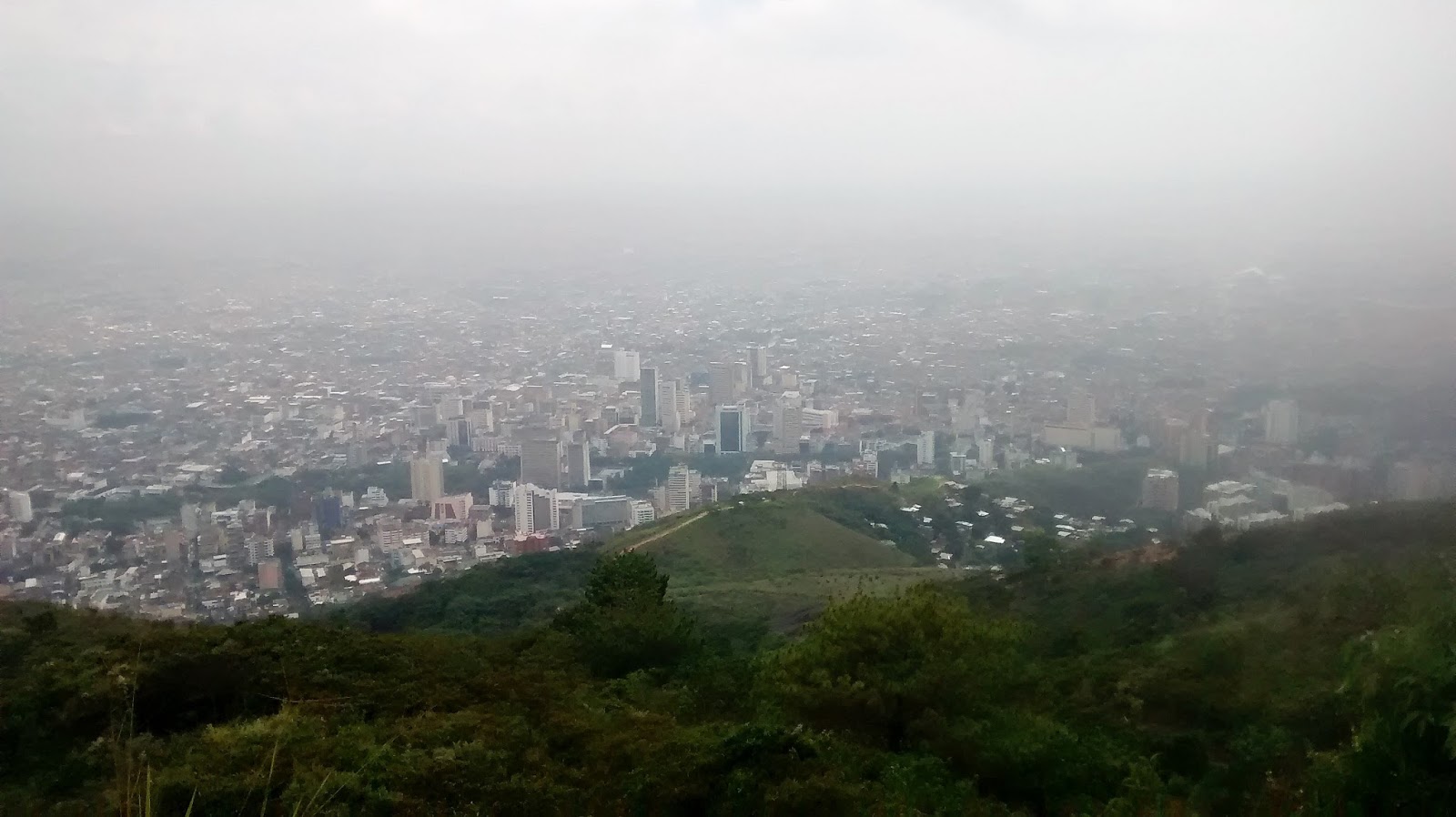
'Colombia's rich biodiversity has little to do with the humans who inhabit the territory. Maintaining that richness, though, has a lot to do with us humans.'Colombia's waste mismanagement should come under greater scrutiny in the coming weeks as the city of Cali gears up to host Cop16. If you, like me, are a bit confused, indifferent or even annoyed by all these talking-shop Cops, this one is the 2024 United Nations Biodiversity Conference of the Parties (Cop16) to the UN Convention on Biological Diversity (CBD). That makes more sense now, doesn't it?!
 |
| Words are easy to express. Acting on them is another matter. |
Cop16 aside, it smacks of a lack of cop-on to regularly brag about the country's biodiversity and natural beauty but do next to nothing to keep things that way. Or worse, to actively, if apathetically, engage in practices that harm the environment.
Colombia's rich biodiversity, after all, has little to do with the humans who inhabit the territory. Maintaining that richness, though, has a lot to do with us humans.
As for reusing, opting to repair damaged goods — be they clothing, footwear, electronics, etc. — is normal here.
In other Western countries, the default setting over the last few decades has been, 'If it's broken, bin it', rather than try to fix it first. This mentality finally seems to be changing but the repair industry isn't as established in the likes of Ireland and the UK as it is in Colombia.
What's more, while many high-income nations are seen to manage their waste well according to the aforementioned Mismanaged Waste Index, it's fair to ask what that management entails. Those who see it as little better than a cosmetic exercise that comes with high energy requirements and associated costs have a valid point at present.
OK, litter is unsightly but does it make a major difference if it's concentrated in one area away from the eyes of most or spread out all over the place?
As mentioned, aiming to reduce the amount of waste we generate should be the main goal. And many of us in the comfortable classes can do more to cut back on our use of non-essentials.
Doing so would give us something to be genuinely proud of, for those of us who truly care about the natural environment, that is: Less material diversity, more biodiversity.
__________________________________________________________
Listen to The Corrigan Cast podcast here.
Facebook: Wrong Way Corrigan — The Blog & IQuiz "The Bogotá Pub Quiz".
Colombia's rich biodiversity, after all, has little to do with the humans who inhabit the territory. Maintaining that richness, though, has a lot to do with us humans.
Reducing material diversity
About the best way to manage potentially harmful waste is to keep it to a minimum in the first instance i.e. reduce consumption so that there's less of a need for both reusing and recycling. And on that front, overuse of disposables aside, Colombia appears to do better than some high-income nations. There can be upsides to not having much of a disposable income.As for reusing, opting to repair damaged goods — be they clothing, footwear, electronics, etc. — is normal here.
In other Western countries, the default setting over the last few decades has been, 'If it's broken, bin it', rather than try to fix it first. This mentality finally seems to be changing but the repair industry isn't as established in the likes of Ireland and the UK as it is in Colombia.
What's more, while many high-income nations are seen to manage their waste well according to the aforementioned Mismanaged Waste Index, it's fair to ask what that management entails. Those who see it as little better than a cosmetic exercise that comes with high energy requirements and associated costs have a valid point at present.
OK, litter is unsightly but does it make a major difference if it's concentrated in one area away from the eyes of most or spread out all over the place?
As mentioned, aiming to reduce the amount of waste we generate should be the main goal. And many of us in the comfortable classes can do more to cut back on our use of non-essentials.
Doing so would give us something to be genuinely proud of, for those of us who truly care about the natural environment, that is: Less material diversity, more biodiversity.
__________________________________________________________
Listen to The Corrigan Cast podcast here.
Facebook: Wrong Way Corrigan — The Blog & IQuiz "The Bogotá Pub Quiz".