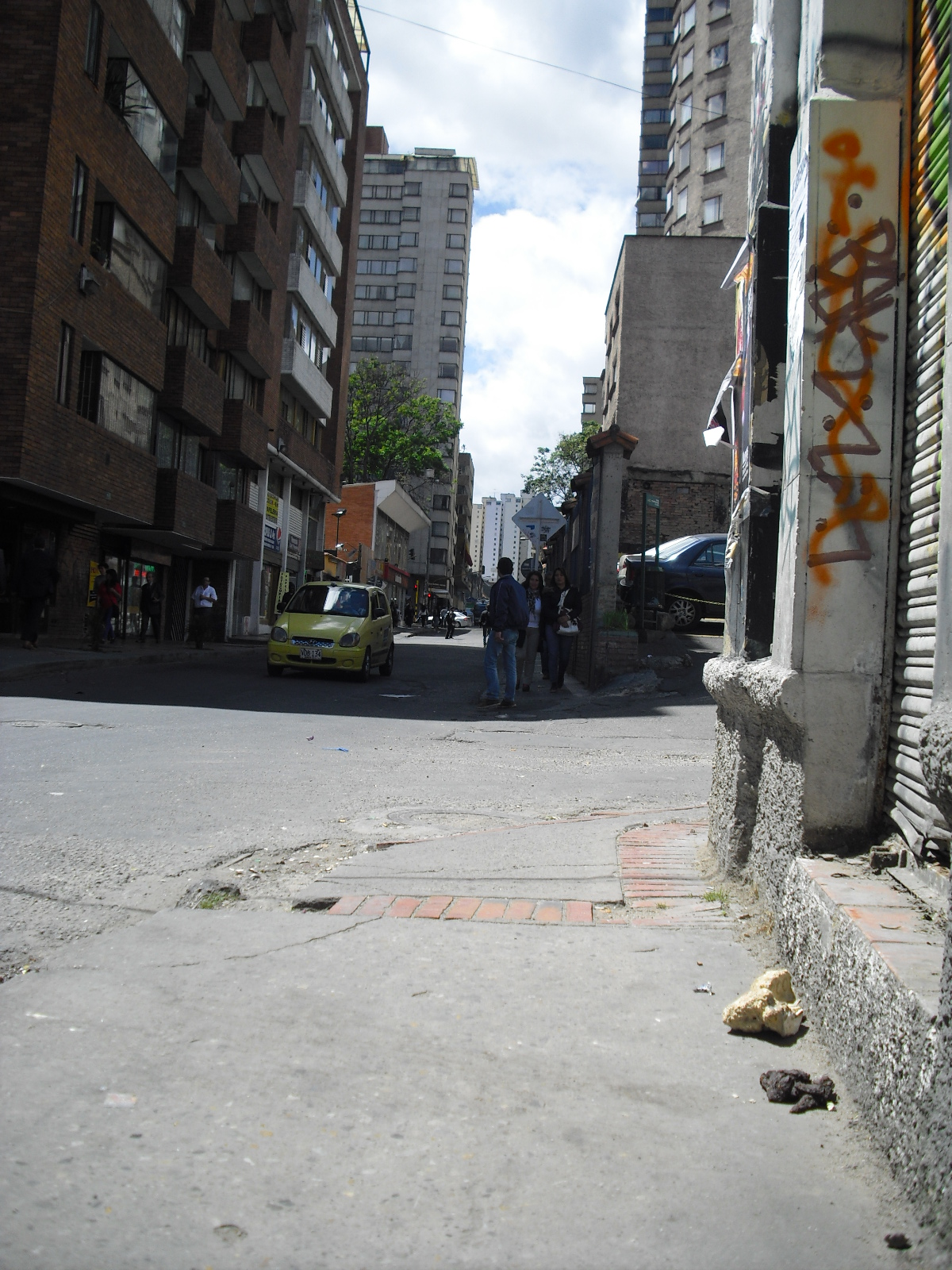
A couple of years back this blog looked at some of Bogotá's 'broken windows'. That is to say, in relation to the broken windows theory on crime and its prevention, things in the Colombian capital that could be seen as pointing to a lawlessness nature, or at least letting what seem like minor things get out of hand.
With the city's mayoral elections just over a month away,* here we revisit those broken windows to see what, if anything, has changed:
From a city centre/La Candelaría/Las Aguas point of view, not much has changed with this problem. OK, some portable free-to-use public toilets have been installed in a few key locations, but they seem to be locked more than they are open.
The continued rejuvenation of the principle Carrera Séptima (Seventh Avenue) in the centre is bringing a new gloss to things around there; but as the lot for the main perpetrators of this particular problem hasn't changed, it's hard to envisage things staying clean and shiny for long.
As stated in the original, it’s a thin line to cross from aggressively asking for money to aggressively taking it. Beggars aside, the more dangerous out-and-out thieves certainly appear to be as strong in number as ever.
Giving such types a more positive raison d'être is an ongoing challenge, one that neither the mayor's office nor national government seems capable of meeting.
Chances are, if you can reduce the number of fare hoppers, you'll reduce the incidents of theft inside the system.
Has his Basura Cero (Zero Rubbish) programme been effective? In short, no.
In his defence, securing a lasting peace in Colombia may be easier than dealing with its rubbish problem. In most barrios of the city, if people used standard wheelie bins to leave their waste for collection, these bins wouldn't be in their possession for long.
You see anything that isn't firmly — firmly — fixed to Mother Earth or well secured in other ways generally goes 'missing' in these parts.
So the custom of leaving rubbish for collection in random locations on the street in easily ruptured plastic bags continues. And so does the custom of the city's many homeless ripping them opening looking for discarded treasures. Such a sight to behold.
What's more, if and when they do vanish, it's normally some time before they are replaced. The practice of placing a 'warning stick' in them is still standard procedure.
Then you have ones that are just in a state of disrepair — as is the case for footpaths and roads in general. Be it a lack of resources or whatever, but the desire to get them up to a functional standard is obviously lacking.
 |
| Spot the poo. |
Faeces on the streets
Considering all the other problems Bogotá has, this one rates pretty low. However, it doesn't take away from the disgusting nature of it, made all the worse that the poo you see, or stand in, is just as likely to be from humans as from dogs (or police horses).From a city centre/La Candelaría/Las Aguas point of view, not much has changed with this problem. OK, some portable free-to-use public toilets have been installed in a few key locations, but they seem to be locked more than they are open.
The continued rejuvenation of the principle Carrera Séptima (Seventh Avenue) in the centre is bringing a new gloss to things around there; but as the lot for the main perpetrators of this particular problem hasn't changed, it's hard to envisage things staying clean and shiny for long.
Aggressive beggars
At best, we can say this one has stayed the same over the last few years. That's the optimistic view. Again, looking at it from a tourist/expat-heavy city centre perspective, it could be argued that things have actually regressed.As stated in the original, it’s a thin line to cross from aggressively asking for money to aggressively taking it. Beggars aside, the more dangerous out-and-out thieves certainly appear to be as strong in number as ever.
Giving such types a more positive raison d'être is an ongoing challenge, one that neither the mayor's office nor national government seems capable of meeting.
Transmilenio delinquents
With the recent fare increase for Bogotá's flagship public transport system, we'll probably see more rather than fewer of these in the coming months and years. OK, the extra revenue will be used, so we're being told, to increase security and improve the overall service and infrastructure of the operation.Chances are, if you can reduce the number of fare hoppers, you'll reduce the incidents of theft inside the system.
Rubbish
For good or bad, this is the area where outgoing mayor Gustavo Petro will be remembered the most.Has his Basura Cero (Zero Rubbish) programme been effective? In short, no.
In his defence, securing a lasting peace in Colombia may be easier than dealing with its rubbish problem. In most barrios of the city, if people used standard wheelie bins to leave their waste for collection, these bins wouldn't be in their possession for long.
 |
| Warning tape was actually put around this hole; it didn't last, though. |
So the custom of leaving rubbish for collection in random locations on the street in easily ruptured plastic bags continues. And so does the custom of the city's many homeless ripping them opening looking for discarded treasures. Such a sight to behold.
Infrastructure issues, neglected buildings
As mentioned above, if things aren't firmly secured around Bogotá, they will be taken. In relation to manhole covers, their regular disappearance continues to be a problem for city authorities and citizens alike.What's more, if and when they do vanish, it's normally some time before they are replaced. The practice of placing a 'warning stick' in them is still standard procedure.
Then you have ones that are just in a state of disrepair — as is the case for footpaths and roads in general. Be it a lack of resources or whatever, but the desire to get them up to a functional standard is obviously lacking.
 |
| There's graffiti and there's just defacing things, as above. |
Graffiti
This certainly hasn't gone away; in any case, in general here, it's not a crime. Plus, you'll see some very impressive graffiti in Bogotá — in fact, it has become a popular tourist attraction.Nonetheless, not all of it is sanctioned and not all of it can be described as art; it's just vandalism, plain and simple. How about decoratively painting the building or monument in question guys, rather than just attacking it with ugly spray paint squiggles?
So it's pretty much a case of 'as you were' with these issues in Bogotá. The (slow) roll-out of the integrated public-private transport system could be seen as at least one positive development under Gustavo Petro's stewardship. And the asses and carts seem to have largely disappeared from the streets. If only some of the same old asses running the place would disappear, too. We can dream, can't we?
*For an earlier piece on the leading candidates running for mayor see Broken Bogotá: Who can fix it?
______________________________________
Facebook: Wrong Way Corrigan - The Blog & IQuiz "The Bogotá Pub Quiz".