Showing posts with label basura cero. Show all posts

Tuesday, 22 September 2015

Bogotá's perpetually broken windows

A couple of years back this blog looked at some of Bogotá's 'broken windows'. That is to say, in relation to the broken windows theory on crime and its prevention, things in the Colombian capital that could be seen as pointing to a lawlessness nature, or at least letting what seem like minor things get out of hand. 

With the city's mayoral elections just over a month away,* here we revisit those broken windows to see what, if anything, has changed:

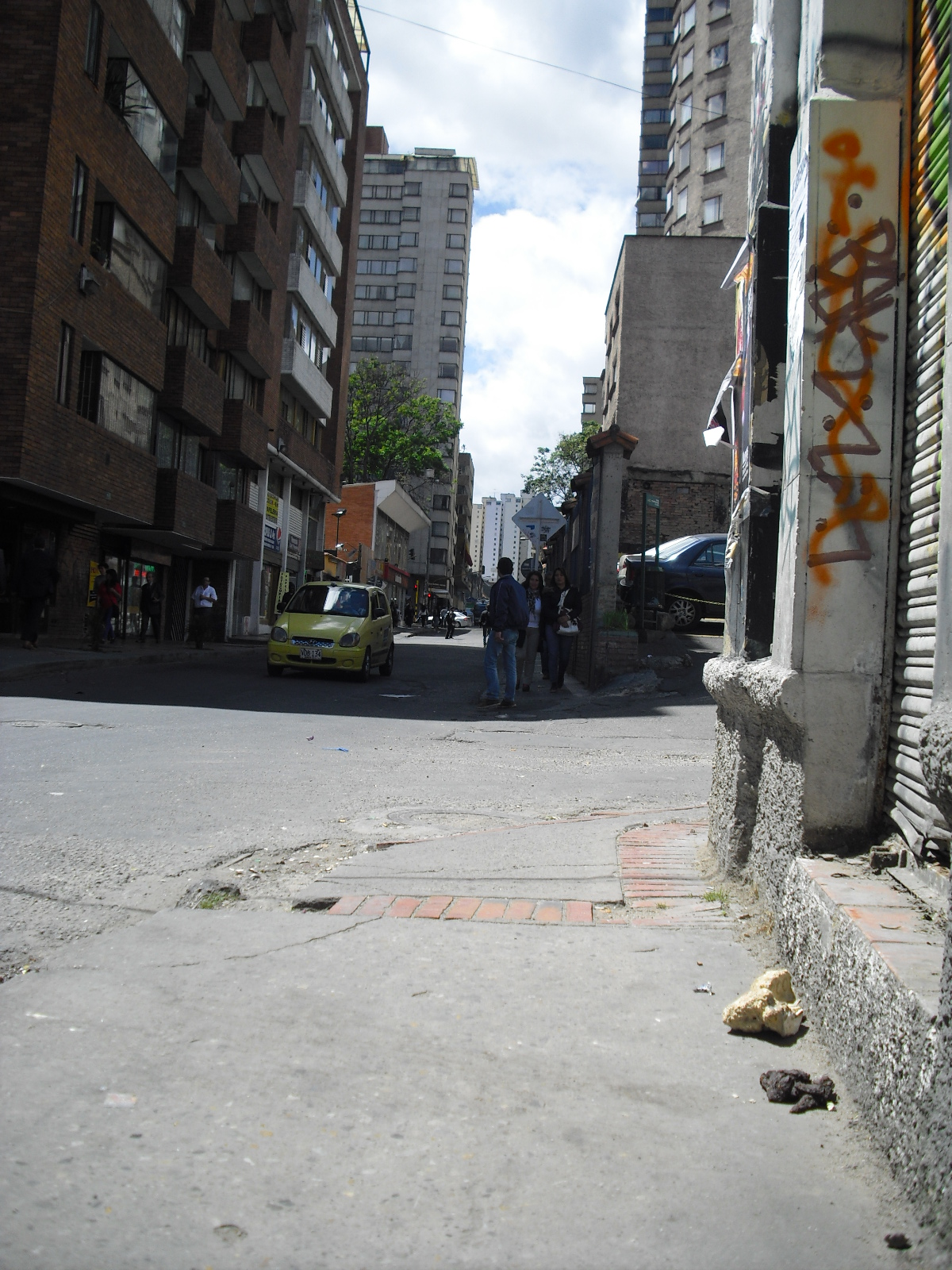
Bogotá's perpetually broken windows: Human faeces on the street; a common sight in city-centre Bogotá.
Spot the poo.

Faeces on the streets

Considering all the other problems Bogotá has, this one rates pretty low. However, it doesn't take away from the disgusting nature of it, made all the worse that the poo you see, or stand in, is just as likely to be from humans as from dogs (or police horses).

From a city centre/La Candelaría/Las Aguas point of view, not much has changed with this problem. OK, some portable free-to-use public toilets have been installed in a few key locations, but they seem to be locked more than they are open.

The continued rejuvenation of the principle Carrera Séptima (Seventh Avenue) in the centre is bringing a new gloss to things around there; but as the lot for the main perpetrators of this particular problem hasn't changed, it's hard to envisage things staying clean and shiny for long.

Aggressive beggars

At best, we can say this one has stayed the same over the last few years. That's the optimistic view. Again, looking at it from a tourist/expat-heavy city centre perspective, it could be argued that things have actually regressed.

As stated in the original, it’s a thin line to cross from aggressively asking for money to aggressively taking it. Beggars aside, the more dangerous out-and-out thieves certainly appear to be as strong in number as ever.

Giving such types a more positive raison d'être is an ongoing challenge, one that neither the mayor's office nor national government seems capable of meeting.

Transmilenio delinquents

With the recent fare increase for Bogotá's flagship public transport system, we'll probably see more rather than fewer of these in the coming months and years. OK, the extra revenue will be used, so we're being told, to increase security and improve the overall service and infrastructure of the operation.

Chances are, if you can reduce the number of fare hoppers, you'll reduce the incidents of theft inside the system.

Rubbish

For good or bad, this is the area where outgoing mayor Gustavo Petro will be remembered the most.
Has his Basura Cero (Zero Rubbish) programme been effective? In short, no.

In his defence, securing a lasting peace in Colombia may be easier than dealing with its rubbish problem. In most barrios of the city, if people used standard wheelie bins to leave their waste for collection, these bins wouldn't be in their possession for long.

Bogotá's perpetually broken windows: Another manhole cover in a state of disrepair & left that way in Bogotá DC.
Warning tape was actually put around this hole; it didn't last, though.
You see anything that isn't firmly — firmly — fixed to Mother Earth or well secured in other ways generally goes 'missing' in these parts.

So the custom of leaving rubbish for collection in random locations on the street in easily ruptured plastic bags continues. And so does the custom of the city's many homeless ripping them opening looking for discarded treasures. Such a sight to behold.

Infrastructure issues, neglected buildings

As mentioned above, if things aren't firmly secured around Bogotá, they will be taken. In relation to manhole covers, their regular disappearance continues to be a problem for city authorities and citizens alike.

What's more, if and when they do vanish, it's normally some time before they are replaced. The practice of placing a 'warning stick' in them is still standard procedure.

Then you have ones that are just in a state of disrepair — as is the case for footpaths and roads in general. Be it a lack of resources or whatever, but the desire to get them up to a functional standard is obviously lacking.

Defaced buildings in Bogotá, Colombia.
There's graffiti and there's just defacing things, as above.

Graffiti

This certainly hasn't gone away; in any case, in general here, it's not a crime. Plus, you'll see some very impressive graffiti in Bogotá — in fact, it has become a popular tourist attraction.

Nonetheless, not all of it is sanctioned and not all of it can be described as art; it's just vandalism, plain and simple. How about decoratively painting the building or monument in question guys, rather than just attacking it with ugly spray paint squiggles?

So it's pretty much a case of 'as you were' with these issues in Bogotá. The (slow) roll-out of the integrated public-private transport system could be seen as at least one positive development under Gustavo Petro's stewardship. And the asses and carts seem to have largely disappeared from the streets. If only some of the same old asses running the place would disappear, too. We can dream, can't we?

*For an earlier piece on the leading candidates running for mayor see Broken Bogotá: Who can fix it?
______________________________________
Facebook: Wrong Way Corrigan - The Blog & IQuiz "The Bogotá Pub Quiz".

Wednesday, 24 July 2013

Putting Colombia right, the 'Wrong Way'

As has been well documented, the Wrong Way crew is a modest bunch. Sometimes, though, we have to go against our natural instincts and give ourselves a modicum of praise (it’s unlikely anyone else will). 

So as we prepare to depart Bogotá for what at this remove is an unspecified period of time, we’re going to take a look at some of, ahem, our achievements in the region over the last 20-plus months.*
Putting Colombia right, the 'Wrong Way': Sunset in Bogotá
The sun is setting on this latest (but perhaps not last) stint in Bogotá.

Peace talks

Considering the bridges we built during our time living in divided Belfast (a nice little chat with the Reverend Ian Paisley outside City Hall being one of the highlights), it was only a matter of time before President Juan Manuel Santos called on us to set the Colombian peace process in motion. 

Cynics out there may say that the whole thing is just an expensive talking shop that’s going nowhere – the violence hasn’t stopped, for one – but at least they’re talking, right? (For an earlier account of this, see http://bit.ly/13IIUKr).

‘Revitalised’ Bogotá

Where do we start with this? There’s the partially pedestrianised Carrera Séptima (7th Street) in the capital’s centre – a rare victory for humans over vehicles (kind of). 

We stood shoulder-to-shoulder with Mayor Gustavo Petro during the controversial change in rubbish collection that has revolutionised waste collection in the city (well, maybe not quite revolutionised, but it sounds good – for background see http://bit.ly/WFOPsW).

What's more, we finally initialised the programme to rescue the metropolis’ overworked horses – it’s taking time to get them all off the streets, but we’re getting there (see http://bit.ly/15IZQPz).

It’s not only the equines we’ve saved but also some human beings. Our cleaning up of Bogotá’s notorious Bronx barrio (and other dangerous barrios in other cities across Colombia) has been a roaring success – we just haven’t been there in a while to check on progress (it’s too dangerous).

A rally for peace in Bogotá City Centre
Carrera Septima –take away the cars & the people will come (and march).

Transport matters

An ever-extending (it goes to the airport now, almost) efficient (at times) Transmilenio service linked up with an integrated public bus system (SITP – OK, hardly anybody uses it yet and its operation is divvied up between nine companies, but change takes time, you know) is something we’re pretty proud of. 

We’re not resting on our laurels, though. Metro Bogotá is more than just a pipe dream, it is on the way, trust us. (For more on transport in the city, check out http://bit.ly/N68gKL)

La grande

Las Grandes; The BIG beers
Las grandes in our favourite tienda ...
For some reason, the big beer revolution that swept through the rest of South America some time back passed over Colombia. That was until we arrived and got Bavaria – the country’s main beer producer – moving on this front. 

Since the introduction of La grande (750ml bottle), through hard work, dedication and repetition, we’ve been persuading the locals to take up the big habit. Come on guys, above all it makes economical sense.

Vamos a Brazil

There’s no doubt Colombia has produced some exceptional football (soccer, if you will) players through the ages, but La Selección – the national team – has very often flattered to deceive. Thanks to our, um, support that has all changed. 

All they need is a couple of points from their final four games of the South American World Cup qualifiers and Los Cafeteros will be on their way to Brazil next year – their first World Cup finals appearance since 1998. Chévere.

Thespian talent

Before our arrival, Colombian telenovelas (soap operas) were renowned for their cheesiness, terrible acting, ridiculous storylines and just all-round bad quality. 

Now, however, with our help, they are, well, um ... Right, let’s just say we did some interesting extras work from time to time. The gory details of those can be found here http://bit.ly/NrbPc3.
'Wrong Way' hard at work...
Hard at it; but whose is that banana skin?

Educating excellence

While we may have occasionally showcased our acting skills on Colombia’s small screen, the arguably more lasting, beneficial legacy we’ll leave behind has been our ability to pass on the English language – with an Irish twist, albeit (more detailed thoughts on our teaching talents can be read here http://bit.ly/V8ELH4). 

Whether any of our alumni actually learned anything is open to debate. At the very least, though, some of them have a better understanding of Irish history and culture, Wrong Way style. 

We'll miss imparting that knowledge; as well as all the free coffees and the odd free lunch. Heck, those latter treats are enough to entice us back (we're easily pleased here, you know). Time will tell on that one.

*Disclaimer: We would like to point out that some of these achievements may not be directly attributed to us. But ...

Tuesday, 9 July 2013

Bogotá's broken windows

Right, it's a question of where do we start with this one. Applying the Broken Windows theory to Bogotá might seem futile.* 

In brief, this is the idea that if a window is broken and left that way in a neighbourhood, this gives off a signal to others that nobody cares about the place. Thus, more windows are broken and a sense of disorder soon spreads throughout the area with a feeling that nobody is in control. 

In other words, the premise is that when trying to implement law and order, small, seemingly minor transgressions matter in a big way.
Bogotá's broken windows: A typical 'colourful' building in Bogotá's La Candelaria district
A cause for concern or not?
It is this thinking in operation that is credited by many in overseeing the dramatic reduction in crime levels in New York City in the late 1980s and '90s. 

For much of the '80s the city was going through one of the worst crime epidemics in its history. But by coming down hard on what appeared petty, insignificant unlawful behaviour in comparison to the daily homicides that were occurring at the time – a policy that started on the subway before later being introduced on the streets under the guise of zero-tolerance – the city’s crime levels plummeted.

So looking at Bogotá in this light, there are plenty of broken windows – in the literal sense and otherwise – which the authorities here could start making a concerted effort to fix. Below we take a look at the ones that cause us the greatest annoyance:

A Bogotá street replete with faecal matter
Watch your step ...

Faeces on the streets**

When we lived in working-class north Belfast, good practice on the main street outside our house was to walk with your head down so as not to step on the ubiquitous dog poo lining the concrete. The same advice goes for Bogotá; however, not only is it dog excrement you have to avoid but also human.

Yes, most of the latter faeces are the product of the homeless, but perhaps the introduction of some basic public toilets (we’re not asking for a shelter just yet) for these guys and gentle persuasion not to "decorate" the streets with their waste would be a start.

As for the dogs, fine owners who are caught not cleaning up after their canine’s mess, simple as. The unaccounted for street mutts? Round them up.

Aggressive beggars

In a city where a many live well below the poverty line, beggars are a sad fact of reality. When there is a lack of any meaningful social programme to help them it’s difficult to be critical. 

However, the in-your-face, give-me-money-now types need to be systematically tackled – it’s a thin line to cross from aggressively asking for money to aggressively taking it. Fining these types is obviously a waste of time but setting up some sort of community scheme where they are housed and put to work might be one solution.

Transmilenio delinquents

It was on New York’s subway where Broken Windows first hit, tackling fare-beaters for one. When these offenders were apprehended, it was often found that many of them were carrying weapons or had previous convictions. 

There are plenty of abusers of Bogotá’s main public transport system, Transmilenio, who no doubt would fall into the same category. Deal with them. Of course, to help in this you need a streamlined system where these crimes are punished quickly and effectively – in a country such as Colombia that could be the downfall.

Rubbish

This just adds to the overall environment of carelessness, and there’s plenty of it to be found blowing around the capital’s centre. 

Inadequate public bins, poor storage facilities for waste yet to be collected, a lack of litter awareness among the populace, and homeless people who rip open rubbish bags looking for hidden "delights" are all parts of the problem. 

Mayor Gustavo Petro’s coveted Basura Cero (‘Zero Rubbish') programme (see http://bit.ly/WFOPsW for background) has a long way to go.

Infrastructure issues, neglected buildings

A standard open manhole in Bogotá
"Holy" ground.
Footpaths and roads in perpetual states of incompleteness and/or disrepair, new buildings not finished or older ones lying decrepit, again like the rubbish and the broken windows themselves, these send out negative signals. 

It’s not just faeces that you have to avoid on Bogotá’s streets but also the risk of falling down a manhole – it’s normal for the covers of these to go missing and then rarely replaced. This goes for the highways and the pavements. At best some thoughtful person might place a stick protruding out of the hole to act as a warning. It’s a start anyway.

Graffiti

Another "crime" that came in for heavy treatment on New York’s subway; for many, of course, it’s just an expression of art. From that point of view, Bogotá has plenty of interesting, impressive murals that are now tourist attractions. 

So when graffiti brightens up an area and has a story to tell, then it's fine. But vandalising protected public buildings or transport with paint is not art – this is where heads should roll.

It must be pointed out that we’re not in favour of a zealous police state. For us, Broken Windows should be about implementing an attitude change. 

Therefore, to set an example you may have to be strict and unwavering at first, but over time people should come to know what’s acceptable and what’s not. Some, though, take longer than others to learn.

_______________
*See http://bit.ly/12r4YV2 for a more detailed explanation of broken windows.

**A good Dutch friend sent us this photo – the infamous shit-hand of Bogotá. Nice.

A human hand 'poo-print'
Toilet paper? What's that?