Right, it's a question of where do we start with this one. Applying the Broken Windows theory to Bogotá might seem futile.*
In brief, this is the idea that if a window is broken and left that way in a neighbourhood, this gives off a signal to others that nobody cares about the place. Thus, more windows are broken and a sense of disorder soon spreads throughout the area with a feeling that nobody is in control.
In other words, the premise is that when trying to implement law and order, small, seemingly minor transgressions matter in a big way.
It is this thinking in operation that is credited by many in overseeing the dramatic reduction in crime levels in New York City in the late 1980s and '90s.
 |
| A cause for concern or not? |
For much of the '80s the city was going through one of the worst crime epidemics in its history. But by coming down hard on what appeared petty, insignificant unlawful behaviour in comparison to the daily homicides that were occurring at the time – a policy that started on the subway before later being introduced on the streets under the guise of zero-tolerance – the city’s crime levels plummeted.
So looking at Bogotá in this light, there are plenty of broken windows – in the literal sense and otherwise – which the authorities here could start making a concerted effort to fix. Below we take a look at the ones that cause us the greatest annoyance:
So looking at Bogotá in this light, there are plenty of broken windows – in the literal sense and otherwise – which the authorities here could start making a concerted effort to fix. Below we take a look at the ones that cause us the greatest annoyance:
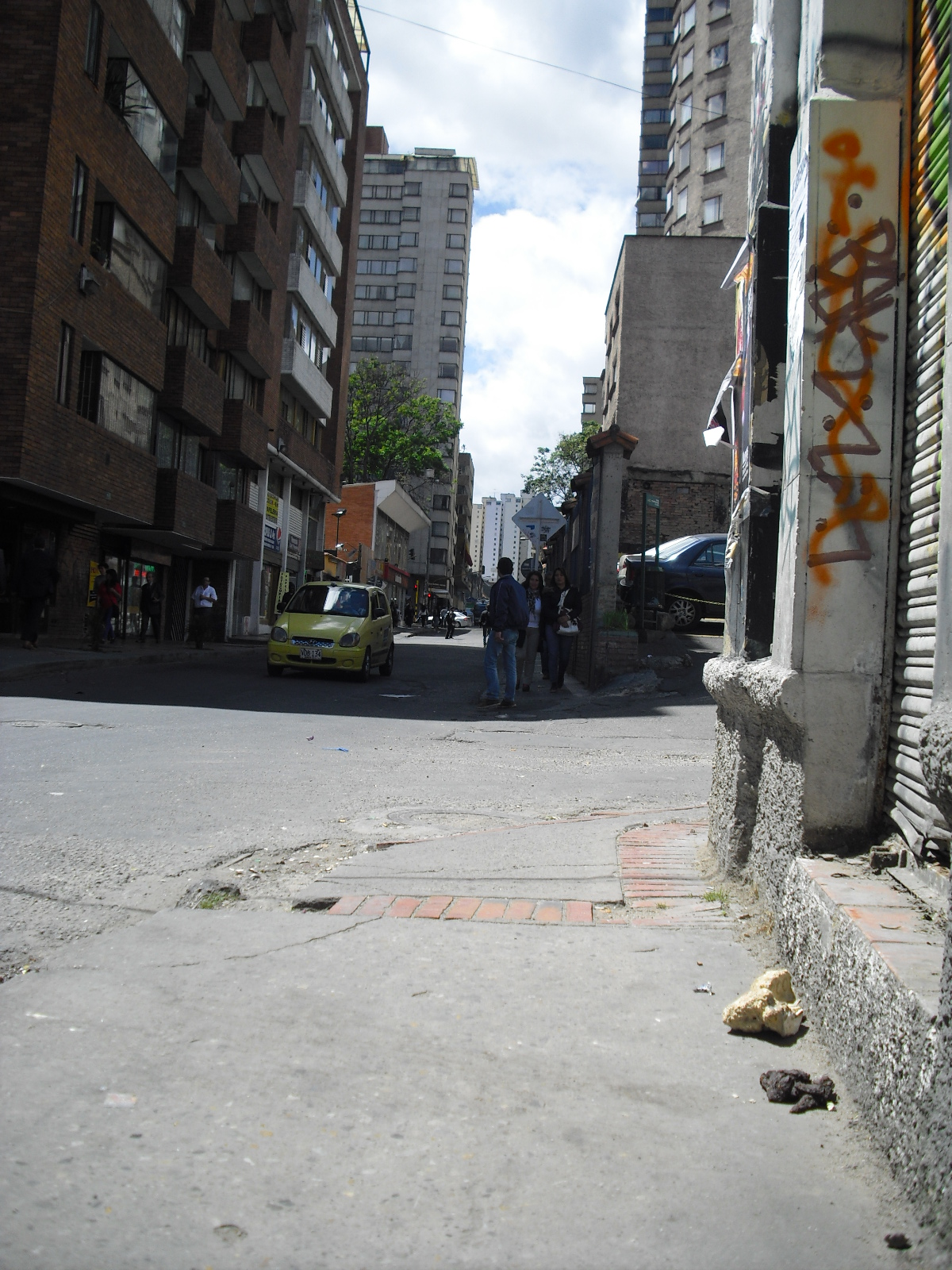 |
| Watch your step ... |
Faeces on the streets**
When we lived in working-class north Belfast, good practice on the main street outside our house was to walk with your head down so as not to step on the ubiquitous dog poo lining the concrete. The same advice goes for Bogotá; however, not only is it dog excrement you have to avoid but also human.Yes, most of the latter faeces are the product of the homeless, but perhaps the introduction of some basic public toilets (we’re not asking for a shelter just yet) for these guys and gentle persuasion not to "decorate" the streets with their waste would be a start.
As for the dogs, fine owners who are caught not cleaning up after their canine’s mess, simple as. The unaccounted for street mutts? Round them up.
Aggressive beggars
In a city where a many live well below the poverty line, beggars are a sad fact of reality. When there is a lack of any meaningful social programme to help them it’s difficult to be critical.However, the in-your-face, give-me-money-now types need to be systematically tackled – it’s a thin line to cross from aggressively asking for money to aggressively taking it. Fining these types is obviously a waste of time but setting up some sort of community scheme where they are housed and put to work might be one solution.
Transmilenio delinquents
It was on New York’s subway where Broken Windows first hit, tackling fare-beaters for one. When these offenders were apprehended, it was often found that many of them were carrying weapons or had previous convictions.There are plenty of abusers of Bogotá’s main public transport system, Transmilenio, who no doubt would fall into the same category. Deal with them. Of course, to help in this you need a streamlined system where these crimes are punished quickly and effectively – in a country such as Colombia that could be the downfall.
Rubbish
This just adds to the overall environment of carelessness, and there’s plenty of it to be found blowing around the capital’s centre.Inadequate public bins, poor storage facilities for waste yet to be collected, a lack of litter awareness among the populace, and homeless people who rip open rubbish bags looking for hidden "delights" are all parts of the problem.
Mayor Gustavo Petro’s coveted Basura Cero (‘Zero Rubbish') programme (see http://bit.ly/WFOPsW for background) has a long way to go.
Footpaths and roads in perpetual states of incompleteness and/or disrepair, new buildings not finished or older ones lying decrepit, again like the rubbish and the broken windows themselves, these send out negative signals.
Infrastructure issues, neglected buildings
 |
| "Holy" ground. |
It’s not just faeces that you have to avoid on Bogotá’s streets but also the risk of falling down a manhole – it’s normal for the covers of these to go missing and then rarely replaced. This goes for the highways and the pavements. At best some thoughtful person might place a stick protruding out of the hole to act as a warning. It’s a start anyway.
Graffiti
Another "crime" that came in for heavy treatment on New York’s subway; for many, of course, it’s just an expression of art. From that point of view, Bogotá has plenty of interesting, impressive murals that are now tourist attractions.So when graffiti brightens up an area and has a story to tell, then it's fine. But vandalising protected public buildings or transport with paint is not art – this is where heads should roll.
It must be pointed out that we’re not in favour of a zealous police state. For us, Broken Windows should be about implementing an attitude change.
It must be pointed out that we’re not in favour of a zealous police state. For us, Broken Windows should be about implementing an attitude change.
Therefore, to set an example you may have to be strict and unwavering at first, but over time people should come to know what’s acceptable and what’s not. Some, though, take longer than others to learn.
_______________
*See http://bit.ly/12r4YV2 for a more detailed explanation of broken windows.
**A good Dutch friend sent us this photo – the infamous shit-hand of Bogotá. Nice.
_______________
*See http://bit.ly/12r4YV2 for a more detailed explanation of broken windows.
**A good Dutch friend sent us this photo – the infamous shit-hand of Bogotá. Nice.
 |
| Toilet paper? What's that? |