Showing posts with label Cartagena. Show all posts

Tuesday, 15 August 2023

Cartagena: A costly Colombian Caribbean city but more relaxed than I'd remembered

@wwaycorrigan

[For an audio/vlog version of this blog story, click here.]

If you're looking for the definitive visitor's guide to Cartagena, this isn't it.

Cartagena: A costly Colombian Caribbean city but more relaxed than I'd remembered
Cartagena's tourist-heavy nature is a turn-off for some. It has its charms, though.
As one of Colombia's most popular tourist spots, much has been written about it. And because this popularity with Colombians and foreigners alike has seen it become one of the most expensive places in the country to visit, I hadn't been in a rush to go back. The last time I'd been there was in 2011, with my first visit in 2009.

Safe shores

That 2009 trip, accompanied by a Colombian friend who did most of the planning, saw me take in many of the tourist attractions, including a recommended day trip to one of the picturesque Islas del Rosario, Rosario Islands.

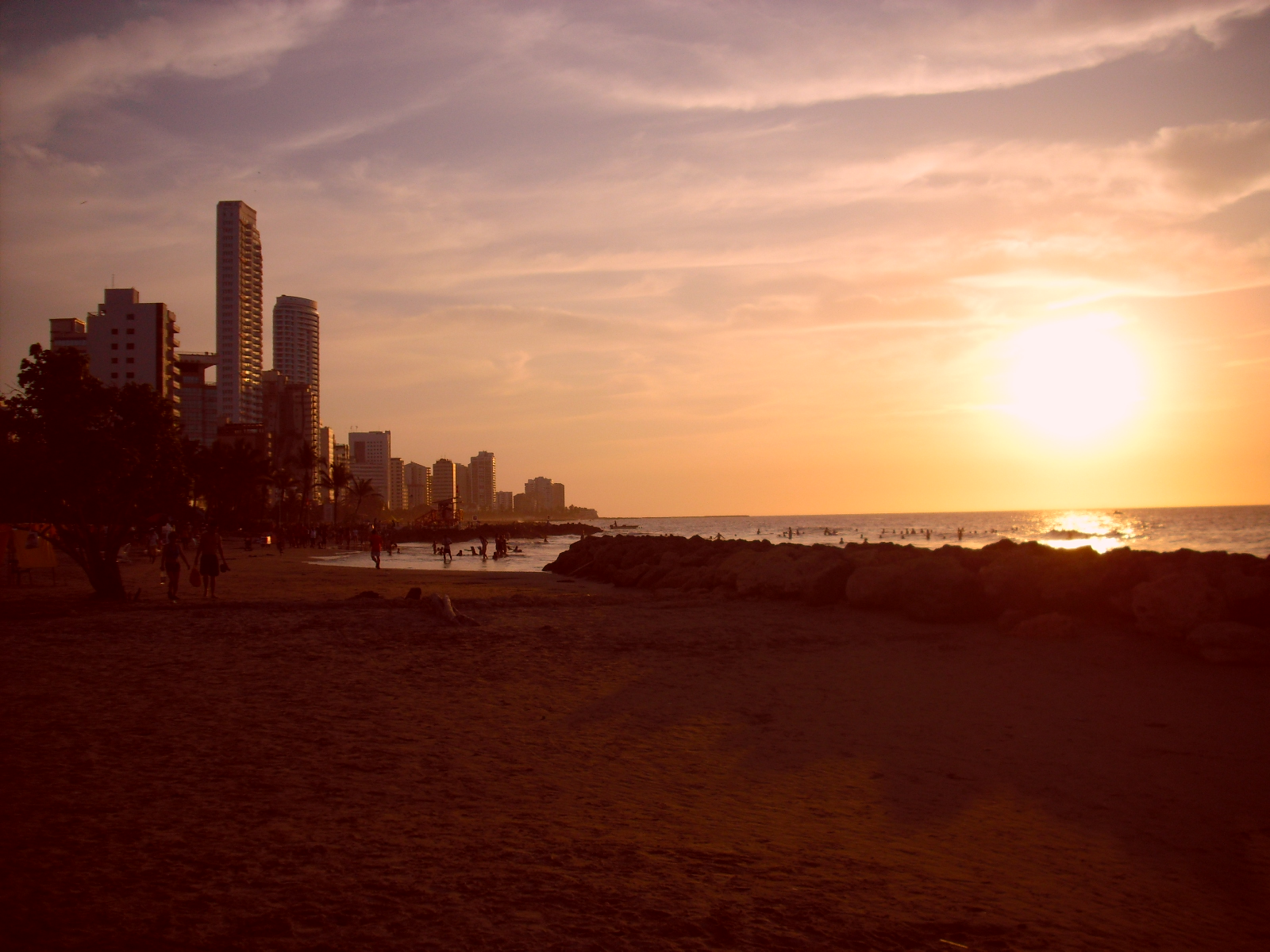
The beaches there are — or at least were — more pleasing to the eye than those around the city. This isn't to say the beaches in Cartagena, specifically the Bocagrande sector, are unpleasant. They're fine, no more, no less.

What had bugged me the most in Cartagena was the intensity of the beach vendors — they were far worse than the mid-30 degrees Celsius heat.

Alongside the selling of refreshments and tattoos of questionable quality, one would be offered a massage a minute. These masseuses were as annoying as mosquitoes buzzing around your ear in the middle of the night.

On this latest visit, such vendor force was, thankfully, nowhere near as powerful. Maybe I just got lucky with my timing. Or maybe I was unlucky in 2009 and 2011.

The fact that there was much more of a relaxed vibe for the three consecutive mornings/early afternoons I spent on Bocagrande's western beach, does suggest it has become a little more tranquil. It could be said the ambience is like the surrounding waters, rather calm with only the occasional wild-ish wave.

Indeed, much to my pleasant surprise, I discovered that it was fine to leave my belongings on the beach while I went for a refreshing dip in the sea.

Initially, not only had I asked neighbouring loungers to keep an eye on my stuff but I also gathered it up and left it beside them. No dar papaya and all that.

Yet, I soon noticed that hardly anyone else was being as cautious. Considering how important this sun, sea and sand tourism is to Cartagena, especially in the upmarket Bocagrande, it seems opportunistic thievery has been largely eradicated.

However, in Bocagrande one gets robbed in another, officially sanctioned way: the high prices. For example, a beer on the beach costs around 10,000 COP for a 330-ml bottle of the working-man's Aguila brew. That's four times more than the standard price.
'I found it rather curious that El Guerrero's TV gave us live pictures of the toilet. What would one be up to on the loo besides relieving oneself?'
As mentioned, though, Bocagrande is upmarket in what is a Caribbean tourist hotspot. So there's nothing too shocking about the higher prices.

Those on a tighter budget will most likely opt to stay in Cartagena's historic centre or in the chilled-out Manga neighbourhood.

(Regular readers might be surprised to discover that I stayed in Bocagrande, in the four-star Hotel Cartagena Plaza. Don't worry, it's not that I lost my mind and went on a mad spending spree. At a press conference in Bogotá earlier this year, I won a three-night stay there. As fancy hotels go, it was fine. I certainly made the most of the decent spread of food at the buffet breakfasts.)

When my three nights were up at the Cartagena Plaza, it was to Manga I went and the quaint San Jacinto hostel. A dorm bed at 40,000 COP per night, light breakfast included, is about the best value one will get in the city.

The Guerrero of Getsemani

My evening socialising throughout my stay was reserved for the historic centre, inside the old walled city, around Plaza de la Trinidad in the Getsemani barrio to be precise. Well, there and a couple of brief visits to the more unkempt Mercado de Bazurto, the working class's shopping district.

Outside of the centre's liveliness come sunset, there I found a tienda, El Guerrero, that sold litres of my preferred Poker beer for 6,000 COP. That's an acceptable price anywhere in Colombia — except in my local watering holes in my Bogotá barrio — never mind Cartagena. (Do note, even though my bed and breakfast was free for my first three nights, I was still in Cartagena on a tight budget.)

While El Guerrero is popular with revellers — not surprising considering the booze prices — most buy their tipple to drink outside. As is my wont, I positioned myself in a corner at the counter, allowing me to chat with the employees/owners.

I did find it rather curious that the TV in the tienda, via the security camera, gave us live pictures of the toilet. What would one be up to on the loo besides relieving oneself? It did, nonetheless, give another, um, solid reason not to be glued to the box.

WC watching aside, El Guerrero was certainly an interesting place to observe the comings and goings of the diverse folk traipsing around Cartagena's colonial quarter.

Just outside the centre is Castillo de San Felipe de Barajas, a castle constructed by African slaves under Spanish supervision in the 16th century.
'It was nice to view and enter the sea for the first time since 2018.'
I'm fairly sure that I visited this tourist site for free in 2009, although perhaps my memory is failing me on that one. These days, there's what I consider a fairly hefty entrance fee, 30,000 COP. I gave it a miss this time; the long queues waiting to get in were off-putting, too.

Now, that I enjoyed my stay in the city may be because I went there with low enough expectations. That and the fact that I generally look forward to any escape from Bogotá these days.

As this story has explained, though, there's more to it than that. And in a more basic sense, it was simply nice to view and enter the sea for the first time since 2018.

Sticky stopover

The biggest drawback is getting there from Bogotá, as I detailed in Colombia's plebeian transport: A riveting ride.

As mentioned in that piece, I broke up the marathon return journey with a night-and-day stay in Aguachica in the Cesar department, about halfway between Cartagena and Bogotá.

Well inland at a low altitude, temperatures reach the mid-30s in degrees Celsius.

With hardly a breeze about and no nearby refreshing waters to cool off in, it's one of those places where you could take a shower every hour to stay feeling fresh. I don't particularly mind that, it's just that the town seems to have little going for it. Again, this generally isn't a drawback for me, I can create my own fun.

It must get plenty of visitors all the same, for whatever reason. There are hotels on pretty much every street. It also has an abundance of barbershops and hairdressers.

What annoyed me the most during my brief stay there were the motorbike taxis. They won't leave a wanderer in peace.

I probably need a second, longer visit to give a more rounded review of the place. Like my Cartagena experiences, my opinion of Aguachica might get better with subsequent stays. Return visits are unlikely, all the same.

However, if Hotel Cartagena Plaza wants to gift me more free nights on the Caribbean shores, I could include another stay in Aguachica en route. It certainly does its job as a fairly cheap stopover town.
__________________________________________________________
Listen to The Corrigan Cast podcast here.

Facebook: Wrong Way Corrigan — The Blog & IQuiz "The Bogotá Pub Quiz".

Tuesday, 8 August 2023

Colombia's plebeian transport: A riveting ride

@wwaycorrigan

[For an audio/vlog version of this blog story, click here.]

'Why are you going by bus when flights are cheap?'

That's how some Bogotá acquaintances reacted when they heard I was taking the land route for my grand return after a 12-year absence to the Caribbean coast city of Cartagena, over 1,000 kilometres away from the capital

Fare deal

Considering the bus journey takes about 26 hours while the flight time is an hour or so, flying certainly has its advantages. Price, though, is not one of them.

Colombia's plebeian transport: A riveting ride
There's rarely a dull moment when bussing it in Colombia.
Domestic airfares were similar to, even occasionally cheaper than, bus fares during Colombia's low-cost carrier heydey, from 2016 to 2020, roughly speaking. However, with the rather curious departure of Viva Air, closely followed by Ultra Air, bus travel is once again a lot cheaper; generally less than half the price of flight tickets.*

For sure, if it is a time-is-money case at the origin or at the destination — or at both — then the financial savings made by taking the bus would most likely be wiped out in a matter of hours.

In a year of scant paid work, this hasn't been a concern for me. Indeed, taking a little bit more time to get to and from the destination, and thus being out of Bogotá for longer, is a minor bonus.

Land travel also allows for more flexibility and last-minute decisions. Simply turn up at the bus terminal at the moment you want to travel, pay in cash and go. It's often more hectic during religious/school/state holidays, times I tend to avoid in any case.

Another advantage is that you can view the scenery and get a flavour of the towns along the way, fleetingly as this is. (Although, some food/toilet breaks are taken in towns rather than at isolated and expensive service stations and restaurants well outside urban centres. Stopping in a town means one has a bit of choice when it comes to snacking.)
'I had a mildly drunk middle-aged man for company for, mercifully, a short period. What he lacked in stature he made up for in fidgetiness.'
As has often happened with me, one bus journey to a certain destination, um, paves the way for the next trip, in a that-place-I've-just-passed-through-looks-interesting sense.

On this escape to Cartagena, the town of Aguachica in the Cesar department made it onto my to-visit list. I duly did just that, spending a night and day there to break up the return journey to Bogotá. I plan to write more about hot and sticky Aguachica in a later post.

Road reading

Coming back to the benefits of long-haul land travel, it appears that even a mammoth bus trip of 26 hours still leaves one with a smaller carbon footprint than a flight of one hour.

Of course, many of those shouting the loudest about the impending doom due to climate change are too busy saving us all to have time to focus on their own environmentally harmful practices. They are, after all, statistically safer in the air, too. We can't risk further endangering humanity by putting the lives of these heroes at greater risk, can we?

Notwithstanding all the above, as somebody who can be quite restless, I don't exactly look forward with great joy to spending hours locked up in a metal box.

This is offset by the fact that I am travelling, I am going somewhere — when not stuck in traffic, that is — while the dead time gives ample opportunity for reading and pondering.

What one can't really plan for is the aforementioned traffic.

In Colombia, alongside standard causes of congestion such as the sheer volume of vehicles and roadworks, there's also the potential road blockages. These can be natural, i.e. landslides, or human-made in the form of disgruntled workers, social groups or rebel fighters. The latter is not as common as it once was but can still cause disturbances in certain regions.

Noisy neighbours

Another uncontrollable is fellow passengers. Previously, I had a mother with a couple of young kids seated next to me, kids who at one moment would roam over me, the next bawl out, then they'd spew out; sometimes it was all three at once. Rent-a-dad, eh?

On this latest trip, I had a mildly drunk middle-aged man for company for, mercifully, a short period. What he lacked in stature he made up for in fidgetiness. I did contemplate trying to put him to sleep with a knock-out blow. His stop came just in time.

The near neighbours aren't always a pain, though.

Again, on this most recent journey, it was because of Barranquilla-bound student Pleasant Paola and her talking up of Aguachica, her hometown where she boarded the bus, that led me to visit the place on my return from Cartagena. Her gifting me of a piece of torta de tres quesos, 'three cheeses cake', from the pastry shop La Tortería where she works during college holidays left an impression.

Now, while it's a lottery as to who sits next to you when travelling solo, it's not a complete free for all. On most long-haul/overnight trips, each passenger is assigned a seat. Yet, there's nearly always some dispute and subsequent musical chairs mid-journey.

The seemingly simple solution of insisting people take the seat number stipulated on their ticket doesn't always work. Double bookings appear to be a frequent occurrence. Nonetheless, a lot of the time it's purely because passengers, knowingly or ignorantly, take a different seat.
'Our competitor bus, firmly focused on the duel, unperturbed by pedestrians, managed to squeeze ahead and stop in front of us, blocking our way.'
On-board entertainment had been another contentious issue — anyone for another ire-raising Fast & Furious movie? — but it seems many bus operators are now leaving that, literally, in the hands of the passengers and their smartphones.

Newer buses with some companies now also come with seat-back screens with various entertainment options so the individual can choose what to watch, listen to or play. Or silently opt-out. I've experienced these screens with Berlinas and Expreso Brasilia.

Knight driving

Now, even if you get the perfect fellow passengers and non-invasive entertainment, the bus drivers will invariably take you on an emotional — and physical — rollercoaster.

In keeping with the Colombian motorist standard, the bus drivers' overall aim is to push the boundaries of land travel. Passengers, if thought of at all, are merely pawns.

I was privileged to have front-row seats to the duel between my bus, from the Concorde company, and bitter rival Copetran; a modern take on the medieval game of jousting.

It took place on the rather narrow road between Barranquilla and Cartagena. One of the notable feats was a daring act of undertaking by our Concorde driver.

In fact, I thought it was the clincher. Concorde, true to its name, sped away. You can't, though, keep a good Copetran down.

In a busy town en route, our competitor bus, firmly focused on the duel, unperturbed by pedestrians, managed to squeeze ahead and stop in front of us, blocking our way.

In a highly controversial move, the rival driver alighted his charge and approached the window of our Concorde conductor. Not only did he fire angry words at our driver but he also dealt him a slap in the jaw, mild as it was. I believe that left it in a tie. Dates for the rematch have yet to be announced.

The things one misses out on when flying, eh?

Train of thought

Outside of happenings on the bus and between rival buses, Colombia's road infrastructure is another challenge.

For sure, the Andes present their own unique problems, such as the aforementioned landslides.

Yet, on the journey from Bogotá to the Caribbean, after entering the Cesar department at the town of San Alberto, the mountains give way to low-lying plains. Here you get the first significant stretch of dual carriageway since Bogotá-Tunja.

The frustrating part is that this dual carriageway is intermittent. What makes this frustration worse is that all along the way are unfinished works.

They are all part of the Ruta del Sol, Route to the Sun project, mired in controversy and corruption as it has been for years. So all along one is given reminders of how much shorter the journey could be if only the works were finished.

If it takes me another 12 years to return to Cartagena, the route might be fully ready by then.

Or maybe Colombia will come to embrace the joys of modern, efficient train transport. Let's resurrect the railways!

*A note on prices: I paid 130,000 COP for a one-way direct trip from Bogotá's northern bus terminal (Calle 192) to Cartagena with Concorde. The return trip was more expensive as I did it in two legs. It was 80,000 COP from Cartagena to Aguachica with Copetran and another 80,000 COP with Brasilia from Aguachica to Bogotá.
__________________________________________________________
Listen to The Corrigan Cast podcast here.

Facebook: Wrong Way Corrigan — The Blog & IQuiz "The Bogotá Pub Quiz".

Friday, 1 July 2022

Colombia's foreign "saviours"

@wwaycorrigan

[Listen to an audio version of this blog entry here.]

'Being alone in Colombia is such a waste.'

That was the reaction of one Facebook user to my recent post, 'Set on singlehood'. What particularly caught my attention was the inclusion of 'Colombia'.

Colombia's foreign "saviours": Some foreigners who come to Colombia seem to think their "mission" is to save the impoverished locals.
'Your "saviour" shall come from beyond the seas.'

'Quite a catch'

If one very much believes in companionships/relationships then, one would think, the location should have little to do with it — unless we're talking about a hermit monastery or the like, where the whole idea is to live in solitude.

Exchanging a few messages with the commenter, his general sentiment became clearer. Basically, people from high-income countries living in Colombia aren't utilising all their advantages if they remain single.

It is true that some, nay many, Colombians have a preconception that those originally from the wealthier Western nations live a more comfortable life and have greater access to a host of resources compared to the average local here. (However, as I touched on in 'Making ends meet in Colombia', this is all relative.)
'It plays into this belief that exists in some quarters that Colombia is a sex-tourism destination.'
Thus, for a Colombian looking to improve his/her lot, on the face of it, hooking up with such a foreigner could pay dividends — not just in monetary terms but in overall quality of life. So, it could be said, the foreigner often gets first refusal in the dating game.

For our Facebook commenter, with this advantage and as long as the majority of the other relationship essentials are in place — no biggy that! — it should be relatively easy for the high-income-nation native to find a partner in these parts.

Mentioning the other relationship essentials and to be fair to our Facebook commenter, he did insist that with his significant other, a Colombiana, it's not all about money. She pays her way. We'll take him at his word.

The wages of love

Yet, a male foreigner's notion that 'being alone in Colombia is such a waste' appears to bring with it an innuendo that the country's women are simply waiting for a "rich" saviour from overseas to arrive and lead them to salvation.

It has little or nothing to do with love and romance, more to do with prudence. (Yes, there's an element of that at play in all relationships yet in this case the need for genuine affection is hardly a factor at all.)

It also plays into this belief that exists in some quarters — not without reason, of course — that Colombia is a sex-tourism destination.

Most of us have seen those couples, usually an older man with a much younger woman, where love doesn't exactly appear to be the primary fuel keeping the passions burning.

Such a sight might be more pronounced in the likes of Thailand but it's certainly not alien to Colombia either (from memory, it did seem more obvious in balmy tourist spots such as Cartagena and Medellín compared to a somewhat frigid Bogotá).

Should I tie myself up here romantically in the near future, I can rest assured that it would not be because of money. With a personality like mine, who needs wads of cash, eh?

I did not, obviously enough, relocate to Colombia with the sole intention of finding a partner. Indeed, for better or for worse — more so the latter in many instances — I came here without any real plan at all.

So being romantically alone — for the record, I do have solid local friendships — is not something I see as a major setback. Right now, my greater concern is in finding a route to a more comfortable living financially speaking rather than hooking up.

Of course, one could lead to the other. I'm less convinced, though, that my current modus operandi in Colombia represents a good chance of either happening, whether that's a waste or not.
_______________________________________________________________
Listen to Wrong Way's Colombia Cast podcast here.

Facebook: Wrong Way Corrigan — The Blog & IQuiz "The Bogotá Pub Quiz".

Wednesday, 22 March 2017

An Arauca awakening

As we've mentioned before here, Colombia's popularity as a tourist destination has never been higher. The country is very much in fashion, not just among backpacking types but for a range of tourists. 

In many ways, it could be argued, we're just at the start of this upward swing. The potential for sustained growth in this sector appears substantial, like the size of the country itself (for the record, of Colombia's 32 departments, three are bigger in area than the island of Ireland).

An Arauca awakening: The impressive bamboo 'gate' in Tame, Arauca, Colombia, officially marking your entry to Arauca coming from Casanare.
'You are now entering Tame, Arauca.' (Photo from Facebook.)
We already have fairly well-established areas such as Cartagena, Santa Marta and their surrounds on the Caribbean coast, the Eje Cafetero (coffee region), Medellín and the capital city Bogotá to name the most obvious.

There are other areas, however, that are practically virgin territory when it comes to tourism, and more or less anything else for that matter. Vast tracts of the previously written about Caquetá and Putumayo, for example, fall into that category.

Another department that has plenty to boast about but is rarely even considered as a place to visit is Arauca on the eastern extremes, bordering Venezuela. It's part of Colombia's vast Llanos or plains; in over-simplified terms, cowboy country.

As has been the case with most of the country's other more remote locations, one big reason why tourists, both those from inside and outside, were reluctant to visit was down to the internal conflict. Now, however, with the Farc and paramilitary problems fading post the peace agreement, the associated security concerns are also abating.

What's more, in this air of optimism circling around Colombia, coming from both near and far, everybody's looking to get some warmth (strike it rich, we could say) from this new positive light. And why not?

An Arauca awakening: Monuments to an important historical role. Tame, Arauca, Colombia.
Tame's historical role in Colombia is evident. (Photo from Facebook.)
To this end, those working in Arauca's fledgling tourism sector certainly don't lack energy and enthusiasm. The problem, though, is getting their message out to a wider audience in a country full of beauty spots, varied as many of them are. Other Colombians are unaware of the region's attractions, never mind outsiders.

As Carlos Alberto Duque, the creator of the Colombia Realismo Mágico slogan and who realises the tourism potential Arauca has, puts it: "Each place has sights to show off, a story to tell, but not many are good at getting the message out there."

Arauca's location doesn't help either. By bus, it's a good 12-hour trip from Bogotá just to reach its borders and, on the way, the argument could be made that you pass places more or less equal in terms of landscape and culture. Coupled with this is the fact that, for many backpacking types, it's unnecessarily off the beaten track, basically a 'road to nowhere', considering Venezuela is off-limits for most right now.

That aside, while our short visit to Tame was mostly taken up with the town's annual festival, the all-round tourism pull the place has is evident.

For starters, what's a negative is also a positive. Not many tourists come here, so as tends to happen in such places, the locals are even friendlier than the Colombian norm. There also doesn't appear to be any 'gringo prices' in operation.
Tame, Arauca, Colombia: Another type of impressive sight ...
Some of Tame's, um, impressive sights ...
For bird watchers, the region is fluttering with delights. Indeed, its wildlife in general is a big selling point (and a reason why we'll be keen to return to go on the look for caiman, giant turtles and monkeys to name just a few). 

Throw in the fact that over half the area of the Sierra Nevada del Cocuy National Park, home to Colombia's third highest peak, is situated in Arauca and nature lovers have plenty of reasons to visit.

From a cultural point of view, outside of the cowboy and meat-eating lifestyle, there is an indigenous influence in certain aspects, something that the locals seem eager to enhance and promote. 

Tame itself is known as the 'cradle of freedom' (cuna de libertad), the place where Latin America's great liberators Simón Bolívar and General Francisco de Paula Santander met for the first time, just weeks before the decisive Battle of Boyacá in 1819. This is honoured with an impressive monument of the two men seated in conversation.

Another not-very-well-known attraction is Arauca's cacao. The department is actually home to award-winning chocolate on an international level. Chocolate could become for the region what coffee is for the Eje Cafetero, which draws tourists all year round.

Specifically, in relation to the town of Tame, its climate is relatively fresh for a low-lying tropical region. So even with temperatures over 30 degrees Celsius, it doesn't feel overbearing thanks to the refreshing breeze blowing about.

With plans afoot to develop a 'Ruta de los Llanos', basically a multi-departmental tourism-focused way through the plains, Arauca's delights could be set to become more accessible and widely known.

An 'Arauca awakening' of sorts. You read it here first!
_______________________________________

Wednesday, 24 June 2015

Boogaloo: helping to bring the world's adventure-minded to Colombia

When you're an expat who has been based in Colombia for a while, you generally get used to the place; well, as much as a westerner can in these parts. In fact, you can even start to take it for granted, especially in terms of its natural beauty.

It is only when you return to your old home 'comforts' that you are reminded about what are still the standard opinions of Colombia from those in the 'developed' world. Those are, simply put, that the place is wild and dangerous, drug-ridden and best to be avoided. As Colombians are well aware, it takes a long time to change a negative image.

Laura Vega, Boogaloo Travel founder.
Boogaloo Travel founder, the ultra-active Laura Vega.
But things are changing, if ever so slowly. One way that can be measured is in the increase of foreign tourists coming here and with it, an increase in travel companies focusing on the country.

One of the newest on the scene is Boogaloo Travel; the baby of a petite-sized but larger than life, travel/adventure junky Colombiana, Laura Vega. Wrong Way caught up with her to find out what's unique about what Boogaloo has to offer the adventure-seeking traveller.

You describe Boogaloo as a 'trip company' rather than a 'tour company'. Why are you so keen to `make that distinction?

"Because our aim is to create a new way of travel where we meet like-minded people who like and want to be active, who know that having a healthy, adventurous life will have a positive impact on not only themselves but also the planet we live on. We don’t organise tours, because it’s not about a group of people following someone and getting told what to do; we offer trips for enthusiastic people full of energy and ideas and who wish to share them with others.”

So Boogaloo Travel is only for people who like adventure and lots of activities when they travel ..?

"Yes, but also for curious people who feel motivated to understand the world we live in by travelling to other cultures, actively engaging with them and becoming part of their development. Yet, we offer several different trips with varying styles and costs"

So those who take on the Boogaloo challenge, what can they expect? What gems of Colombia will they get to see?
Valle Cocora, near Salento, Colombia.
Tall: Palm trees in Valle Cocora, near Salento. (Photo Pieter Hupkes.)

"The main activities we offer are cycling (which you can enjoy in four destinations), hiking, rafting, paragliding, quad-biking, windsurfing, dancing lessons and kayaking.

From my perspective, the most outstanding places we visit (although every place has something special!) are:
Salento, where we hike to the tallest palm trees in the world; San Agustín, where we explore one of the most important archaeological sites in Colombia, with stunning green mountains providing a wonderful backdrop; Tatacoa, where the desert offers a perfect setting for landscape pictures by day, while you can expect to be treated to a celestial show of meteor showers by night; Villa de Leyva, a simply beautiful Colombian colonial town; Guatapé, where after climbing 649 steps, we have a gorgeous view of a man-made lake that covers the entire surrounding area; Tayrona, home to virgin Caribbean beaches; La Guajira, the northernmost part of South America where the desert runs majestically into the sea; and Cartagena, the romantic city famous for its beautiful colonial architecture full of colourful, flower-filled balconies and unforgettable sunsets.

I could go on, but you get the idea — this is a beautiful country after all! For a full itinerary, just check out our web site!"*

Mentioning your (impressive) web site, which is in English, is it correct to say your focus is on attracting English-speaking tourists?

"Anyone from anywhere in the world is welcome on our trips, but I’d like to point out that the trip leader will give all the information in English."

By the way, the name 'Boogaloo', where does that come from?

"Boogaloo is the name of a Latin music style that started during the 1960s. It's a mix of Afro-Cuban and soul rhythms. I have always loved to dance and there are several Boogaloo songs that I have danced to since I was a child! Of course in our trips we will teach people some Boogaloo moves."

Well that's Boogaloo, but tell us a little bit about yourself. Have you always been the travelling/adventurous type?

"Since my first ever travel as a kid I felt very passionate about knowing “what is on the other side”. Getting to know and learning about other cultures is something that has always made me curious. I wanted to travel the world making documentaries and in so doing get a better understanding of it. So I decided to move to Argentina to study film production.
Cartagena, Colombia.
Quaint: Cartagena's streets.

When I finished my studies I backpacked from Argentina to Colombia on my own. While I was in Cusco, Peru, I had the misfortune of having my wallet stolen, on Christmas Day of all days. But this unfortunate situation led to a big change in my life. As I had no money I had to look for a job.

Luckily, I found one, at The Point Hostel. There, I met travellers from all over the world, heard their stories, got to know a bit of their own cultures, and in return I was able to help them learn more about South America. This sounded very much like what I wanted to keep on doing; you could say that this experience made me find another part of me.

Ever since, I've been working in the tourism industry, advising and showing people how inspiring travel can be and leading groups through Brazil, Uruguay, Paraguay, Chile, Argentina, Peru, Bolivia, Ecuador and Colombia.

Sport has also been very important to me. At high school I was a cheerleader; from a very young age I've been doing swimming, rock climbing, mountain biking, hiking and many other sports. All these are activities that I look forward to doing wherever I go."

So it definitely seems that Boogaloo is very much Laura Vega and Laura Vega is Boogaloo. You might say you're fulfilling your destiny ...

"Yes! I put my heart into this project and I will do my best to make this an unforgettable and unique experience for everyone who joins. I also have the fortune to work with a great enthusiastic team full of creativity and ideas to make Boogaloo Travel a project that will transcend time!"

*If you're interested in finding out more about Boogaloo, the trips offered and the activities involved, visit the web site at www.boogalootravel.com.

Note: This blog wishes to make no secret of the fact that it has helped Boogaloo in terms of its web site content (as listed on the site itself), and will continue to assist the company if and when required — but Wrong Way is not on the Boogaloo payroll! It is, nonetheless, a project that I endorse and wish it the best of success.

Facebook: Wrong Way Corrigan - The Blog & IQuiz "The Bogotá Pub Quiz".

Sunday, 28 October 2012

'¿Por qué Colombia?'

One of the most popular questions we get thrown at us here by some of the locals when they realise we’ve been in the country for a bit is ¿Por qué Colombia?, ‘Why Colombia?’ 

Many are quick to suggest an answer themselves with ‘a girlfriend’. But no, that’s not the reason for us. 

In this land of ‘beautiful and plenty’ on the ladies' front – granted that many of them fall firmly into the crazy category even more so than the average woman (see ‘Colombia’s Locas’ http://bit.ly/XzHltA, amongst others) – we’ve yet to be overly enthused to commit to just one. A lot of that is really down to our honesty – and frugality – to be honest. 

For if we were to play it the Colombian men’s way we’d commit to a number of women at the same time – indeed, most of the girls here expect as much (you could, in a sense, equate this kind of behaviour as taking the "best bits" out of the Muslim and Christian religions). 

However, we’re just not in the commitment mood at this moment in time, full stop.
'¿Por qué Colombia?': A dull, overcast day in Bogotá
Bogotá has its charms. The weather, though, isn't usually one of them!

So then, why indeed Colombia? Well, sticking with the reasons why we didn’t come here, making sack-loads of money is one of them. There are plenty of other countries across the globe we could hit for – we think, anyway – where we could make and save much more money doing more or less the same thing. 

In terms of Bogotá specifically, our home for the best part of a year, we’re not here for the glorious weather and/or laid-back coastal lifestyle. The fact that we’re in a gas-guzzling construction-site of a city, with a population of about eight million, perched well inland at an altitude of over 2,600 metres accounts for that.

It would certainly be untrue to say, though, that we’re here against our will or wholly by accident. 

What is a fact, though, is what we’ve termed our second coming to South America, in June 2011, was aimed more at Chile than here. 

That was because we wanted to give ourselves a more concrete reason to return to this continent than just willy-nilly travelling and we found the grounds for that in signing up as a volunteer for an English media group in Santiago. 

Yet, tellingly enough, perhaps, we firstly spent two weeks in Bogotá and its surrounds before hitting overland for Chile. Now, that wasn’t just because it was far cheaper to fly here compared to Santiago – the chance to catch up with some friends from our first visit to Colombia (February 2009) was a much greater reason.

Cheap flights back to Ireland were, though, the biggest factor in our brief return to Colombia in October last year – a visit that was a more sobering experience of the country than previous ones, a few days in the company of a good friend in Cartagena excepted. 

That ‘sobering experience’ was our first taste of how crazy Colombian women can turn for no apparent reason – what we thought was a good friend aggressively blanking us from her life.
A quite stunning view from 'The Rock' Guatapé, a couple of hours' drive from Colombia's second city, Medellín
Landscape-wise, Colombia is up there with the best of them.
However, after a necessary four-week stop in the home country, back we came, like suckers for punishment in a see-what-happens approach. 

An initial spell of wandering around to less-visited spots in this physically stunning country with its amazing and diverse wildlife helped us get over that aforementioned ‘defriending’ by someone who had been a strong initial reason in tempting us back in the first place (she is part of our life once more, however – we can be quite forgiving and lenient at times).

It was always likely that we’d return to Bogotá – Colombia’s ‘city of opportunity’, the best place for a local or expat to find work. It wasn’t that we were really stuck and needed money but we figured we’d give living here a go for a bit. 

So after a slow, admittedly reluctant start, we did manage to find ourselves some steady, semi-profitable English teaching work (for more on this see ‘The Money Tongue’ http://bit.ly/V8ELH4). Not forgetting the odd bit of relatively enjoyable TV extras work – something different anyway (see ‘Giving just a little bit ‘Extra’’ http://bit.ly/NrbPc3) – a change being as good as a break.

After a while, though, like in any place, city living can become quite stale – even here in Bogotá. A lot of this is probably more to do with our own itchy-feet nature, especially when we have very few serious ties to a place and are relatively free. 

The return of a very good local friend to this city after a 12-month absence coupled with our already existing good friends here is making it harder for us to take flight once more. 

The Colombian authorities have also played their part – they make it pretty easy to stay on a mid- to long-term basis. If we had to put more effort and cost into staying here we might reconsider.
Sunset in the city of Cartagena, on Colombia's Caribbean coast
Is the sun setting on our time in Colombia?
There is, of course, much more to Colombia than Bogotá and while we have seen a fair bit of the country there are still many other places worth discovering. With the seasonal slow-down in teaching work upcoming that may give us the opportunity to get moving.

After that, perhaps our subconscious reasons for staying will abate somewhat and we’ll have less of a reluctance to leave? 

One thing is for sure, at this remove anyway, the Colombian tourist board's slogan of ‘the only risk is wanting to stay’ – be that subconsciously or not – is certainly ringing true. We just don’t really know why that is.

Sunday, 22 April 2012

What a mother hooker!

There seems to be a lot of outcry in the United States over this ‘Secret Service Prostitute Scandal’, as it’s being dubbed. 

On the face of it, you can – kind of – understand why for many this story is so shocking. Undercover agents working to ensure President Barack Obama’s safety during his recent visit to Cartagena, on Colombia’s Caribbean coast, hiring ‘escort girls’ and then not having the decency to pay them the, allegedly, agreed fee. Not the kind of publicity the White House is looking for, is it?

What a mother hooker! A group of prostitutes at looking for clients in the middle of the day in Bogotá's city centre.
'Looking for something, pretty boy?' 'Eh, no thanks.'
We don’t know yet – and we probably never will – what exactly happened on the night/early morning in question. Yes, the 24-year-old mother at the centre of all this has given her account of things. That’s just one side of the story, though, of course – and a Colombian woman’s one at that. 

Most of the flak in the media and general public is aimed, rightfully so you might say, at the US agents for a number of reasons. 

These are, namely, that they procured the services of prostitutes (albeit in a country where such practices are legal), they were drunk and they showed a complete lack of professional judgement with their actions, thus embarrassing their president and their country. On that last point, don’t worry USA, we think as much as you now as we ever did in the past – perhaps even a bit more.

OK, criticism one, the guys hired hookers. Well, we’re not up on the staffing of the men in question, but if they happened to be on ‘free time’ when all this happened, are they not entitled to do what they want, especially legal activities? 

Here’s another point to consider, though. Maybe they didn’t know the girls were ‘escorts’, as they describe themselves – distinct from prostitutes that now, these girls are much classier operators. 

Colombia is famous – Cartagena and Medellín in particular (see previous posts ‘Bienvenidos a Medellin – Bangkok Light’ http://bit.ly/IhlErq & ‘The Wages of Love’ http://bit.ly/IeUXji for related stories) – for such ‘gringo hunters’. These are women who come across as normal (is there such a thing?), just out for a night out trying to ‘score’ a man or two, as happens in every place in the world. 

However, what these ladies usually won’t tell you is that they want to get directly paid for their services – by whatever means they can get it. They don’t tend to introduce themselves as prostitutes or escorts, giving you their business cards in the process. No, that wouldn’t be the smartest move for picking up now, would it? 

They’re much sneakier than that. They’ve perfected the art of being ‘genuine’ so skillfully that we’ve witnessed people who are fully sober as well as street-wise Colombian natives getting duped by them. 

Yes, you can say secret service personnel should be a bit savvier, but we have to remember that there were at least two bottles of vodka thrown into the equation.

Getting 'rubbed-up' on a beach on Colombia's Caribbean coast by a 'strong-handed' lady. A much safer pursuit than hiring 'escorts'!
A Caribbean beach rub - far less hassle & cheaper than troublesome 'escorts'.
This brings us nicely to the second major condemnation of the men in question, that they were drunk. This one we find more incriminating than the fact they were, knowingly or unknowingly, sleeping with prostitutes. Why? Well, as the Latin phrase goes, ‘in vino veritas’, ‘in wine there is truth’. 

So regardless of the fact that the guys may have been on a night off, it doesn’t seem very prudent as an undercover agent, whose job it is to look after the President of the USA in what many think is a volatile country (we don’t), to be out knocking down copious amounts of alcohol. 

James Bond might have had the odd vodka and Martini – shaken, not stirred – but we can’t recall him ever getting too inebriated, while Jason Bourne always kept his wits about him. Alas, these real-life professional agents let such standards (and their trousers) slip for a few hours – a faux pas which has already cost a number of them their careers.

In the grand scheme of things, however, do their actions really warrant sacking? It’s safe to say that there are far worse activities being carried out by US secret agents and military personnel across the globe. 

Heck, the ladies involved in this ‘scandal’ still got paid decent loot for their services – US$225 for a few hours' work is more than they would make in a normal week or month even. 

Perhaps we should direct our anger at the greed of the woman who looked for US$800. Bet she didn’t even buy a drink all night. Disgraceful.