'Ireland; a great little country, if only you could put a roof over it.'
It's difficult to go against that comedic summation of my homeland. Actually, you could add to it and suggest the construction of a few massive wind barriers as well.
You see there's a good reason it's dubbed 'The Emerald Isle'. There are plenty of, picturesque, rolling green hills that give it a sparkling look, especially when viewed from above. That's if you could actually see the land beneath the practically perpetual, thick, grey rain clouds that smother the place.
Therein lies the Irish problem; the dull, wet weather. If it was pulled a thousand miles further south, you could be talking about one of the world's greatest tourist spots. But then again, there's the risk it'd lose a bit of that greenness; the land that is anyway, whatever about the people (well, we'd get a little redder for one).
Plus, an Ireland with nicer weather might tone down that fine Irish cynicism; what a terrible shame that would be for the world.
Now, needless to say, it's not always raining here (I write from ‘home’, in case you’re wondering). The odd few visitors get lucky with the sun coming out to play. Predicting when that's going to happen, though, is anyone's guess.
As an Irish expat living in Colombia, I do, on occasions, try and talk up Ireland as a go-to destination. With a rising middle class (so it goes anyway) more Colombians are taking foreign holidays. Although you’d have to say that promoting other locations when in Colombia seems a little pointless considering the extent of its own natural beauty.
It more or less has everything in one neat package, save for violent storms. These can be good to experience every now and again, from a safe perch of course. Do note we’re talking weather-related ones, not the human emotional variety you regularly get from some Latinas.
Yet, even if my talking up of Ireland raises the interest of a visit from Colombians, as it sometimes does, the practicalities of doing so make the reality of it happening less likely.
We're talking visa issues here. The hassle of having to go through the process of applying for a separate one, separate from other European countries and the UK that is, pretty much extinguishes any enthusiasm to make Ireland part of a European holiday.
OK, with a UK visa they can visit the north-eastern part of the island, the part that is not the Republic of Ireland that is. And they could risk a run across the fluid border and more than likely get away with it. But why potentially jeopardise future travel by doing that?
Now, the powers that be in London and Dublin have changed the rules of engagement as regards a common tourist visa for the two states. However, this little arrangement is limited to the Chinese and Indians — lucky guys. That's a bit unfair, no?
Considering all European citizens who travel to Colombia for tourism don't need to get a visa in advance — up to 90 days is given on arrival, with the option of getting another 90 after that — shouldn't the same apply for Colombians who visit Europe? (As pointed out in Soft touch Colombia, it could be argued that authorities are a little too generous in some aspects.)
So come on Ireland, take the lead, give a little more genuine substance to the motto of being 'the land of a thousand welcomes' and allow the country's doors to be opened more easily by many more.
'Open it and they will come.' Weather permitting.
It's difficult to go against that comedic summation of my homeland. Actually, you could add to it and suggest the construction of a few massive wind barriers as well.
 |
| Ireland's practically ever-present cloud. It does let up every now and again, though. Really, it does. |
Therein lies the Irish problem; the dull, wet weather. If it was pulled a thousand miles further south, you could be talking about one of the world's greatest tourist spots. But then again, there's the risk it'd lose a bit of that greenness; the land that is anyway, whatever about the people (well, we'd get a little redder for one).
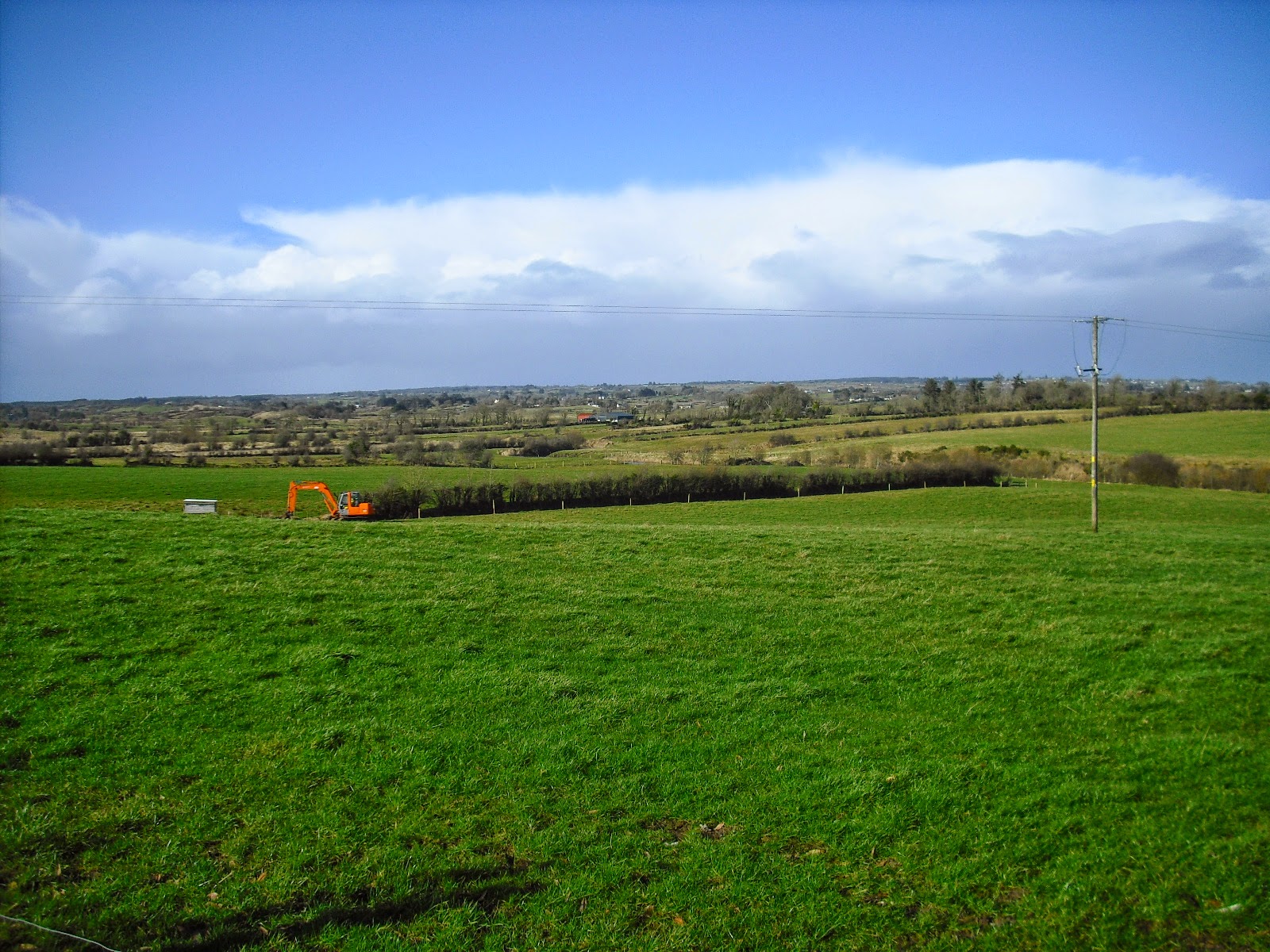 |
| Irish weather: Four seasons in one day (more or less) ... |
Now, needless to say, it's not always raining here (I write from ‘home’, in case you’re wondering). The odd few visitors get lucky with the sun coming out to play. Predicting when that's going to happen, though, is anyone's guess.
 |
| ... from green to white, and back to green again. |
It more or less has everything in one neat package, save for violent storms. These can be good to experience every now and again, from a safe perch of course. Do note we’re talking weather-related ones, not the human emotional variety you regularly get from some Latinas.
Yet, even if my talking up of Ireland raises the interest of a visit from Colombians, as it sometimes does, the practicalities of doing so make the reality of it happening less likely.
We're talking visa issues here. The hassle of having to go through the process of applying for a separate one, separate from other European countries and the UK that is, pretty much extinguishes any enthusiasm to make Ireland part of a European holiday.
OK, with a UK visa they can visit the north-eastern part of the island, the part that is not the Republic of Ireland that is. And they could risk a run across the fluid border and more than likely get away with it. But why potentially jeopardise future travel by doing that?
 |
| If the weather fails, there's always Guinness ... |
Considering all European citizens who travel to Colombia for tourism don't need to get a visa in advance — up to 90 days is given on arrival, with the option of getting another 90 after that — shouldn't the same apply for Colombians who visit Europe? (As pointed out in Soft touch Colombia, it could be argued that authorities are a little too generous in some aspects.)
So come on Ireland, take the lead, give a little more genuine substance to the motto of being 'the land of a thousand welcomes' and allow the country's doors to be opened more easily by many more.
'Open it and they will come.' Weather permitting.

