Showing posts with label German. Show all posts

Friday, 2 October 2020

Beware of the (Dominic) Wolf warrior, Cancillería

Listen to an audio version of this blog entry here.

And so it continues. The grave injustices perpetrated by the Colombian state show no signs of abating. Those who were thinking that the pandemic would result in a fairer country, think again.

Beware of the (Dominic) Wolf warrior, Cancillería: Influencer Dominic Wolf is taking on Colombia's La Cancillería. With the backing of the masses, he'll probably win.
Dominic Wolf: More Colombian than the Colombians? (From Dominic's Facebook page.)

Each time it seems as if we've had a watershed moment, we're met with news of a new low but on the same trajectory.

A wolf in sheep's clothing

The killing of unarmed civilians by police is one thing, but the country's Foreign Affairs Office, La Cancillería, failing to give residency to Dominic Wolf, a 26-year-old German-Russian who has managed to sell the many great things Colombia has to offer back to Colombians, that's an absolute travesty. Something must be done, and quickly.

Never mind the fact that his application for residency was deemed inadmissible for valid reasons — if you don't do the time and all that. They're silly requirements anyway. Dominic's a German-Russian for goodness sake, he's above these trivial things. '¡Qué vergüenza!' for Colombia to even consider subjecting him to such conditions. 

Let's not focus, either, on the fact that he erroneously thinks he is the only one who has been singled out for harsh treatment by the big bad boys at La Cancillería. 

For the record, Dominic, not every foreigner who is granted an M visa gets it for the maximum permitted time of three years. The first M visa I got, after having had four consecutive TP 7 visas under the old system, was for one year. The second, two years. Anecdotally, it would seem getting a three-year M visa is the exception, not the rule.
'Should Dominic get his way, the door will fling open to the rest of us with even greater grounds for unfair treatment, to the point of it possibly being unconstitutional, to take on Colombian officialdom.'
Also, as Dominic pleads for 'fair treatment', we shouldn't say too much about the change.org campaign launched following his public protestations via his YouTube channel, recorded thousands of miles away from the country he loves dearly (that's Colombia he loves by the way, in case you haven't picked up on that). 

Sure don't all of us currently struggling to get visas or residency here have recourse to such tools? Dominic's just our trailblazer. What a champ.

Due to the consternation his case has caused here, there's every chance La Cancillería will do an about-turn and grant him at least residency. There's a precedent to this. Another influencer who has been pulling the wool over the eyes of many gullible Colombians, US native Zach Morris, was given citizenship a couple of years back after experiencing a similar episode to Dominic's.

The initial response from La Cancillería has been to stand firm, reminding Dominic that he can apply for another visa, that it is just his request for residency that has been deemed inadmissible. The visa office might just find, however, that the less stressful solution is to give in to public pressure.

Should Dominic get his way, the door will fling open to the rest of us with even greater grounds for unfair treatment — unfair to the point of possibly being unconstitutional — to take on Colombian officialdom.

At least we can rely on Dominic to fight our corner, the justice warrior that he is. Mayor of Bucaramanga in 2024 perhaps? Why not? Nobody knows Colombia better than he does. It's why he's not even here right now, he doesn't need to be.
_____________________________________________________________
Listen to Wrong Way's Colombia Cast podcast here.

Facebook: Wrong Way Corrigan — The Blog & IQuiz "The Bogotá Pub Quiz".

Sunday, 13 November 2016

Who needs Ebenezer Scrooge when there's Adidas ...

The world, it's true to say, has never been as interconnected, and not just in a virtual way. We can move around the globe like no other time in our history, finding ourselves immersed in cultures quite distinct from our own, yet at the same time be close to home comforts  in some shape or form, anyway  should we feel the need to seek them.

In many ways and for many people, this interconnectedness is a good thing. It can help, especially when it happens in a physical, real way, to break down boundaries among peoples, to make us question any prejudices we may have, to remove the 'fear of the others' mentality.
Who needs Ebenezer Scrooge when there's Adidas? A Christmas-less Adidas store in Bogotá, Colombia.
Adidas: Bigger than Christmas ...
However, in the same way that no two individuals are the same, cultural differences exist across the world. While it can be argued that an 'Americanisation' has swept superficially over the Western world and countries closely linked to it, differences remain at a deeper level. The former foreign minister of the USSR, Vyacheslav Molotov, was only partially right in his prediction in this regard back in 1946.

All aboard the Adidas world

Thus, it tends not to be best practice to lump everybody together in whatever you happen to be at. Yet this is exactly what sportswear giant Adidas seems to be doing with regard to its marketing strategy; a kind of 'one size fits all' approach if you will.

It all comes down to, we have it on good authority, a strategic change made a few years back, where it moved from a commercial focus to a brand one. Basically, this appears to mean that Adidas must be marketed pretty much the same across the world, whether that's in Beijing or Bogotá. Cultural differences aren't considered  or at least they are deemed not important enough to warrant a country or regional alteration in approach.

How that has played out at this time of year is a lack of direct and obvious recognition of the Christmas season. This is to say that in Adidas stores you won't find a festive flavour to them; a good thing for some people that, but Colombia 'does Christmas' with as much gusto as the best of them. The 'bland' Adidas stores will stand out, and the risk is this won't be viewed in a good light.

Adidas Colombia did suggest a marketing campaign that had a bit of a seasonal swing to it, but not ostentatiously so. Personally, I thought it was much better than the nondescript global one (which, incidentally, originally focused on basketball, a sport that doesn't register much of a beat in these parts). However, the company's chiefs said 'nay' to the Colombian creation; but who are we to question global Adidas? It is a German company after all.

In one sense, it might be a thinking, and perhaps with reason, that Adidas is a sort of culture in itself and thus doesn't need to be concerned with others or with seasons. It's bigger than Christmas and all such malarkey. Plus, as noted above, the main focus for the company has shifted to its brand over the commercial side of things. (Obviously, there's a delicate balance there; the principal focus would soon switch back if sales declined. You don't get to Adidas' position, though, without having your homework well done.)

So while the Adidas approach may frustrate its employees on the ground in Colombia, it might just be reflecting a world that is more homogeneous than ever before. We may have our cultural differences but for some things, they matter little.
____________________________________
Facebook: Wrong Way Corrigan - The Blog & IQuiz "The Bogotá Pub Quiz".

Wednesday, 6 May 2015

Broken Bogotá: Who can fix it?

This is, on the face of it, an important time coming up for Bogotá. In October the city's inhabitants will vote for a new mayor

Broken Bogotá: Who can fix it? Lookalikes — German Chancellor Angela Merkel and Bogotá mayoral candidate Clara López.
A straight swap: Merkel for López. (Image: Pieter Hupkes.)
It's a bit of an understatement to say that the outgoing Gustavo Petro administration endured a turbulent time. And depending on where you're coming from, he either did a good job in the face of 'dark forces' undermining him, or he was the dark force returning Bogotá to uglier times.

The truth, as is generally the case in such matters, more than likely lies somewhere in the middle.

He may have tried to put his personal stamp on some things, the biggest example being the controversial waste collection changes that briefly cost him his job, but the reality is no one person can either fix or break Bogotá, as much as some like to think.

Does he leave the city in a better place, however? In short, no. But it could be argued that he has laid, or at least tried to lay, the foundations for a brighter future. 

For one, a metro sounds exciting, if the inhabitants here could figure out how to use it in an orderly, respectful fashion.

Also, as regards the rubbish debacle, at least trying to implement a culture change in how Bogotanos deal with their waste was worthy of some merit. Considering the city he has been in charge of, he has just about earned a pass mark.

Queuing up to replace him, you have the typical Colombian mix of right, centre-right and phoney left. The thing is, completely unlike the national presidency, Bogotá has gone left for its mayor with relative regularity in recent times.

However, while they all came in with grand ideals and promised much, the height of what many seemed to achieve was to anger their fellow elites and further disillusion the poor (and enjoy the trappings of power at the same time).

With that in mind, the point could be made that the city should shun the so-called left this time out. 

Yet last year's presidential candidate from the leftist (and mired in controversy) Polo Democrático, Clara López, is the early leader in the polls. She does talk a good talk for sure; and maybe the city could do with a more permanent woman's touch at the top table. (Women have served in the office, López included, but just in holding roles.)

Plus, if she has the same command and leadership skills as a woman she somewhat resembles — German Chancellor Angela Merkel (sorry Angela) — Bogotá could be on to a winner. It's best not to hold your breath just yet, though.

So if the left is to be avoided, who does the city look to?

There is President Santos' cousin, Francisco ‘Pacho’ Santos, himself a former vice president of the country, from the divisive Centro Democrático party. Yet, by all accounts he's like the joke candidate — a rightist, Colombian version of Venezuelan president Nicolás Maduro. (However, if he was to adopt the 'Go Pato' song, tweaked to 'Go Pacho', it could work wonders.)

Bogotá mayoral candidate 2015, Rafael Pardo, on a recent visit to Madrid.
Pardo (right): 'If only Bogotá was a bit more like Madrid.' (Photo: Facebook.)
One other man who could fit the bill is the joint Liberal and de la U parties’ selection, former government minister Rafael Pardo. Like López, he already held the office for a brief period; his month in charge came during the Petro ‘in-out’ saga last year. 

From what this blog can gather, he certainly seems to be popular among young professionals and the middle class in general. Although, if the polls are to be believed, he has a lot of ground to make up on the Polo Democrático candidate.

Also, whether Pardo will even be on the ballot paper is now in doubt with Enrique Peñalosa's introduction to the race. The former mayor and presidential candidate announced his candidature by saying that he wants a centre-right alliance picking the best-placed runner to prevent López taking office.

Really, though, considering what has gone before, with the odd exception, it might be time to parachute in an outsider to sort the place out. The aforementioned Merkel would bring some badly needed German organisation to things. And she'd surely relish the daunting task at hand.

One of the first things she could perhaps weigh up, Berlin-in-reverse style, is constructing a north-south dividing wall.

A two-city solution, at least for a while. I wonder which side of the divide the current mayoral candidates would opt for?
________________________________
For an idea of some (just some) of the challenges facing the next Bogotá mayor, this piece from a while back gives an idea: Bogotá's 'broken window'.

Tuesday, 12 November 2013

A Globish affair

Many native English speakers, ourselves included, can be accused of laziness and/or indifference when it comes to learning other languages. It's a fair enough comment, especially when compared to the linguistic exploits of the likes of the Dutch and Germans, to name just two nationalities.

The fact that our language (yes, we’re Irish but we won’t pretend to be anything close to fluent Gaelic speakers) is the world’s chief business tongue means we generally more than survive and mingle in foreign countries without having to master – or even come close to mastering – others.
A Globish affair: It's the thought/effort that counts, right?
'Is there a refund if we don't make it across the bridge?'

Language laziness

Basically, if English isn't your first language, there’s a high chance it’s your second, or at least you desire it to be. In contrast, for native English speakers, there isn't a common second language we gravitate towards. 

Looking at our situation here, we have what we’ll describe as an OK grasp of Spanish simply because we've spent the last two years-plus surrounded by it in Colombia and elsewhere. Had things worked out differently, it could be French, German, Dutch or what have you that we’d have as our second language (using that phrase lightly). 

In other words, things happened by chance rather than design. For those with English as their number two tongue, the chances they gained it in such a similar ad-hoc manner are pretty slim.

At the risk of making an excuse for many native English speakers’ language laziness, the words of a good Israeli friend are a nice synopsis of the current state of play. 

As he opined, in a professional context in any case, knowing Spanish is great if you’re in a country where it’s widely spoken (as we have been) or if you need it for work, but, outside of that, it’s not going to win you much favour. The same can be said for most other languages. (Obviously, being able to speak and understand every language on the planet would be great, but let’s stay in the realms of reality for now).

In fact, it can be a bit frustrating when we make efforts to speak to somebody in their first language – we’re specifically referring to Spanish here – and they automatically switch to speaking English. Our Spanish isn't that bad, come on! 

Moreover, in all our travels across the world, we only need one hand to count the number of times English was not the default language when we found ourselves with groups of people from a range of diverse countries.

Taking all this on board, it leads us on to the rapidly growing, evolving and contested area of ‘Globish’ – that is of course ‘Global English’, or as some might see it, dumbed-down English. 

To put it simply, it’s the "English" you’re likely to hear if, for example – to give it a truly international or global feel considering the point we’re making – a Colombian man strikes up a conversation with a Chinese counterpart at Frankfurt airport. 

What’s spoken is unlikely to meet the approval of guardians of the English language in Oxford or Cambridge (we'll put aside Irish English for the moment), but the people in question will fully understand each other (more or less) in their common tongue.

For us, anything that helps different cultures communicate and comprehend each other is generally a good thing. 

Thus, we do our best not to frown upon what, at times, seems like the bastardisation of English. (It must be pointed out, though, that some non-native English speakers have a better understanding of the language than many native ones.)
A Globish affair: Some 'minor' spelling mistakes on a Colombian TV production
Even, ahem, quality Colombian TV productions make some mistakes.

Now, due to its position as the global business language, it’s fair to say that there is a greater tolerance for English not being spoken entirely correctly. 

We find, and given where we’re coming from there’s perhaps no surprise in this, native English speakers are more inclined to let slide errors made by others compared to when an English speaker tries to speak in another language.

Maybe we’re just being a bit paranoid about this; but if we wanted to we could, for example, correct every second word uttered by some of our Colombian acquaintances. 

In a teaching environment, that’s obviously what we’re paid to do; but outside of that, if we get the sentiment, we’re happy to let things go. We believe it's not as smooth vice-versa. Then again, we would, wouldn't we?

With more time, this might not be an issue. Yes, we haven’t really needed excellent Spanish in a professional context here in Colombia. 

However, for matters closer to the heart, it may be prudent to be much sharper than we currently are. Then again, maybe not.

______________________
For more on English in Colombia, check out The 'money' tongue.

Thursday, 13 June 2013

All that you can't leave behind

Every now and again it’s a good idea to cut the crap from your life. To undergo a necessary pruning you might call it. This can be done in a number of ways and in different areas. 

For example, you can streamline your friend database – these days that might involve deleting from your mobile phone and/or Facebook the numbers and contact details of old acquaintances who might now be a source of negativity.* 

There are also the material things we build up over time – in some contexts, these could be seen as no more than clutter or rubbish but they can be hard to let go of all the same.
All that you can't leave behind
All that we can't leave behind?
It’s in that latter area where we often struggle – our penchant for holding on to various bits and pieces plays against us. 

Now, if you’re a settled person (whatever that means) with your own house or at least long-term accommodation, such a hoarding trait isn’t that big of a deal really. However, if you still have something of a backpacker lifestyle and mentality, as we generally do, then keeping hold of what are, objectively speaking, non-important things, is far from a convenient practice.

What we’re on about here is the ability to extend the travel light approach to living light. After almost two years of being based in Bogotá but with a necessary break (for how long, we’re not sure) from the city on the horizon, the dreaded time of gathering up our things is fast approaching.

At first glance and without really getting down and dirty in it yet, it appears that we haven’t done too bad in terms of a large accumulation of stuff compared to other places we’ve stayed in over the years. 

For one, we don’t own any big electrical equipment or cumbersome furniture – in any case, if we did, they’d have to stay put unless they were of incredible emotional value. As for everything else, the question is: Can we put what we want to bring with us into one bag that weighs no more than 20 kg? That’s the goal.
Unnecessary extravagance...
Many of us are guilty of having more than we need.

In theory, it shouldn’t be a problem. What more does one really need to travel with other than some basic clothes? Added to that, it’s not like we’ve got any expensive outfits in our wardrobe – a nice, not-that-heavy suit apart – that we can’t leave behind.

Indeed price-wise, the ‘Wrong Way’ set of clothes these days is very much in the value-for-money, practical department.

This is, however, where what might be described as emotion comes into play. What we do have is an assortment of football and rugby shirts of sentimental value. An ever-growing collection we like to have recourse to at any given moment. Individually, of course, these tops weigh next to nothing; collectively, though, is a different story, while they also occupy some valuable room in a backpack tight on space.

Alongside the shirts, but perhaps slightly more acceptable in terms of emotional attachment, we’ve the various little mementoes that we’ve built up over the last couple of years. ‘Important’ paper cuttings, various correspondence, thought-provoking books that we like to keep hard copies of for reference, stuff like that.

But if we’re being tough on ourselves, coupled with a potentially bulging bag, a lot of these things can be scrapped. Sometimes it’s best just to live with the memories – no more, no less. What’s going to be required is German-style efficiency and precision when we’re eventually packing things up.
For some, living light isn't a lifestyle choice ...
Living light, the extreme way.

It’s also worth bearing in mind that being in a position to have this as a problem shows the privileged place we’re coming from. There are plenty of people on this planet who are not and never will be able to accumulate a stash of material stuff. 

For them, it’s just about finding sufficient food to survive on from one day to the next. We don’t need to look too far for examples of this – here in Colombia, the gap between the haves and the have-nots is as wide and apparent as anywhere.

So while it’s a good idea to cut the crap from your life, when doing so it’s also wise to put things into an appropriate context. However, both can be quite difficult to do.

___________________
*For more on some of the ‘evils’ of Facebook and its ilk, see http://bit.ly/Rbh9lc. Also, for how some Colombian ladies deal with 'friend clearing' see http://bit.ly/NsJyB5.

Friday, 15 June 2012

Eur-out

Citizens of Ireland, arise from your slumber. It’s now fully clear, Europe doesn’t want us anymore, as if it ever really did. 

If it wasn’t pretty clear already as to the continent’s feelings towards us, events of the past few weeks have spelt it out in no uncertain terms. 
Eur-out: A 'political' map of Europe according to, allegedly, Germany
What the Reich thinks of us & the rest of its 'Empire'.
Remember just last month the Irish electorate – well, those remaining in the country who bothered to vote – gave both the euro currency and EU itself a significant shot in the arm by endorsing the Fiscal Treaty in a referendum. It was a straight forward yes – not one of those nos that means a yes á la the Nice and Lisbon treaties. 

As all our main political parties assured us in the lead up to the vote – bar Sinn Féin and a few other weird leftists – a big thumbs-up would win us brownie points on the ‘mainland’ (that’s Europe we’re referring to here, not Britain, as some Shinners may think). 

Given the boot

But what happens? Well, our first dining at the top table of European soccer since 1988 – where it’s really at – sees us suffer a humbling 3-1 reverse to Croatia. This is a country, bear in mind, that’s not even a fully-fledged European Union member. Come on, they might as well have just given our place at the finals to that most European of countries, Israel. 

That’s followed swiftly by a 4-0 thrashing from a country that has a much worse debt problem than us, Spain. 

'As many an Ulsterman has been trying to tell us for years: We must utilise our orange power.'

Sport often tends to be more blunt and honest than most other walks of life. The message is clear – and don’t be fooled into thinking that it’s just soccer related. ‘We’ve had enough of these Irish alcoholics pretending to be part of Europe; the game is up lads’. Time to exit stage left. 
Jedward performing at Eurovision 2012
Who wouldn't like these guys? Europe just doesn't get it, eh?
The rot, however, has been setting in for some time. We should have really jumped ship after the ‘Hand of Henry’ incident in Paris (see: http://bit.ly/NruJT9). Loyalty gets you nowhere; just ask any married couple about that. 

Ignoring the Irish

It’s not all sporting signs, though. Even when we shower them with love, no less than two years in a row, in the shape of Jedward at Eurovision, they give us the proverbial two-fingers. Do you think the United States or even China would flatly reject such wooing? Of course not.

We can go further back if you want. For one, the Romans never wanted us. Yet for centuries we’ve been pledging our allegiance firmly in that direction – a one-way relationship if there ever was one. 

There’s more. How many times did we send SOS calls to our Catholic neighbours in France and Spain when Protestant Britain was laying siege to our land? Too big a number to go through here, that’s for sure.

And what help did we get? A few half-hearted attempts at sending military reinforcements, nothing more. 

Eastern promise?

Contrast this with Dermot MacMurrough’s call for assistance to Strongbow in the 12th century. It was the start of a long-lasting, ahem, friendship with our neighbours across the Irish Sea. A friend in need and all that.
Republic of Ireland defender Paul McShane, giving it socks for his country
Some of our strongest assets - red heads & cattle.
Now, in case you thought we’d forgotten, the never-put-a-foot-wrong Germans, our current masters, aren’t without fault either; bombing poor little neutral Ireland’s capital city during World War Two. 

What did we do in return? Send our condolences to the German Embassy in Dublin on the news of the noble Herr Hitler’s death. Talk about setting a precedent for being a soft touch. 
Cattle holding up a car on a main road in Ireland - the traditional 'Irish traffic jam'
'They may take our freedom but they'll never take our cattle!' 'What's that? They already have?!'
So let’s stop deluding ourselves – trying to be part of something that we’re plainly not. 

We have options. The Yanks would surely accept us – all we’d have to do is go back to living in thatched cottages and replace all those leaving the country with more cattle and sheep, thereby bringing back the traditional Irish traffic jam. 

We could, though, look east instead. That should at least ensure an easier qualifying route to the Fifa World Cup. Should, that is. 

In any case, if things were going awry against Asian opposition, we could always throw on Paul McShane. Our friends from the Orient would then be too busy trying to get a photo of his flowing ginger locks rather than worrying about football. 

As many an Ulsterman has been trying to tell us for years: We must utilise our orange power.
_______________________
For more on the way things currently stand for the Republic of Ireland, check out this very informative video: http://www.rte.ie/sport/player/#!/clip/820/

Sunday, 26 February 2012

Back to the future

We can all be wise after the event – most of us, anyway. In an Irish context, we’ve had plenty of politicians and economists claiming that — after the wheels so dramatically and disastrously came off our false little boom — they knew the bust was coming well before it arrived. If so, the majority of them did a very good job of keeping this valuable information to themselves. Publicly making predictions or at least sharing your thoughts on the future direction of events is something many of our modern-day politicians shirk from. 

Back to the future: Vyacheslav Molotov with Adolf Hitler.
'So, which part of Poland can we have?' - Molotov, left, with Hitler.
The same, however, cannot be said for the former Soviet Union Foreign Minister Vyacheslav Molotov. Below is a speech he made in Paris on 10 October 1946, on the policy of ‘equal opportunity’ or the ‘open world’ economy that was beginning to take shape in the West. 

Considering how things have panned out in the 60-plus years since he uttered these words, you would have to say he wasn’t that far off the mark on much of what he foresaw here. Of course, depending on where you’re coming from, this ‘equal opportunity’ that Molotov feared is either good or bad. 

Like most things, it’s probably a mixture of both. Right now many of the ‘liberated’ former Soviet states are probably quite happy to be in bed with, so to speak, the USA rather than Russia. There might come a time, though, when that stance will change. Whatever the case may be, you can make up your own mind on what ‘Prophet’ Molotov had to say:

“We know that the United States made a very great effort in this war, in defence of its own interests and of our common aims, for which we are all grateful to that country. But for all that, it cannot be said that the United States is one of those states which suffered grave material damage in the Second World War, which were ruined and weakened in this war. We are glad that this did not happen to our ally, although we ourselves have had to go through trying times, the consequences of which will take us long years to heal.

Now that you know the facts, place side-by-side Romania, enfeebled by the war, or Yugoslavia, ruined by the German and Italian fascists, and the United States of America, whose wealth has grown immensely during the war, and you will clearly see what the implementation of the principle of ‘equal opportunity’ would mean in practice. Imagine, under these circumstances, that in this same Romania or Yugoslavia or in some other war-weakened state, you have this so-called ‘equal opportunity’ for, let us say, American capital – that is, the opportunity for it to penetrate unhindered into Romanian industry or Yugoslav industry and so forth: what, then, will remain of Romania’s national industry, or of Yugoslavia’s national industry?

It is surely not so difficult to understand that if American capital were given a free hand in the small states ruined and enfeebled by the war, as the advocates of the principle of ‘equal opportunity’ desire, American capital would buy up the local industries, appropriate the more attractive Romanian, Yugoslav and all other enterprises and would become the master in these small states. Given such a situation, we would probably live to see the day when in your own country, on switching on the radio, you would be hearing not so much your own language as one American gramophone record after another or some piece or other of British propaganda. 

The time might come when in your own country, on going to the cinema, you would be seeing American films sold for foreign consumption – and not those of better quality, but those manufactured in greater quantity and circulated and imposed abroad by the agents of powerful firms and cinema companies which have grown particularly rich during the war.

Back to the future: A shot of a typical day's offering at the cinema in Colombia — Hollywood top-heavy.
'Eh, Minister Molotov, let's give the cinema a miss today.'
Can anyone really fail to see that if, as a result of the application of the principle of so-called ‘equal opportunity’ in small states, unrestricted competition begins between the home products and the products poured out by the factories of the United States or Great Britain, nothing will remain of the sovereignty and independence of these states, especially considering the post-war conditions? Is it not clear that such unrestricted application of the principle of ‘equal opportunity’ in the given conditions would in practice mean the veritable economic enslavement of the small states and their subjugation to the rule and arbitrary will of strong and enriched foreign firms, banks and industrial companies? 

Is it not clear that if such ‘principles of equality’ are applied in international economic life, the smaller states will be governed by the orders, injunctions and instructions of strong foreign trusts and monopolies? Was this what we fought for when we battled the fascist invaders, the Hitlerite and Japanese imperialists?”

Well there you go. A visionary or what, eh?

__________________________
Speech taken from: McCauley, Martin, ‘Seminar Studies in History – The Origins of the Cold War’, PP 119-121, Longman, New York, 1990

Sunday, 19 February 2012

The 'bastard' child

For those of you familiar with Chile's geography, it won't surprise you to be told that this elongated stretch of land is a country of extremes. From the driest desert in the world in the north to the bitter coldness of the Antarctic south, boxing Chile's terrain into one category is impossible. So maybe we shouldn't be overly surprised that efforts to neatly sum up the culture and people of the country prove equally challenging. 
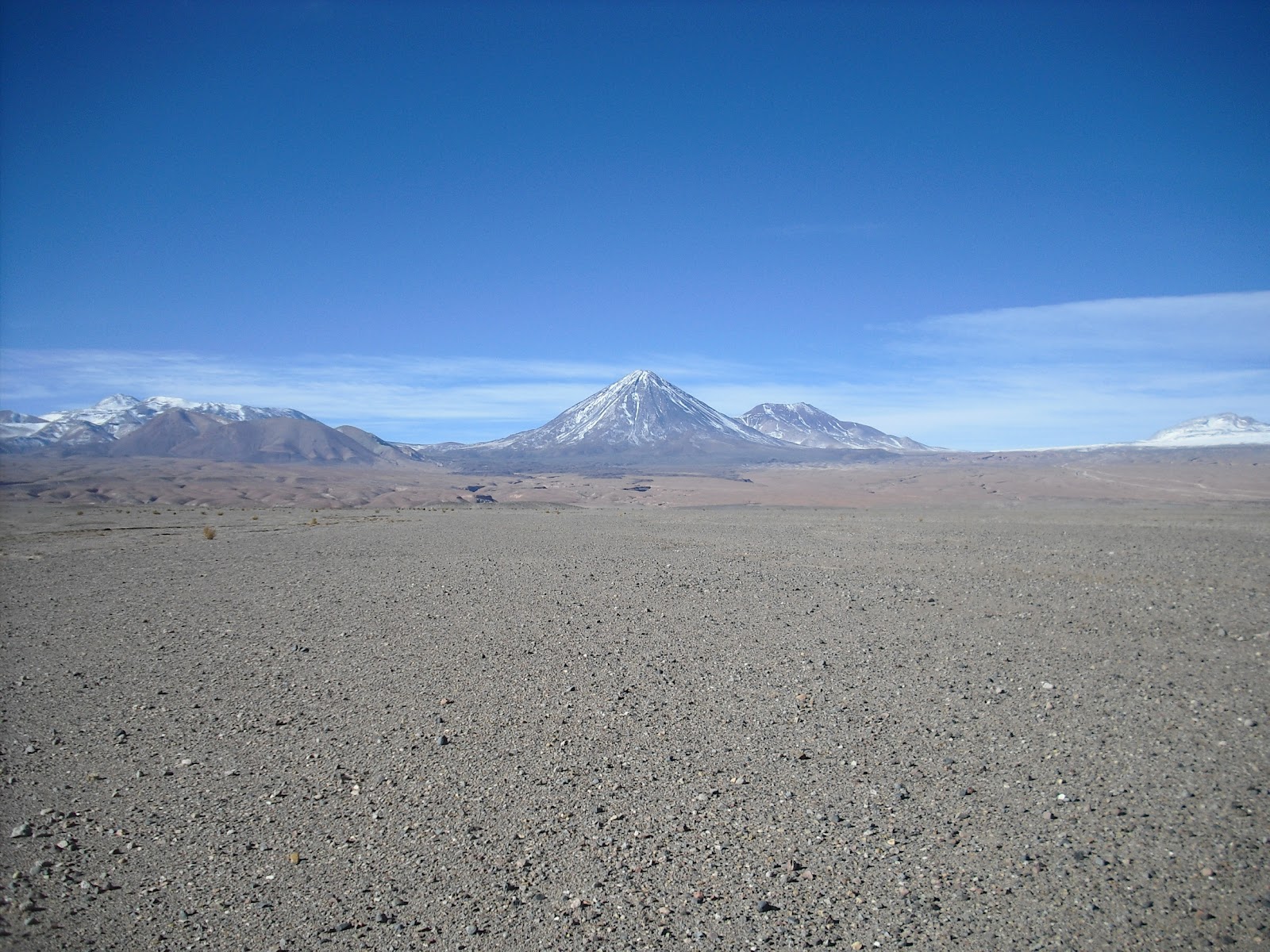
The 'bastard' child: A typical shot of Northern Chile — blue skies with snow-topped mountains interrupting expanses of desert.
Chile's barren yet spellbinding north.
In our efforts to simplify the world we live in, one-word summations of countries have become the norm. Argentina-tango, Brazil-samba, Colombia-coc ... ... ahem, coffee, Ireland-drink (apologies to all us Irish — sure let's have a drink and forget about it), New Zealand-rugby. You get the drift. 

But Chile-what? It's difficult, eh? Thanks to the extraordinary survival story of the trapped miners in 2010, maybe we could throw in mining there, but that's just seasonal in a sense. Yes, they’ve got some excellent wines of course, but there is much competition in that regard. 

For visitors — and indeed many locals — to this weird and wonderful land, getting Chile has and still proves to be a difficult task. It's in Latin America, but it's not quite 'Latino'. The pre-Spanish indigenous influence exists, but it's no Inca bastion à la its neighbours to the north, Peru and Bolivia. Can it match the style and swagger – or is that arrogance - of its counterpart over the Andes, Argentina? Well, we won't go there, just to say that bumbags were big in the 80s if indeed they were at all. 

When it comes to native cuisine, it seems that Chile was missing the day they were ‘serving up’ the national dishes in these parts. At best it’s a mix and match of the least attractive offerings from a host of countries, deep-fried. Although at this point we must mention the delightfully addictive street snack, sopaipilla. Cheap and cheerful, this pumpkin-based wonder is the perfect hunger-buster on a ‘chilly’ Chile evening. Heck, it’s that good it makes up for the general lack of culinary quality on offer.
Wrong Way tucking into the delightful Chilean street snack, the sopaipilla - the perfect hunger-buster on a chilly Chile evening!
Sopaipillas - yummy!
Physically, Chile is a very isolated country. Alongside its aforementioned harsh northern and southern borders, it has the world’s largest ocean submerging its western frontiers while the biggest peaks of the imposing Andes Mountains saddle its eastern extremes. Such isolation alone ensured, over the country's fledgling years, that it was pretty immune to the influences of its more — dare we say — illustrious neighbours. Furthermore, for visitors from Europe and North America, Chile was — and still very much is — the last stop on any voyage to South America, considering one even made it that far. 

What's more, while the majority of Latin America venerates Simón Bolívar as its saviour from Spanish rule, the Chileans have a different, more controversial liberator to honour – Bernardo O’Higgins. It’s surely more than just a coincidence that this unacknowledged, ‘illegitimate’ son of an Irishman emerged to become the founding father of modern-day Chile. The correlations between the man and the country — comparing both to their apparent peers — could hardly be more salient. The atheist, ‘bastard’ child in a place — and a time — where religion mattered.
A portrait of Chile's founding father, Bernardo O Higgins in military rig-out
'The Bastard Child' - Bernardo O'Higgins.
On top of all this, the nation is still 'finding its feet' after General Pinochet's dictatorship — a past that is proving unsurprisingly difficult to move on from. Indeed when you put all these factors together, it is quite remarkable that the country is as stable and relatively successful — in a South American context — as it is at the moment. 

Part of the reason for this may be down to the fact that Chileans are possibly the least 'emotional' of the Spanish-speaking nations in Latin America. This may be explained by the strong German influence that exists there. Herr Steffan is more noted for his business acumen than his sensitive side. This is a characteristic that has helped Chile, arguably, make much more out of the natural resources at its disposal compared to some of its, let's say, more laid-back neighbours.
 
So putting all this together, what exactly ‘is’ Chile? A ‘western’ nation trapped in the craziness of South America? Well, outwardly speaking, perhaps. But scrape away at the surface and you’ll notice a much different beat than what you get in much of Europe or North America — thankfully so you might say. So maybe it’s an example of how the rest of the Latino world would operate if it acquired a bit more order? 

Whatever it is, this baffling land has plenty to offer, from the truly amazing to the utterly annoying and everything else in between.