Back in 2009, on our first visit to the Ecuadorian capital Quito, we heeded the well-intentioned advice of some fellow travellers and opted to stay in the ‘safer’ north of the city – an area home to many backpacker hostels.
What we encountered there, however, was anything but a feeling of security, reinforced by hostel and restaurant owners’ warnings not to venture out alone, if indeed at all, after dark.
 |
| "Do you want to go ahead with this?" |
The fact that the majority of people we spoke to in the hostel we stayed in had been mugged on the streets right outside our lodgings obviously did nothing to ease concerns.
As a result, our stay in the city was short-lived; we were quite happy to leave in all honesty.
Two years later, in a less-planned stop in the city and being led by an Argentinean bus companion, we found ourselves camped up in a mediocre ‘hospedaje’ (hostel/hotel) in the historic centre of the city – dodgier territory than the north of the metropolis according to many.
This time, though, we experienced a completely different, far friendlier side to the place. Within hours after arriving (we got there late in the evening, in darkness, at that) we found ourselves drinking beers in a rough-and-ready house of some local. In another context, considering the area we were in, these guys would be seen as people to be avoided.
As a result, our stay in the city was short-lived; we were quite happy to leave in all honesty.
Two years later, in a less-planned stop in the city and being led by an Argentinean bus companion, we found ourselves camped up in a mediocre ‘hospedaje’ (hostel/hotel) in the historic centre of the city – dodgier territory than the north of the metropolis according to many.
This time, though, we experienced a completely different, far friendlier side to the place. Within hours after arriving (we got there late in the evening, in darkness, at that) we found ourselves drinking beers in a rough-and-ready house of some local. In another context, considering the area we were in, these guys would be seen as people to be avoided.
This set the tone for what turned out to be a hugely enjoyable, trouble-free few days in Quito.
So while first impressions of a place or a person can at times be a good guide to the whole picture, this isn’t always the case. Very often such things are context and time-dependent.
Bearing that in mind, we made no secret of our negative introduction to Venezuela last year (see: http://bit.ly/OLR2Ev).
So while first impressions of a place or a person can at times be a good guide to the whole picture, this isn’t always the case. Very often such things are context and time-dependent.
Bearing that in mind, we made no secret of our negative introduction to Venezuela last year (see: http://bit.ly/OLR2Ev).
In many ways, our experiences back then sat nicely with the accepted Western narrative that the place is dangerous, politically insecure and best avoided – even though we did enter the country rather excitedly and with an open mind.
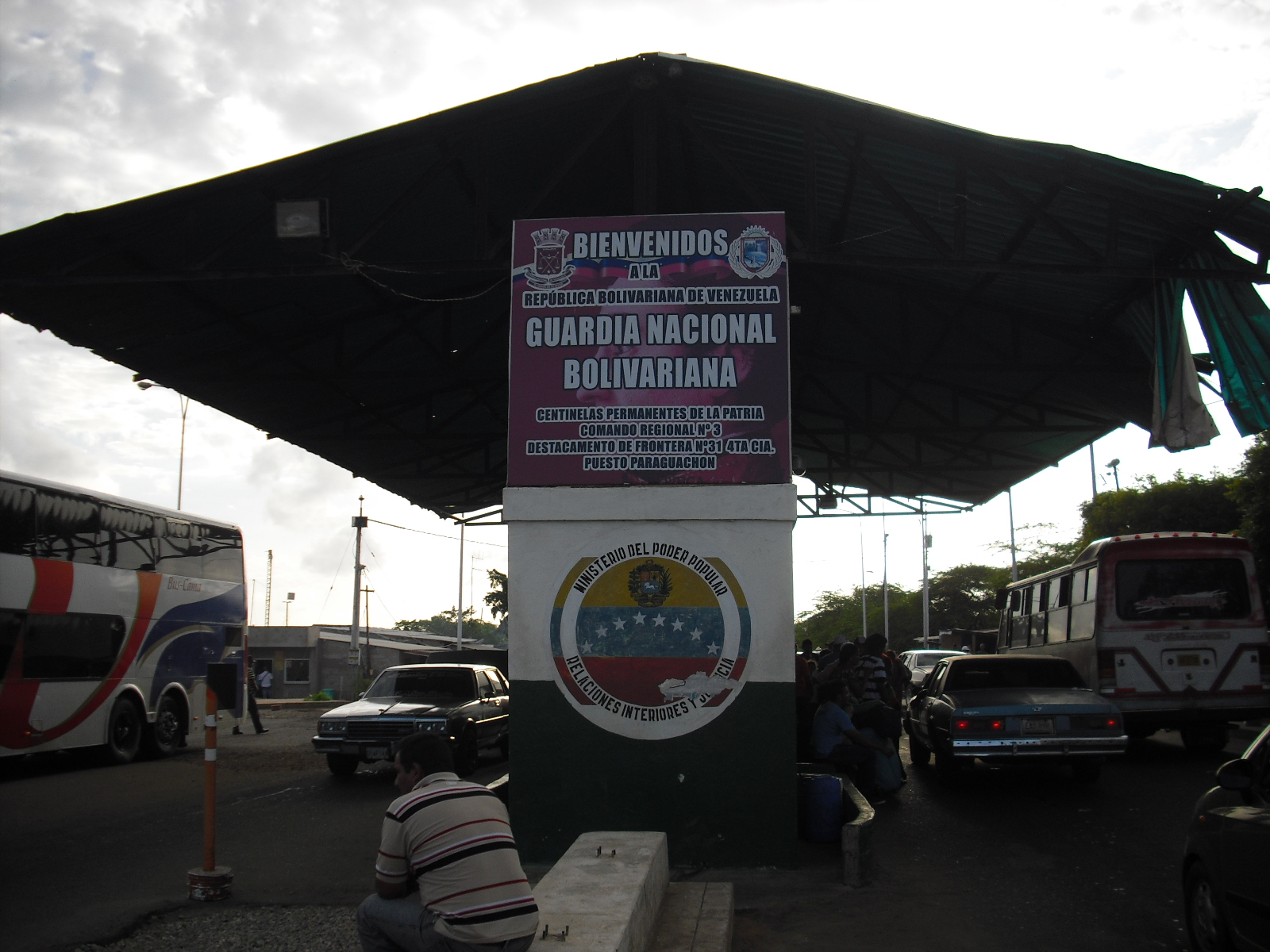
Thus, this time it was with a bit of nervousness, tempered by stubbornness and a sense of some adventure, that we hit for Colombia’s eastern neighbour for a visa run. The rough plan on departing Bogotá was to get in and out of the place as quickly as possible.
Our anxiousness increased when, on arrival in the city of Cúcuta on the Colombian side of the border, the guys who exchanged our pesos for Venezuelan bolivares gave us plastic bags and told us to stow our cash in them and put them in our shoes for safety. (The biggest problem in the end was that this practice almost rendered the notes unusable from the damage inflicted by being wrapped up in our sweaty runners.)
Yet practically from the get-go, the coldness of the citizens and feelings of insecurity that prevailed during our first visit were replaced by very helpful, friendly people and a relaxed general atmosphere.
Yes, the physical signs of the recent, highly contentious general election (for a recap, see: http://bit.ly/Yy86zJ) narrowly and controversially won by the late Hugo Chávez’s successor, Nicolás Maduro, are there to be seen.
Thus, this time it was with a bit of nervousness, tempered by stubbornness and a sense of some adventure, that we hit for Colombia’s eastern neighbour for a visa run. The rough plan on departing Bogotá was to get in and out of the place as quickly as possible.
Our anxiousness increased when, on arrival in the city of Cúcuta on the Colombian side of the border, the guys who exchanged our pesos for Venezuelan bolivares gave us plastic bags and told us to stow our cash in them and put them in our shoes for safety. (The biggest problem in the end was that this practice almost rendered the notes unusable from the damage inflicted by being wrapped up in our sweaty runners.)
Yet practically from the get-go, the coldness of the citizens and feelings of insecurity that prevailed during our first visit were replaced by very helpful, friendly people and a relaxed general atmosphere.
 |
| To the left ... |
 |
| ... and to the right |
But it’s not – at least openly and at ground level amongst the populace (at a political level and below the surface for some citizens we spoke to, deep divisions are apparent*) – a case of a dangerously divided country where opposing sides don’t mix.
What we found in the two places we stayed, firstly San Cristóbal and then Mérida**, were easy-going people (the small bar brawl we witnessed on our first night aside – sure a beer bottle being hurled at somebody is nothing unusual to us) going about their daily business.
Wherever we stay we like to be able to venture out at night feeling relatively safe, sampling a few beers and chatting to the locals in little ‘tienda’ bars. Thankfully, that was no problem this time, unlike Maracaibo last year.
What we found in the two places we stayed, firstly San Cristóbal and then Mérida**, were easy-going people (the small bar brawl we witnessed on our first night aside – sure a beer bottle being hurled at somebody is nothing unusual to us) going about their daily business.
Wherever we stay we like to be able to venture out at night feeling relatively safe, sampling a few beers and chatting to the locals in little ‘tienda’ bars. Thankfully, that was no problem this time, unlike Maracaibo last year.
OK, our hotel in San Cristóbal did have a 10.30 pm curfew, but that was more an individual choice rather than a rule from what we could gather. Plus, considering the times we tend to retire at night nowadays, this lights-out policy wasn’t a big issue.
Of course, we did learn from our first experience in the country as regards the currency.
So this time we had plenty of cash to convert into bolivares as opposed to going to ATMs where the value is at least four times less than on the street (Colombian pesos are fine to exchange along the border and that’s where you’ll get the best price). Hence, in most aspects, it’s much cheaper to get by compared to Colombia.
On that theme, practically every shop/restaurant displays the prices of its goods – prices that are trustworthy and accepted across the board from our observations. In other words, haggling isn’t really done or needed in the majority of places – the price is the price and it’s usually satisfactory.
On that theme, practically every shop/restaurant displays the prices of its goods – prices that are trustworthy and accepted across the board from our observations. In other words, haggling isn’t really done or needed in the majority of places – the price is the price and it’s usually satisfactory.
Now, we don’t mind haggling, but in many street stores in Colombia you can’t help but wonder if they are charging you a foreigners’ price no matter what you pay. The aversion here to publicly displaying prices always leaves you in a bit of doubt.
You will still find what seems to be official Venezuelan suspicion towards foreigners – again in sharp contrast to the usual Colombian experience.
 |
| "Sorry, where would we find some chicken?" |
On the internal bus journeys where the National Guard did ID checks, as foreign passport holders we were the only ones taken off and given a pretty decent interrogation with our bags thoroughly checked. With nothing to hide it wasn’t something that bothered us really.
That was, of course, taking for granted that the officers were genuine – in this case, they seemed to be. Considering, though, the pronouncements coming from the country’s leader as regards some foreigners’ intentions in Venezuela (mostly aimed at the USA, albeit), you can never rule out a bent military official doing something untoward in the name of patriotism.
If, however, at heart they are in the same mould as the vast majority of civilians we met in San Cristóbal and Mérida, such a scenario is unlikely.
That was, of course, taking for granted that the officers were genuine – in this case, they seemed to be. Considering, though, the pronouncements coming from the country’s leader as regards some foreigners’ intentions in Venezuela (mostly aimed at the USA, albeit), you can never rule out a bent military official doing something untoward in the name of patriotism.
If, however, at heart they are in the same mould as the vast majority of civilians we met in San Cristóbal and Mérida, such a scenario is unlikely.
In any case, going by our adventures this time around, the rewards far outweigh the risks.
___________________
* Some Venezuelan politicians take very seriously the idea of ‘fighting’ for your country, as this video shows: http://www.youtube.com/watch?v=jKUVdw9mgeY
**Mérida is something of a hidden gem from what we experienced. We plan to bring you more on that next.
___________________
* Some Venezuelan politicians take very seriously the idea of ‘fighting’ for your country, as this video shows: http://www.youtube.com/watch?v=jKUVdw9mgeY
**Mérida is something of a hidden gem from what we experienced. We plan to bring you more on that next.