Showing posts with label Hugo Chávez. Show all posts

Tuesday, 21 June 2022

Conservative Colombia left in the cold — for now

@wwaycorrigan

[Listen to an audio version of this blog entry here.]

So the last bastion of conservatism and right-wing populism in Latin America has fallen. Colombia has chosen a leftist president for the first time in its history.
Conservative Colombia left in the cold — for now: Gustavo Petro and Francia Marquéz celebrate their historic win in Colombia's presidential election.
A new dawn for Colombia? Gustavo Petro and Francia Marquéz celebrate their historic election win. (Photo from Facebook.)
The rains that fell incessantly on the capital city, Bogotá, as the results flooded in on Sunday 19 June were most likely viewed as cleansing waters from the heavens for supporters of now president-elect Gustavo Petro. Indeed, in a tweet, he did put the victory down to 'God and the citizens and their history (or story).'

New Colombia

For those who loathe the former rebel — and there are many in that category — the dreary weather must have felt like pathetic fallacy, heralding a decadent, possibly very unstable era.

In fairness, both Petro and the surprise-package challenger in this run-off contest, 77-year-old Rodolfo Hernández who ran on a strong anti-corruption ticket, were representing a change of sorts. Hernández — or the more affectionate Rodolfo as he goes by — was hardly mentioned as a serious contender a month or so out from the first election on 29 May.

His social media campaigning was Trumpesque, making particular use of TikTok. The plan for the former mayor of Bucaramanga appeared to be, 'don't give too much away and just say what many want to hear'. It nearly produced the hoped-for effect.

Petro, on the other hand, has been in the national political limelight for quite some time. Alongside his highly divisive guerilla involvement in the 1970s and '80s, he was elected to Colombia's lower house of Congress in 2002, became a senator in 2006 and won the Bogotá mayor's office in 2012. He also previously ran for president in 2010 and 2018.
'A taxi driver who voted for the winner told me it was a case of opting for the least-bad candidate. Or, to borrow from a saying in these parts, to avoid going from Guatemala to Guatepeor.'
This familiarity may have actually been a significant factor in getting Petro over the line this time. The loose-cannon nature of Rodolfo that displayed itself on numerous occasions worked to his rival's advantage.

As a far-from-euphoric taxi driver who voted for the winner told me, it was a case of opting for the least-bad candidate. Or, to borrow from a saying in these parts, to avoid going from Guatemala to Guatepeor — from bad to worse, basically.

Petrograd

The concerns of those against Petro are in relation to what is seen as his socialist agenda. 'He'll turn Colombia into another Venezuela', that's the common mantra.

A dramatic disruptor in the mould of Hugo Chávez, he is unlikely to be, however. Yes, he and, to an even greater extent, his vice president, the Afro-Colombian environmentalist and human-rights activist Francia Marquéz, represent something quite removed from those of the old Conservative/Liberal heritage who have dominated these offices before.

Yet, the idea that they'll tear down the existing state structures and construct an entirely new system seems somewhat farfetched.

The term, which begins on 07 August, is, after all, limited to four years with reelection constitutionally prohibited. What an administration with a potentially radical programme — and much to do with it — can achieve in such a timeframe in a rather legalistic country is open to debate.

Thus, paving the way for a successor will most likely be a high priority. The 'Petro Plan' is going to need more than four years to deal with the likes of deep-rooted inequality, to name just one of the country's many ills.

As outgoing President Iván Duque discovered in 2021 with his tax-reform proposals — a perennial problem here — opposition in Colombia can be fierce and bring together disparate sections of society.

Mentioning Duque, when he hands over the reins to Petro he'll have just turned 46. One gets the feeling, however, that he'll be happy to end his career in Colombian politics when he vacates Casa de Nariño, unlike his mentor, the president from 2002 to 2010, Álvaro Uribe.

Whatever lies in store for Duque, these next four years for Colombia are certainly set to be intriguing.

While many thought it would never happen, Petro's big moment has arrived. For sure, he'll face many obstacles as, it would appear, about half the country won't want him to succeed, some of whom wield considerable power in various influential spheres.

Yet, for the other half, he is the president they have been waiting for to make what they see as the necessary changes to finally improve their lot.

It's now time to deliver, Presidente Petro. Your enemies aren't willing to stay in the cold for long.
_______________________________________________________________
Listen to Wrong Way's Colombia Cast podcast here.

Facebook: Wrong Way Corrigan — The Blog & IQuiz "The Bogotá Pub Quiz".

Friday, 22 April 2022

Colombia decides: Go with Gutiérrez or plump for Petro?

@wwaycorrigan

[Listen to an audio version of this blog entry here.]

In just over a month, 29 May 2022 to be precise, Colombians go to the polls to elect their next president.
Colombia decides: Go with Gutiérrez or plump for Petro? Colombia's likely lads, Gustavo Petro and Federico Gutiérrez look set for a presidential election run-off.
In the left corner, Gustavo Petro. And in the right-ish corner, Federico "Fico" Gutiérrez. (Photos from https://www.facebook.com/gustavopetrourrego/photos/ & https://federicogutierrez.com/.) 

Fico fights back

There are two things that we can take as virtually certain at this stage. One is that the country's next leader will be a man. The other is that this man won't be declared the winner on 29 May.

The reason for the latter is that for a candidate to win the presidency in the first round, he/she needs more than 50 per cent of the overall valid votes cast. With eight runners currently in the field for the nation's top job and polls showing no runaway favourite, it's pretty much certain a run-off will be needed between the top two candidates.

That head-to-head — barring some dramatic game-changer in the coming weeks — will be between former Bogotá mayor and runner-up in the 2018 presidential election, Gustavo Petro, and Federico "Fico" Gutiérrez, former mayor of Colombia's second city, Medellín.

Opinion polls have shown the leftist Petro with a relatively consistent lead throughout for some time now. Indeed, with a split centre/centre-right vote in round one — that there is no official candidate from the party of the still popular yet divisive former president, Álvaro Uribe, the man who helped propel outgoing president Iván Duque to victory, is a factor here — it seems safe to assume the one-time guerrilla will win the first round but fall somewhat short of the magic number to obviate a second day out.
'All this has to be balanced against the idea that a leftist, former guerrilla becoming Colombia's president takes the cherished sweetness out of the morning coffee of many citizens.'

Thus, similar to 2018 (see my post from that year, Right you are Colombia, for background), the key question is, where will the votes from the losing candidates in round one go in round two?

Most observers, backed up by polling — polls do tend to be reliable in Colombia — suggest Gutiérrez (I'm loath to call him by the affectionate "Fico" monicker) will take the lion's share. This may be enough to get him over the line but it looks set to be very close. (Do note that traditionally conservative Colombia has never returned what one may consider a genuine leftist candidate.)

The country's electoral system does also allow for a valid protest/blank vote, 'voto en blanco' (see https://wwcorrigan.blogspot.com/2018/02/colombia-vote-ve-blanco-for-real-change.html). In the 2018 run-off, this took 4.2 per cent of the overall votes, an increase of three percentage points from that year's first round. In one opinion poll in March this year, 16 per cent of respondents said they would vote blank. With that in mind, this phantom candidate may play a decisive role this time.

A turnout for Petro?

Another important factor is turnout. It hovered around 54 per cent in both rounds in 2018, a rather high figure compared to all the other presidential elections this century. As a reference, turnout for this year's congressional elections in March was just over 47 per cent of registered voters, about 1.5 percentage points lower than the 2018 figure.

If turnout increases for this year's presidential election — the various controversies with voter registration in Colombia aside — and we guesstimate that this means a greater participation of younger voters, the belief is that this would be a positive for Petro.

All this has to be balanced against the idea that a leftist and former guerrilla becoming Colombia's president takes the cherished sweetness out of the morning coffee of a not-insignificant number of citizens.

Even the slightest suggestion of something socialist sees many people point to the east and the ongoing mess that is neighbouring Venezuela.

That aside, and while Petro's mayorship of Bogotá was not without its ideological battles (see https://wwcorrigan.blogspot.com/2012/12/petrograd-colombias-new-capital.html & https://blogs.eltiempo.com/wrong-way-corrigan/2014/01/24/ordonez-petro-et-al-fiddle-while-bogota-continues-to-burn/), one finds it hard to envisage a Petro presidency turning the country into the next Venezuela.

Brother countries they may be but the overall more conservative nature of Colombia means it is unlikely radical social change will occur here akin to what we've seen in Venezuela over the last twenty years. What's more, Gustavo Petro is no Hugo Chávez Frías.

Indeed, it could be argued that the most radical departure Colombians could take in this presidential election would be if voto en blanco won the day.

That won't happen. So, as a largely independent observer, if I was forced at this stage to put some of my hard-earned pesos on the outcome, I'd go with Gutiérrez. Very hesitantly, that is.
_______________________________________________________________
Listen to Wrong Way's Colombia Cast podcast here.

Facebook: Wrong Way Corrigan — The Blog & IQuiz "The Bogotá Pub Quiz".


Sunday, 2 April 2017

Colombia's Venezuelans

In a similar fashion to our Bogotá 'bull' report a few weeks back, the following is the original script of our latest report for RTÉ's World Report, this time on the growing number of Venezuelans entering and staying in Colombia. You can listen to the report here (from 20' 55'', edited for time reasons) and follow the script below:
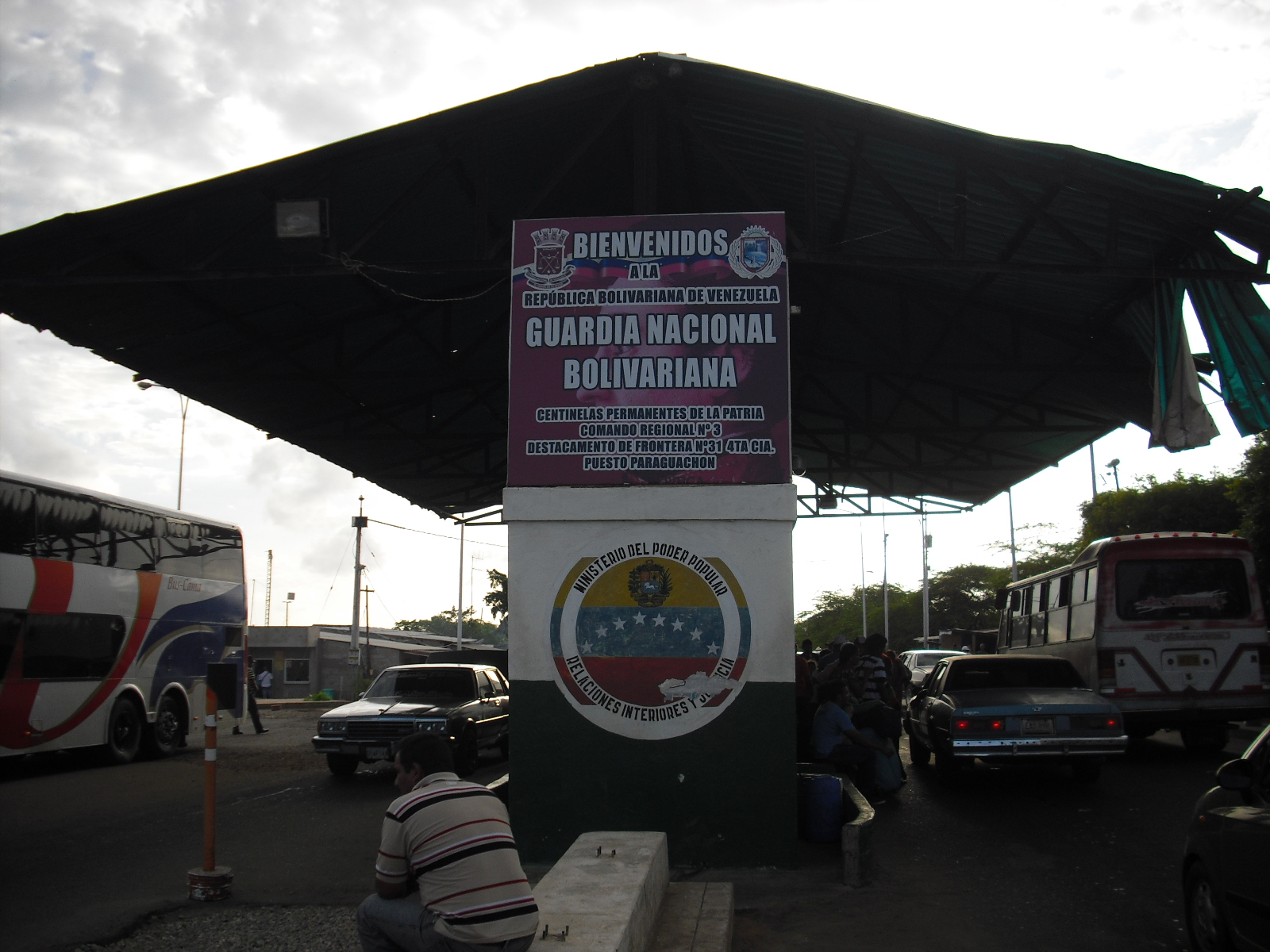
Colombia's Venezuelans: Puente internacional Simón Bolívar, Colombia-Venezuela.
Most of the traffic is coming into Colombia these days, not the other way around.

'We don't have to go too far back in history to find a time when some Colombians found refuge in neighbouring Venezuela, to escape the terrible bloodshed and uncertainty back home. 

Politically speaking, before Hugo Chávez's Socialism for the 21st century took hold in Venezuela, the two countries were quite similar. The difference was Colombia was seen as a violent backwater best avoided, while Venezuela, from a Western, capitalist perspective in any case, was a model for the rest of Latin America to follow.

It's not stretching it to say that now we have the reverse situation: Colombia's external image seems to get brighter by the day while Venezuela's plummets.

In Venezuela's pre-socialist days, so it is said, 'la Colombiana' was the one who came to clean the house of the well-off, the one who worked in the bakeries and bars, the work many locals felt was beneath them. 

Now it's the Venezuelans — men, women and children — who are crossing the border in their thousands to work in whatever they can find in Colombia. Chronic food and medical shortages, hyper-inflation and safety concerns, alongside a seemingly incompetent government to deal with these issues are what have them leaving in droves.

How many have actually relocated here is difficult to measure exactly. This is simply because on a daily basis the toing and froing of Venezuelans into Colombia, and vice versa, all along the over 2000 kilometre-long land border has been constant and not tightly regulated. [This is when the border hasn't been closed by order of Venezuelan president Nicolás Maduro that is, as has happened on occasions over the last couple of years.]

The United Nations Refugee Agency in Bogotá does state that there has been "a notable increase of Venezuelan nationals coming to and remaining in Colombia." 

From an official viewpoint, however, it acknowledges the figures it works off from Colombian immigration are not terribly accurate and more than likely underestimate the volume.

Alongside the informal, unregistered crossings, the agency points to the lack of data on Venezuelan nationals remaining in Colombia as well as the fact that official asylum claims are quite low as this process in Colombia is somewhat cumbersome.

Notwithstanding the difficulties of getting an accurate figure, Daniel Pages of the Association of Venezuelans in Colombia estimates that between legals and illegals there are over 1.2 million of his countrymen currently in Colombia. 

The association itself, set up five years ago to provide assistance for Venezuelans looking to live and work legally in Colombia, has now over 15,000 people on its books.

Alongside the estimated numbers, Colombians themselves are quick to tell you that the Venezuelan accent is being heard much more of late than had been the case just a couple of years ago. And we're not talking here about illegal border intrusions into Colombia by Venezuelan military personnel, which caused a stir recently, damaging further official relations between the two republics.

No, this isn't just temporary border-hopping; Venezuelans are travelling as far into Colombia as Bogotá to set up shop.

A visit to any of the capital's bog-standard bread shops or restaurants and it's a safe bet that there'll be at least one Venezuelan working there.

The problem, as some locals see it, is that these unregistered foreign workers are taking potential jobs from the many hard-pressed Colombians in need of employment. 

As store owner Laura Lancheros puts it: "Many of these unregistered Venezuelans coming here are willing to work for anything, so for some employers they're a good option because there's no real paperwork involved in hiring them."

Indeed, in Bogotá for one, there appears to be little sympathy for the plight of their neighbours. A lot of this stems from the Venezuelan government's decision to remove thousands of Colombian nationals from the country a couple of years back, the deported accused of being involved in paramilitary activities and other illegalities. 

President Maduro's almost daily jibes at Colombia also don't help, where he regularly accuses it as the source of many of his own country's problems.

Be that as it may, for the Venezuelans now living and working in Colombia, many are quick to distance themselves from what their government says and does.

What’s more, as 25-year-old Bogotá bread shop employee Angie Salcedo, who arrived here from her native eastern Venezuela earlier this year, points out: "Some Colombians would do well to remember the past. Venezuela was always welcoming to foreigners, but now that we're in trouble, we're not getting the same treatment from others. Not everybody is received with open arms."

A young, university-educated woman, Angie's story is typical of the Venezuelans flocking to Colombia: here illegally, engaged in unskilled work for barely the minimum wage.

Angie's co-worker, 22-year-old Yorkely Casanova, sees Colombia as just a temporary stopover. Like other Venezuelans, she has her eyes set on Chile as the process to become a legal worker there is shorter, more straightforward and less expensive than Colombia.

For the moment she, along with her husband, are working 12-hour plus days for no more than 10 US dollars a day to save money for that journey further south.

It's far from ideal, but as Yorkely sadly notes, it's better than being in Venezuela right now.'
_______________________________________
Facebook: Wrong Way Corrigan - The Blog & IQuiz "The Bogotá Pub Quiz".

Wednesday, 26 August 2015

Border battles: What next for Colombia and Venezuela?

In many ways, there is a sense of inevitability to all of this. Although those who call the shots in both Colombia and Venezuela are pretty much from the same stock, the ideologies they (claim) to follow are far from similar.

Border battles: What next for Colombia and Venezuela? Venezuelan President Nicolás Maduro's actions have increased tension with neighbours Colombia.
Nicolás Maduro: quashing Colombians. (Photo from Facebook.)
Considering socialist Venezuela's anti-US stance, having a neighbour that is, politically speaking anyway, rather cosy with Washington has always been a sore point.

Add in a president who has been feeling the heat both inside and outside his country since taking office in 2013 from a more charismatic and popular deceased predecessor and this attempt to unite the people against 'foreign insurgents' isn't surprising. 

It's also not without historical precedence. Problems at home? Create a distracting rallying point.

In fact, in this particular case, it's a line Venezuelan leader Nicolás Maduro (as Hugo Chávez before) has been spinning for some time: Colombian paramilitaries are active in his country, plotting to overthrow his rule. 

Colombia is also the source of narco-trafficking and other illegal activities that cross into Venezuela. And all these actions are getting clandestine support from none other than former Colombian president and current state senator Álvaro Uribe.

This siege mentality, whether perceived or real, appears to have reached a head for the Maduro administration with its decision to expel over a thousand Colombian citizens from the country and close the border.

Understandably, the sight of their countrymen fleeing across that border, taking whatever belongings they can before their dwellings are to be, allegedly, demolished, has angered Colombians at home.

So far, the reaction from Bogotá has been strong words only; President Juan Manuel Santos is hoping on finding a diplomatic solution to this mini-crisis. 

Such an approach is to be expected from a man currently trying to close a peace deal with guerrillas to end over 50 years of internal conflict in his country. The dove isn't about to turn into a hawk just yet.

If the more belligerent Uribe or any of his Centro Democrático party colleagues were calling the shots things could be far more delicate than they are at present. 

Indeed, Uribe has already called the Venezuelan government's action 'an attempt at genocide'. This came 24 hours after Maduro accused him of being a paramilitary leader and an assassin.

However, the idea of this escalating into anything more serious is unlikely at this remove. 

Alongside the Santos diplomacy, in many ways the Venezuelan leadership is on a tightrope. Engaging in what many at home would see as an unnecessary military confrontation with the neighbours could be the beginning of the end for Maduro and co.

We're not quite at the brink, but both parties would do well to recall their shared heritage. 

The many people in the two states who venerate the great liberator from old Spanish rule, Simón Bolívar, should remember that if he had had his way there would be no border. 

Yet right now that line in the map seems as pronounced as ever.
______________________________
Facebook: Wrong Way Corrigan - The Blog & IQuiz "The Bogotá Pub Quiz".

Wednesday, 15 May 2013

Venezuela: A necessary reappraisal

Back in 2009, on our first visit to the Ecuadorian capital Quito, we heeded the well-intentioned advice of some fellow travellers and opted to stay in the ‘safer’ north of the city – an area home to many backpacker hostels.
Venezuela: A necessary reappraisal. Crossing back (somewhat reluctantly at the exact time of the photo) into Venezuela
"Do you want to go ahead with this?"
What we encountered there, however, was anything but a feeling of security, reinforced by hostel and restaurant owners’ warnings not to venture out alone, if indeed at all, after dark. 

The fact that the majority of people we spoke to in the hostel we stayed in had been mugged on the streets right outside our lodgings obviously did nothing to ease concerns.

As a result, our stay in the city was short-lived; we were quite happy to leave in all honesty.

Two years later, in a less-planned stop in the city and being led by an Argentinean bus companion, we found ourselves camped up in a mediocre ‘hospedaje’ (hostel/hotel) in the historic centre of the city – dodgier territory than the north of the metropolis according to many.

This time, though, we experienced a completely different, far friendlier side to the place. Within hours after arriving (we got there late in the evening, in darkness, at that) we found ourselves drinking beers in a rough-and-ready house of some local. In another context, considering the area we were in, these guys would be seen as people to be avoided. 

This set the tone for what turned out to be a hugely enjoyable, trouble-free few days in Quito.

So while first impressions of a place or a person can at times be a good guide to the whole picture, this isn’t always the case. Very often such things are context and time-dependent.

Bearing that in mind, we made no secret of our negative introduction to Venezuela last year (see: http://bit.ly/OLR2Ev). 

In many ways, our experiences back then sat nicely with the accepted Western narrative that the place is dangerous, politically insecure and best avoided – even though we did enter the country rather excitedly and with an open mind.

Thus, this time it was with a bit of nervousness, tempered by stubbornness and a sense of some adventure, that we hit for Colombia’s eastern neighbour for a visa run. The rough plan on departing Bogotá was to get in and out of the place as quickly as possible.

Our anxiousness increased when, on arrival in the city of Cúcuta on the Colombian side of the border, the guys who exchanged our pesos for Venezuelan bolivares gave us plastic bags and told us to stow our cash in them and put them in our shoes for safety. (The biggest problem in the end was that this practice almost rendered the notes unusable from the damage inflicted by being wrapped up in our sweaty runners.)

Yet practically from the get-go, the coldness of the citizens and feelings of insecurity that prevailed during our first visit were replaced by very helpful, friendly people and a relaxed general atmosphere.

The 'Maduro' quarter of San Cristóbal
To the left ...
A Henrique Capriles supporter proudly displays his election poster over his little street stall
... and to the right
Yes, the physical signs of the recent, highly contentious general election (for a recap, see: http://bit.ly/Yy86zJ) narrowly and controversially won by the late Hugo Chávez’s successor, Nicolás Maduro, are there to be seen. 

But it’s not – at least openly and at ground level amongst the populace (at a political level and below the surface for some citizens we spoke to, deep divisions are apparent*) – a case of a dangerously divided country where opposing sides don’t mix.

What we found in the two places we stayed, firstly San Cristóbal and then Mérida**, were easy-going people (the small bar brawl we witnessed on our first night aside – sure a beer bottle being hurled at somebody is nothing unusual to us) going about their daily business.

Wherever we stay we like to be able to venture out at night feeling relatively safe, sampling a few beers and chatting to the locals in little ‘tienda’ bars. Thankfully, that was no problem this time, unlike Maracaibo last year. 

OK, our hotel in San Cristóbal did have a 10.30 pm curfew, but that was more an individual choice rather than a rule from what we could gather. Plus, considering the times we tend to retire at night nowadays, this lights-out policy wasn’t a big issue.

Of course, we did learn from our first experience in the country as regards the currency. 

So this time we had plenty of cash to convert into bolivares as opposed to going to ATMs where the value is at least four times less than on the street (Colombian pesos are fine to exchange along the border and that’s where you’ll get the best price). Hence, in most aspects, it’s much cheaper to get by compared to Colombia.

On that theme, practically every shop/restaurant displays the prices of its goods – prices that are trustworthy and accepted across the board from our observations. In other words, haggling isn’t really done or needed in the majority of places – the price is the price and it’s usually satisfactory. 

Now, we don’t mind haggling, but in many street stores in Colombia you can’t help but wonder if they are charging you a foreigners’ price no matter what you pay. The aversion here to publicly displaying prices always leaves you in a bit of doubt.

A typical day at a Venezuelan supermarket
"Sorry, where would we find some chicken?"
You will still find what seems to be official Venezuelan suspicion towards foreigners – again in sharp contrast to the usual Colombian experience. 

On the internal bus journeys where the National Guard did ID checks, as foreign passport holders we were the only ones taken off and given a pretty decent interrogation with our bags thoroughly checked. With nothing to hide it wasn’t something that bothered us really.

That was, of course, taking for granted that the officers were genuine – in this case, they seemed to be. Considering, though, the pronouncements coming from the country’s leader as regards some foreigners’ intentions in Venezuela (mostly aimed at the USA, albeit), you can never rule out a bent military official doing something untoward in the name of patriotism.

If, however, at heart they are in the same mould as the vast majority of civilians we met in San Cristóbal and Mérida, such a scenario is unlikely. 

In any case, going by our adventures this time around, the rewards far outweigh the risks.

___________________
* Some Venezuelan politicians take very seriously the idea of ‘fighting’ for your country, as this video shows: http://www.youtube.com/watch?v=jKUVdw9mgeY

**Mérida is something of a hidden gem from what we experienced. We plan to bring you more on that next.

Sunday, 24 March 2013

Venezuela: Deepening the divide?

It’s just over five months since we wrote that the time, perhaps, was right for a change of the guard in Venezuela.

That was, of course, ahead of the October elections when the-then incumbent president, the late Hugo Chávez, was facing his toughest democratic challenge for the country’s top job since he first took office in 1999.
Venezuela: Deepening the divide? Nicolás Maduro speaks with a photo of the late Hugo Chávez in the background
Past & present: Cházez (l) & Maduro (from paraguay.com).
Despite leading a solid campaign which garnered widespread support – his 45% share of the votes testament to that – challenger Henrique Capriles fell short; Chávez retained his post with 54% support. 

Venezuela, especially the current administration’s key voter base of the lower/working classes, clearly said it wasn’t ready to say goodbye to ‘Socialism for the 21st Century’ at that time.

So as the country prepares once again to go the polls on 14 April – constitutionally necessary following Chávez’s death – is there any reason to think that the challenger can turn the tables in just six months?

Undeniably, the ruling party is weaker without its charismatic and hugely popular deceased leader calling the shots. You don’t lose a chief such as Chávez without this having some adverse effect. However, it might be too soon to see that cost just yet.

It’s difficult to improve on an 80% turnout, as was the case in October, but if there are new votes and voters to be found, they may go the way of president-in-charge and Chavez’s ‘anointed’ successor, Nicolás Maduro. While a dull figure compared to his predecessor – who wouldn’t be – he should still be in a position to benefit from Chávez’s popularity, with the former leader’s figure still shining bright for many. 

Indeed, early opinion polls suggest Maduro has a lead of up to 15%. If this was to be the actual result on polling day, it would be a bigger endorsement for the socialist government than that it received just months ago.

In such a politically divided country – you are either with the revolution or against it, there is very little room for those in the middle ground – it’s hard to see where Capriles can add to the support he gained last year. 

Focusing the campaign on the abuses of the Chávez administration – the more than questionable human rights record, an increase in homicides and an absence of general security, press and judicial interference, currency & economic problems – abuses highlighted by a number of non-governmental organisations including Human Rights Watch and Amnesty International, is one avenue of attack.
Locals dealing in oil on the Colombian-Venezuelan border
'Black gold' on the Colombian-Venezuelan border.
There is also the issue of Venezuela’s over-reliance on oil to keep the economy moving. In the short-to-medium term, this is fine, but, like the oil resources themselves, how sustainable is it?

Yet, for the thousands of people who have seen an unprecedented rise in their general standard of living and their access to education and health improve under the current socialist government, this approach in focusing on other policy areas, however justified, is unlikely to yield much electoral dividend.

What’s more, with a population – especially those in support of the revolution – seemingly convinced by the political elite that the nation, at any moment, could be attacked by ‘Western imperialists’, anti-US discourse continues to excite and impress many. 

Thus, the them-versus-us mentality, which Capriles hopes to weaken should he get elected, has been promoted heavily by his opponent.

However, for any neutral observer, regardless of which side of the political spectrum you lie, Maduro’s inconsistent and lurid pronouncements in this regard in recent days have been nothing but playing to the gallery. 

From firstly claiming there was a CIA/Pentagon plan to assassinate his rival Capriles in order to cause chaos in the country, he flipped the next day to a story that the US was encouraging the opposition to withdraw from the elections. If the White House is planning something, it doesn’t seem to be very consistent if Maduro is to be believed.

Throwing all these factors together, it is difficult to see anything other than a relatively comfortable victory for the interim president.

Indeed, for the time being, for the general stability of the region, especially in relation to the border with Colombia, a Maduro victory might be for the best. 

If the socialist revolution was stopped in its tracks now, democratically, it’s unclear how the current administration and its supporters would react, especially so soon after Chávez’s death. A second defeat in six months for Capriles would no doubt leave him and his followers disillusioned, but a violent reaction to such an outcome is unlikely.

In terms of Colombian relations, with the ongoing, largely fragile peace talks continuing between President Juan Manuel Santos’s government and the left-wing guerrillas Farc, instability in Venezuela is the last thing that process needs.
Presidential hopeful Henrique Capriles reaches out to supporters at a rally
Support: But is it enough for Capriles?
Yes, it’s widely accepted here that the Bolivarian Republic has supported the Farc rebels in terms of ammunition and security, but the fear is that if an unfavourable government for them was to be installed in Venezuela, it may have a negative influence on the peace negotiations.

That’s despite the fact that the majority of Colombians, arguably the most pro-USA Latin America country with a history of centre-right administrations, would find more favour, in general, with Capriles in power than Maduro.

Whatever the case, it appears the mantra from the current office-holders in Venezuela, that the country’s ‘Socialism for the 21st Century’ is bigger than one man, is set to be put to a stern test in the coming months and years. 

It may be more of the same after 14 April but perhaps with even deeper division.

*For another Venezuelan related article see 'Venezuela - South America's North Korea?' http://bit.ly/OLR2Ev

Sunday, 7 October 2012

Time for change

These are heady times in international politics. Top billing is, of course, the race for the White House, where it’s difficult even for those with a limited interest in it not to get caught up in the whole fanfare. Pretty much all media outlets across the globe are following the unfolding story. 

Meanwhile, closer to us here in Colombia, there's the Venezuelan presidential election – perhaps as equally important, if not more so, for this region than the USA one.
Time for change: Current Venezuelan President Hugo Chávez and challenger Henrique Capriles
Will Venezuelans go left again or take a slight move to the right?
The fact that both countries are having leadership contests within a few weeks of each other is about as far as you can go with the comparisons between them. 

For one, Venezuela’s incumbent, Hugo Chávez appears to be in a more comfortable position as regards his re-election compared to Barack Obama – although the challenger, Henrique Capriles, is putting up a pretty impressive fight against the 14-year-long rule of the current administration. 
 
Part of Chávez’s appeal is that rather than just talk about it and despite his many detractors and questionable methods, he has arguably done more for the poor and vulnerable in his jurisdiction than Obama has in the "land of the free". 

Of course, the Venezuelan leader has had much more time and less interference in implementing his vision – ‘socialism for the 21st century’ – than the under-fire United States chief-of-staff.

The word vision here is key. Barack Obama entered the Oval Office just under four years ago promising much and offering a different path – remember, ‘change we can believe in’. For many US citizens, though, it has been far from the fairytale term they were hoping for. 
 
Once the bounce of having a novel, coloured president that was anything but George W. Bush wore off, things began to get a bit more serious for Obama. As many democratically bound and elected politicians discover, implementing change can be slow, mightily slow. 

Throw in the fact that no sooner is a new government sworn in then it begins thinking of its re-election, usually four to five years down the line. So even if you have a visionary leader or administration, the ‘must not harm my chances of getting back in’ mindset takes hold early on.

This sort of thinking is usually to the detriment of a leader’s or administration’s vision, assuming, that is, one exists. 

Ideally, elected governments should make decisions based on a clear plan that they have for the area they govern – regardless if this means that they might alienate or upset some potential voters. This is what doing things in the national interest or, perhaps of greater consequence is these times, the global interest should be about. 

Alas, what we regularly see nowadays are electorally charged policies and decisions, ones aimed at garnering the most votes. Or worse still, we get no clear policies or decisions at all.
Mitt Romney & President Barack Obama after their first Presidential debate
The first debate went to Romney (L). Can he deny Obama four more years?
Take the first of the presidential debates between Obama and the Republican challenger Mitt Romney. 

The Obama strategy – we’ll assume he had one – appeared to be about talking specifics, giving hard facts and figures where he could. Romney on the other hand went down the catchy, well delivered but rehearsed, soundbite route – attacking the President on borrowing billions from China was certainly playing to the gallery. 

The actual amount of real substance and truth there was to all Romney’s utterances is questionable. He stuck to the ‘keep it simple, stupid’ mantra and it worked for him. The masses seemed to love it.

The masses, though, are not always right. As Winston Churchill reputedly once said, 'The best argument against democracy is a five minute conversation with the average voter.' 

Collectively, we don’t always make the best decisions on far-reaching issues. On occasions, consensus is a luxury we should avoid. 

Put it this way, a global survey of popular restaurants would put McDonald’s high up on the list, but is it the best food for us to be eating regularly?

Furthermore, when it comes to elections, many democratic nations implore us to vote – ‘it doesn’t matter how you vote, just make sure you do’ is regularly trumpeted. 

So going by that advice, even if you know absolutely nothing about what you’re doing, just go and do it anyway. That’s not a very smart way of going about things, is it? 

If you really don’t have an opinion or an interest or knowledge on the vote at hand then it’s best to stay at home on polling day. Just because you are entitled to have your say doesn’t mean you must.

That aside, time will tell if the undecided US electorate has been swung by Romney’s smooth talking in the first debate. He may have what it takes to be a good president but relinquishing Obama of his duties right now would seem to be a little premature. 

Legally freed of the four-more-years syndrome we might get a better idea of Obama’s vision – he can go gung-ho in implementing policies without the worry of re-election hanging over him. At least that should be the case.
A border crossing from Colombia into Venezuela. Is the political landscape about to change in the 'Socialist Republic'
Will it be exit stage left for Venezuelan President Hugo Chávez?
So while the current White House administration is looking for more time to implement its changes, in Venezuela, as far as most outside observers are concerned, it appears well and truly time for change. 

Even if you agree with Chávez’s Bolivarian Revolution, one man at the top for 14 years is long enough. What he should have done is stepped aside and appointed a mouthpiece successor, Vladimir Putin style. 

That way the revolution could continue and he could still call the shots. It’s obviously hard, though, to walk away from the power drug. And, for better or worse, the Venezuelan electorate look set to continue to feed his habit.

*For an earlier take on our thoughts about Venezuela, see: http://bit.ly/OLR2Ev

Sunday, 20 May 2012

"Dangerous" Colombia Part II

We’re returning to a theme we first touched on a couple of months back (see http://bit.ly/Je5pxC) – happenings here in Bogotá last week being the reason for this. 

Firstly, for those of you in the English-speaking world, a brief synopsis of these events is probably required considering the lack of coverage this story received there (a point we’ll touch on later). 

We’re referring to the deadly bomb blast of Tuesday 15 May, which left two people dead and injured dozens more. The attack was, it is believed in some quarters, carried out by Colombia’s proscribed left-wing paramilitary group Farc. 

The apparent intended target was the country’s former Interior Minister Fernando Londoño, an outspoken conservative. He managed to escape with minor injuries. The same, unfortunately, cannot be said of his bodyguards.
"Dangerous" Colombia Part II: Riot police outside an Éxito supermarket in Bogotá during a peaceful rally in the city recently
Police State? Nope, just your regular blockade at the local supermarket.
So that’s what happened. For many, it just reinforces the preconceptions they have about Colombia. Maybe that’s why, as alluded to above, the Western media gave this story a wide berth – ‘sure this kind of thing happens all the time there’ type of attitude. But, thankfully, we can state it does not. 

Indeed it is, we’ve been told, the first bombing like this in three years. That the story did seem to escape international attention could be seen as a good thing in the state’s efforts to project a more positive image abroad.

However, judging by the comments of some journalists based here, both foreign and local, that the world wasn’t talking about this was shocking. These will be the first guys, though, to go on the offensive if Colombia’s reputation is tarnished in other areas. There’s just no pleasing some.

In relative terms, the international English-speaking press’ scant coverage of the story was probably justified. The body count was low and, while any loss of life is terrible, the two men who were killed, the bodyguards, did knowingly sign up to work that wasn’t exactly low-risk stuff. For Farc, Londoño, was and still is a ‘legitimate’ target.

Now, while we don’t condone any act of terrorism, this wasn’t a random bomb in a busy city centre where hundreds of innocent lives would have been put in jeopardy - á la the IRA in its heyday – or some crazed gunman going on a murderous rampage. 

OK, it was far from what you might call a clinical assassination attempt, but it seems Farc (or whoever the perpetrators were) did at least think about minimising civilian casualties. There’s a small bit of comfort in that.

What’s more, contrary to what some of our journalist friends here apparently experienced, we didn’t get a sense whatsoever that ‘Bogotanos’ felt ‘under attack’ after the blast. In fact, it was business as usual from the people we encountered – almost as if nothing untoward had just happened. 
 
Some might say that’s a sign that they’re used to this kind of thing but, as we mentioned above, considering the rarity of such incidents these days, that’s not the case. It just seems that the locals’ mindset is not to dwell on these events – worrying about such things, or anything for that matter, doesn’t get you anywhere.

'Wrong Way' in a US Immigration uniform during a recent TV shoot. He certainly looks the part!
At your service - Colombia sends for outside help to deal with Farc.
For those few who think this might be the start of a renewed Farc campaign in Colombia’s major cities, such a nightmare scenario seems highly unlikely. 
 
For one, its strength has been on the wane for some time now. 

Moreover, the organisation is positioning itself for ‘peace’ talks with the government – its recent release of long-held hostages and a pledge to end kidnappings, signs that it is, perhaps finally, changing course. 

The Bogotá bomb was possibly just a little reminder to the country’s administration that, to use an old IRA line, 'we haven’t gone away' and that, if not taken seriously, it can still cause bloodshed.

It must also be pointed out, again, that it's not certain that it was in fact Farc that carried out this attack. That's something we'll address at a later stage.

It’s certainly not time, though, for the US State Department to start warning its citizens against travelling to Colombia (although, on second thoughts, we could always do with fewer Yanks visiting). 

In fact, we wager you are more likely to get attacked in any of the USA’s big cities than you are here – that is, of course, if they let you into the country in the first place. 

But that might not be a concern for Colombians in the near future – the way things are going, it may be just a matter of time before the country officially becomes the ‘51st State’. The perfect cure that for Hugo Chávez’s cancer.