Thursday, 18 October 2012

Computer says "no"

There have been numerous movies in recent years – too many to mention – that depict scenarios where computers/technology take over the human race. Most people put such stories very much in the realm of science fiction: How could the creators of these machines be mastered by them?

Computer says "no": The 'Computer says no' lady from Little Britain.
"Eh OK, but what do you say?"
Well, you don’t have to go too far out of your way to see that this process has already begun. 

Something you can call the traffic light approach to life. That is, an inability to do anything unless a system gives you permission to do so. It’s a phenomenon that was brilliantly parodied by the ‘computer says no’ lady from the British comedy sketch show Little Britain.

Now, while it might be humorous to mock, being on the receiving end of such behaviour is generally quite the opposite. 

As a rule, those who live their lives this way tend to ignore the physical realities staring them in the face if they don’t match up to what their piece of machinery tells them. 

Of course, it’s always good to have a scapegoat or to relinquish all responsibility whatsoever, and in this technology age many people shove all the blame and accountability on to the computer screen sitting in front of them should there be any problems.

Take the following example. Having commenced a new twice-weekly class for a client here in Bogotá, we had been entering the industrial estate where the company is located trouble-free for weeks, registering with security staff at the main reception each time, as is required. 

Then, one day, one of the security staff who had been dealing with us regularly tells us that we can’t enter. 

“Why so?” 
“Well I’m sorry but the system doesn’t recognise your document number” (well, it was said in the gruff Spanish equivalent of the same). 
“But it’s us, standout extranjeros/foreigners (and thereby infinitely more trustworthy than locals) and we’ve been coming here for weeks – we teach a class for 90 minutes and then we’re out again. Surely you can let us in?” 
“Nope, you’re not on the system and therefore you cannot enter.”

'Thinking outside the box'
Crap!
Cue a few choice expletives from ‘Team Wrong Way’ aimed at the controlled-by-technology security man (perhaps that should be robot) and that was that. 

The students didn’t get a class that morning, although, thankfully we still got our payment. Cheers to BSR Idiomas for that – the best English language institute in Colombia bar none (we’re still good for that 20K Colombian pesos plug deal Robert, right?).

The above instance is just one of a number of similar experiences we’ve had in the last few months since we started work here in Bogotá. This is not to say that it’s solely a Bogotano or Colombian occurrence – though, it does seem quite endemic here. 

It’s just that due to the nature of our work (see The money tongue http://bit.ly/V8ELH4 for more) we’ve been unlucky enough in having to face it in these parts more regularly than in any other location. 

However, more or less by definition many in the developed world are much more ‘corrupted’ by computers.

That ambiguous phrase, ‘to think outside the box’, may be doing the rounds for some time but thanks to the rise of technology, it has taken on a whole new, clearer, meaning. 

That is, try and use your own brain from time to time rather than letting a square lump of wires and chips sitting in front of you dictate your actions. Perhaps, though, judging by the way some people behave it’s best that a computer makes the decisions for them.
Frankenstein's Monster from the 1930's movie
The monster cometh — beware.

In our Unsocial media post a few weeks back, we wrote about how people’s overuse of social networking sites may see them living like hermits but with technology. At least, in this regard, they may still be able to use their own initiative. With the computer-says-no mentality, however, we run the risk of severely hampering people’s innovative skills.

So, while technology – arguably – has vastly improved the way we live our lives and has put previously difficult-to-obtain information at the fingertips of billions of people, there are obvious drawbacks.

It has been argued before that laziness, not necessity, is the real mother of invention. So is the human race on the cusp of being consumed by what can only be described as true, suicidal laziness? That is, to submit the use of our brains to technology.

‘Frankenstein's monster’ walks menacingly amongst us.

Sunday, 7 October 2012

Time for change

These are heady times in international politics. Top billing is, of course, the race for the White House, where it’s difficult even for those with a limited interest in it not to get caught up in the whole fanfare. Pretty much all media outlets across the globe are following the unfolding story. 

Meanwhile, closer to us here in Colombia, there's the Venezuelan presidential election – perhaps as equally important, if not more so, for this region than the USA one.
Time for change: Current Venezuelan President Hugo Chávez and challenger Henrique Capriles
Will Venezuelans go left again or take a slight move to the right?
The fact that both countries are having leadership contests within a few weeks of each other is about as far as you can go with the comparisons between them. 

For one, Venezuela’s incumbent, Hugo Chávez appears to be in a more comfortable position as regards his re-election compared to Barack Obama – although the challenger, Henrique Capriles, is putting up a pretty impressive fight against the 14-year-long rule of the current administration. 
 
Part of Chávez’s appeal is that rather than just talk about it and despite his many detractors and questionable methods, he has arguably done more for the poor and vulnerable in his jurisdiction than Obama has in the "land of the free". 

Of course, the Venezuelan leader has had much more time and less interference in implementing his vision – ‘socialism for the 21st century’ – than the under-fire United States chief-of-staff.

The word vision here is key. Barack Obama entered the Oval Office just under four years ago promising much and offering a different path – remember, ‘change we can believe in’. For many US citizens, though, it has been far from the fairytale term they were hoping for. 
 
Once the bounce of having a novel, coloured president that was anything but George W. Bush wore off, things began to get a bit more serious for Obama. As many democratically bound and elected politicians discover, implementing change can be slow, mightily slow. 

Throw in the fact that no sooner is a new government sworn in then it begins thinking of its re-election, usually four to five years down the line. So even if you have a visionary leader or administration, the ‘must not harm my chances of getting back in’ mindset takes hold early on.

This sort of thinking is usually to the detriment of a leader’s or administration’s vision, assuming, that is, one exists. 

Ideally, elected governments should make decisions based on a clear plan that they have for the area they govern – regardless if this means that they might alienate or upset some potential voters. This is what doing things in the national interest or, perhaps of greater consequence is these times, the global interest should be about. 

Alas, what we regularly see nowadays are electorally charged policies and decisions, ones aimed at garnering the most votes. Or worse still, we get no clear policies or decisions at all.
Mitt Romney & President Barack Obama after their first Presidential debate
The first debate went to Romney (L). Can he deny Obama four more years?
Take the first of the presidential debates between Obama and the Republican challenger Mitt Romney. 

The Obama strategy – we’ll assume he had one – appeared to be about talking specifics, giving hard facts and figures where he could. Romney on the other hand went down the catchy, well delivered but rehearsed, soundbite route – attacking the President on borrowing billions from China was certainly playing to the gallery. 

The actual amount of real substance and truth there was to all Romney’s utterances is questionable. He stuck to the ‘keep it simple, stupid’ mantra and it worked for him. The masses seemed to love it.

The masses, though, are not always right. As Winston Churchill reputedly once said, 'The best argument against democracy is a five minute conversation with the average voter.' 

Collectively, we don’t always make the best decisions on far-reaching issues. On occasions, consensus is a luxury we should avoid. 

Put it this way, a global survey of popular restaurants would put McDonald’s high up on the list, but is it the best food for us to be eating regularly?

Furthermore, when it comes to elections, many democratic nations implore us to vote – ‘it doesn’t matter how you vote, just make sure you do’ is regularly trumpeted. 

So going by that advice, even if you know absolutely nothing about what you’re doing, just go and do it anyway. That’s not a very smart way of going about things, is it? 

If you really don’t have an opinion or an interest or knowledge on the vote at hand then it’s best to stay at home on polling day. Just because you are entitled to have your say doesn’t mean you must.

That aside, time will tell if the undecided US electorate has been swung by Romney’s smooth talking in the first debate. He may have what it takes to be a good president but relinquishing Obama of his duties right now would seem to be a little premature. 

Legally freed of the four-more-years syndrome we might get a better idea of Obama’s vision – he can go gung-ho in implementing policies without the worry of re-election hanging over him. At least that should be the case.
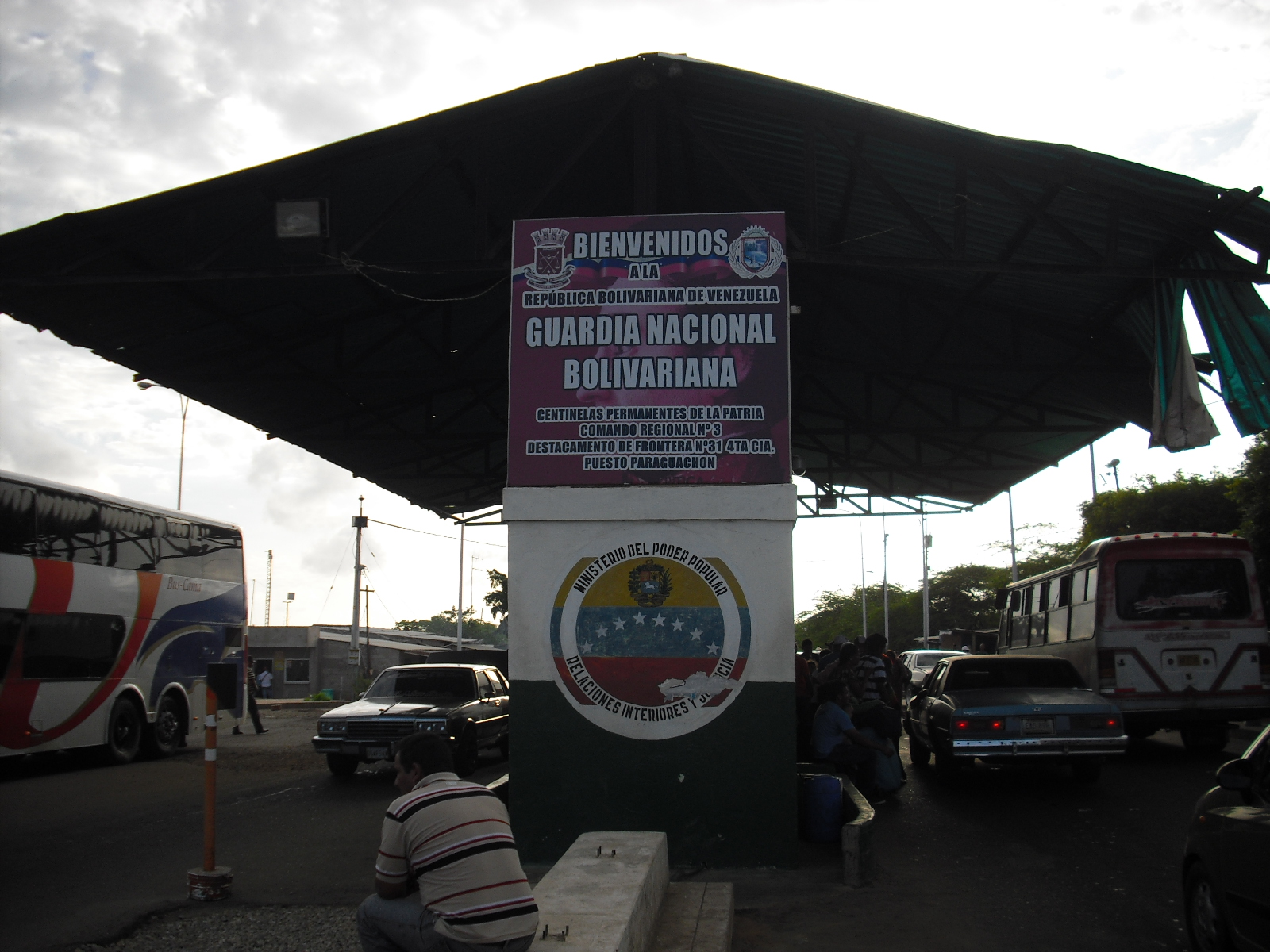
A border crossing from Colombia into Venezuela. Is the political landscape about to change in the 'Socialist Republic'
Will it be exit stage left for Venezuelan President Hugo Chávez?
So while the current White House administration is looking for more time to implement its changes, in Venezuela, as far as most outside observers are concerned, it appears well and truly time for change. 

Even if you agree with Chávez’s Bolivarian Revolution, one man at the top for 14 years is long enough. What he should have done is stepped aside and appointed a mouthpiece successor, Vladimir Putin style. 

That way the revolution could continue and he could still call the shots. It’s obviously hard, though, to walk away from the power drug. And, for better or worse, the Venezuelan electorate look set to continue to feed his habit.

*For an earlier take on our thoughts about Venezuela, see: http://bit.ly/OLR2Ev

Monday, 1 October 2012

'Dulling down' Bogotá

Outside of its natural beauty, another thing that attracts many Westerners or those from the developed world (whatever that means) to Latin America is the difference of the place compared to home. The not-very-organised confusion if you will. It can be refreshingly chaotic, at least for a time.

'Dulling down' Bogotá: One of Bogotá's antique public transport vehicles in 'full-flow'
Die-hards: Bogotá's old-school, diesel-guzzling buses.
In a more specific sense, we highlighted previously (see ‘Bogotá’s Transport Truths’) this kind of chaos in terms of transport here in Bogotá, our home, on and off, for the best part of a year. 

We mentioned then, that despite its many flaws, we preferred the colourful colectivo/buseta public transport system over the more modern Transmilenio (the city’s ‘far from efficient but getting there’ tram service on wheels). 

This attraction, however, with the old-school buses, their colourful handcrafted route displays and devil-may-care way of operating may, sadly in some respects, be coming to an enforced end. 

It’s all to do with the rolling-out of the city’s SITP or integrated public transport system.* In a bid to modernise the metropolis, the old way of doing things is being phased out. 

So, over the next few months and years residents of Bogotá must learn to catch a bus at an actual bus stop, which means the bus drivers will have to get out of the habit of aggressively braking to pick up passengers at random locations. 

With the introduction of a cashless, card system the days of waving a 1,000 peso note at the driver – the accepted sign that you are only willing/able to pay two-thirds of the fare – will be numbered. If your card isn't charged with the sufficient amount, you won’t be able to board. 

Well, that’s the theory anyway. No doubt a few crafty Bogotanos will find a way around this. 

Besides, what about the steam of individuals boarding the current buses, without paying, selling things such as DVDs and pens to books and chocolate and everything else in between? Surely they're not just going to disappear.
The soon to be illegal ass-and-cart struggles for position on a Bogotá street
Facing the axe: the ass-and-cart is fighting for its future.
The travel-card system will also mean that the bus drivers will only have to concentrate on actual driving. 

The admirable skills they have required of managing to, more or less, keep the bus on the road while dishing out the correct change to an endless string of passengers will become defunct. Getting around Bogotá will no doubt be a far duller experience for all these changes.

However, for those of you with a soft spot, like us, for the simple, more rustic way of doing things you’ll be glad to know that old habits and buses die hard around these parts. 

You just need to take a look north to the more ‘cosmopolitan’ Panama City to see how the old-school system refuses to go away despite the city’s rush towards ‘modernisation’. Although Panamanians have got used to using assigned bus stops.  

Now, of course, there are obvious positives in this attempt to ‘clean up’ Bogotá’s transport system. A new, modern fleet of buses should mean that they are cleaner and more fuel efficient than most of the old-guard monsters currently on the prowl. 

In fairness, that’s not stating a lot considering the choking emissions from the archaic buses resemble those of a decent-sized factory. Anything that might do even the slightest bit to freshen up the city’s light, oxygen-deprived air has to be welcomed.

But while it might be one step forward for the seemingly progressive Mayor Gustavo Petro in the above regard on reducing carbon emissions from transport, it’s at least a sixth of a step back in another way: t
he banning of the ass-and-cart from the city’s thoroughfares in the coming months. 

Come on, the emissions from the humble ass (that’s the animal we’re referring to here) are nothing compared to those gas-guzzling vehicles, the old or new ones.  
The newly pedestrianised Carrera Septima (7th Street) in down-town Bogotá
The changing face of Carrera Septima.

Perhaps, though, they’ll still be allowed to mosey on down Carrera Septima (Seventh Street), now that its partial pedestrianisation is up and running. 

As one of Bogotá’s most iconic and important arteries, leading right into the main square, Plaza Bolívar, this move is welcome, despite the opposition by some local traders. 

Indeed, in the long run, it’s these very same local traders who may benefit the most from taking the traffic off this street.

All these new developments are an attempt to bring Bogotá in line with the very best cities, not just in South America, but across the globe. And as the chief urban centre in a country that is changing – ever so slowly, but changing nonetheless – its negative, dangerous image to the outside world, all the above can be seen, in general, as positive. 

For those of you who fear the city and its inhabitants may lose a little bit of their uniqueness, there’s much more to this place and its people than how they commute.  

However, on a broader scale, modernisation does not always mean ‘cleaner and greener’ — on the contrary, in some cases it can mean quite the opposite. 

So as many ‘developing countries’ try to play catch-up with the ‘developed’ ones, it’s worth bearing in mind the following stat we came across recently: If the world’s poorest four-fifths were to live like the richest one-fifth, at current consumption levels, we would need four planet earths to sustain us.

Some food for thought that.


_________________________
*SITP stands for Sistema Integrado de Transporte Público de Bogotá, or Bogotá's Integrated Public Transport System.

Monday, 24 September 2012

Mocking Muhammad

We were going to hold our counsel on the latest wave of violence by Muslims that has been sweeping across the Middle East and beyond, but not now. 

There are a number of observations we feel we must make. Our guiding principles on what we’re going to write about here come from two previous articles – ‘Survival of the Dumbest’ and ‘Strength in Belief’.
Mocking Muhammad: The impressive mosque near the Djemaa el Fna square in Marrakech, Morocco
A more tranquil time in the Muslim world.

First of all, it must be stated that the United States-produced Muhammad ‘movie’ trailer (whether there is an actual full-length movie remains a doubt) that is being used as the catalyst for this fierce uproar in the Islamic world is an absolute joke – and that’s not in a funny way, it’s just complete rubbish. 

If you’ve seen it – as most of you probably have by now – you’ll know what we mean (heck, it even makes some of the Colombian telenovelas we’ve had the privilege to appear in seem like quality productions). 

So, while it obviously has infuriated the majority of Muslims, the fact that it is of such low quality, made by dimwits, would make you think that most reasonable people should be able to let it slide. It doesn’t even deserve comment. But for many followers of Muhammad it was all they needed to go on – in Libya and Pakistan, at least – a murderous rampage against the USA. 

From the outside looking in, it really appears that Muslims are just waiting for any slight excuse to take to the streets in angry, violent protests against the West. 

For these latest demonstrations are not cases of fighting fire with fire. 

Yes, the movie trailer is offensive – and you can also now throw in here the naked picture of Prophet Muhammad published in recent days by a French magazine – but no physical damage was caused and certainly no Muslims lost their lives because of it. 

The best thing that could have been done was to ignore it completely, to rise above such idiocy. Or at most make a film counter-attacking all that they see as daft and deplorable in the United States – it’s not like they wouldn’t have much ammunition in this regard.
A quite imposing religious figure in Kuala Lumpur, Malaysia
"What did you call me?"
But no, a significant number of Muslims, seemingly drunk on their faith, think that rioting is the only response to such things. It certainly doesn’t paint a very good picture for the religion as one of ‘promoting peace’. 

Yes, there are fundamentalists in all religious sects, but there seems to be a proliferation of them in the Islamic world compared to elsewhere. 

By definition, it is next to impossible to reason with such fundamentalists – be they Muslim, Christian, Hindu or whatever.

Indeed, from our experiences, those closer to being peaceful beings are found more so in the agnostic/atheist camp than in organised religions. 

You can usually discuss different opinions and outlooks with such people without raising their ire. Their understanding tends to be more universal.

In terms of Islamic states, there are clear practices and laws in existence that in any enlightened society cannot be condoned – the freedom to express incompatible views without fear of death and the treatment of women to name two of the most obvious. 

Contrast this with the relative freedom Muslims are granted to practice their beliefs and customs in the Western world and you see apparent double standards. A little bit more reciprocity from the Islamic world wouldn’t go astray here. 

Of course, there are certain aspects of Muslim society that we generally like. There is a no nonsense approach to those found guilty of crimes. Find yourself on the wrong side of the law in an Islamic country and you’ll certainly know about it. 

It’s something that many Christian-based or secular societies could learn from – stronger, more meaningful deterrents rather than the softly-softly approach. 

In this regard, we refer to what might be considered as more ‘universal’ crimes – needless to say there are a number of things considered offences in the Muslim world that in other societies are certainly not.

We must also state that the brief time we spent in the past in countries that are predominantly Muslim was highly enjoyable. 

Friendly people where you don’t get a feeling that all they see you as is a talking cash machine there to be used and abused; something you can’t always say about the more Christian Latin America.
A Muslim burial ground, Morocco
"Everybody in the graveyard votes the same."
However, as mentioned above, the radical streak when it comes to defending their religion only serves to deepen the chasm and suspicion that exists between themselves and the Christian/secular West. 

We’ve firmly nailed our colours to the mast previously here on what we think about organised religion – no matter what sect it is. Take away any form of reason or perspective and you get events like we’ve been witnessing in the last week across the Islamic world. 

You have to wonder what does God, along with his prophets Jesus and Muhammad, make of it all?

Tuesday, 18 September 2012

The damned Irish question

For Winston Churchill it was ‘the damned Irish question’. Fast forward the guts of a century later and for Rory McIlroy it’s the damned – although perhaps not in the same venomous way as Sir Winston – Irish or British question. 

And it appears, unsurprisingly in some contexts, that the United Kingdom resident is siding with the latter. Although, he has been at pains to state in recent days that he is yet to fully make up his mind.
The damned Irish question: Rory McIlory doing what he does best — playing golf
Mean in green. Or not? Rory McIlroy.
For those of you in the dark on the above, we’re referring to where Northern Ireland-born Rory McIlroy – the number one golf player in the world right now and arguably the sport’s biggest superstar – will pledge his allegiance for the Rio de Janeiro Olympics in 2016. 
 
As he correctly pointed out in a recent open letter on this subject via his Twitter account, no matter which side he opts for, he is going to upset some people. 

By the tone of that correspondence it seems this whole subject is one he wishes he didn’t have to deal with. Or at least if it was one that was taken out of his hands. He’s certainly not in an enviable position.

Of course, it shouldn’t need to be stated that as a UK citizen he is fully within his right to plump for Team GB. Hailing from Northern Ireland, he can choose to have either a British or an Irish passport – as yet there is no separate one for NI. 

So, the fact that he holds a British passport is a pretty strong guide to his preference. 

However, we are aware of some Northern Ireland residents considered to be more in the green sphere than orange who hold British passports for the simple fact that they are cheaper to obtain. What price your nationality, eh? About £20 it seems, for some. 

The whole political position of Northern Ireland is one that we regularly get questioned about from locals here in Colombia. Most of them assume that it is British, confusing Great Britain – the island to the east of Ireland consisting of the countries England, Scotland and Wales – with the UK, the sovereign state that is Great Britain and Northern Ireland. 

So looking at this from a purely geographical perspective, if you are born on the island of Ireland – be it in the Republic or the North – you are Irish. 

For most people, though – Rory McIlroy included – nationality is much more than just where you were born. It’s about where you come from in a background sense – your blood, your heritage. 

For McIlroy and many of his kin in Northern Ireland, their roots on the island date back to Britain’s Ulster Plantation in the early 1600s. 
 
These new settlers – mostly Scottish Presbyterians although there were also English Anglicans – remained fiercely loyal to their motherland of Britain. 

Also, chiefly because of religious, political and indeed language differences, they did not end up mixing with the dispossessed ‘old Irish’ as happened in other parts of the island where British settlers had been previously planted. 

This divide was only made deeper after the Battle of the Boyne in 1690 where the Protestant King William defeated the Catholic King James, ensuring the Protestant succession for the English, Scottish and Irish thrones and thus the religion’s ascendency in Ireland.
The 'Irish' Union Jack
Perhaps even the Brits are Irish at heart?
In the following years, up to and including the creation of the Irish Free State in 1921 and its subsequent declaration as a Republic 27 years later, the political and cultural differences between the settlers in the north-east of Ireland compared to residents in most of the rest of the island sharpened further.
 
In this context, what it meant (and still means in many ways) to be Irish was completely at odds with the customs and mindset of the planted stock in what is now the state of Northern Ireland. 

Namely, to be Irish usually meant Catholic, anti-British (here you can include British sports such as cricket, rugby and soccer versus the Irish sports of Gaelic football and hurling) and anti-royalty, to name just the most relevant in this regard. 

Now, while many of these differences were unavoidable from the get-go, they were given further legitimacy by the direction taken by the early leaders of both states. 

Northern Ireland’s first Prime Minister, James Craig, summed this up in his response to Éamon de Valera’s (his southern counterpart at the time) declaration in 1934 that the Irish Free State was a Catholic one, stating: 'They still boast of Southern Ireland being a Catholic State. All I boast of is that we are a Protestant Parliament and a Protestant State.'

So bearing all this in mind, for Rory McIlroy, while geographically he may be Irish, or Northern Irish if you will, culturally he may feel more British – or at least the Northern Ireland version of what it means to be British. 
 
It may feel more natural to him to march behind the Union Jack rather than the tricolour – even allowing for the fact that the green, white and orange of the Irish flag signifies the hope for peace, understanding and harmony between the Irish nationalist and British nationalist/Orange traditions that exist on the island. 

Indeed, it could be argued that the flag has more significance today for the North considering the uneasy peace process it is going through than it has for independent Ireland.

All this begs the question, is it possible to be Irish if you come from a Northern Ireland Protestant/Orange tradition? This really depends on how you define what being Irish is. 

It also depends on what you want to be yourself. If you can be British and Scottish, British and Welsh or British and English, than surely you can be British and Irish? 
 
Many past and present rugby players, from a similar stock to McIlroy, have donned and continue to don the green jersey of Ireland when it comes to representing their "country". There is, however, an important difference here: there is no British rugby team (it’s the British AND Irish Lions remember). The Olympics, on the other hand, forces a choice.
'Wrong Way' in his Northern Ireland soccer shirt - a gift from his friends in Belfast
What's in a shirt? C'mon 'Norn Iron'!
Perhaps, though, there is still time for a compromise – one that may be closer to being a reality than most people think. That is representing the fully-fledged, independent Northern Ireland at the Olympics – not Irish, not British, but Northern Irish. 

From our highly enjoyable time living in Belfast, we encountered a number of locals – from both sides of the divide – who expressed such a desire.

Considering the arrogance, ignorance and indifference that many citizens of both Britain and Ireland have towards Northern Ireland, this might be the best solution for all. For one, we’re sure Rory McIlroy would like it if that were the case right now.
______________________
*For a somewhat related piece, see Punching back.

Tuesday, 11 September 2012

Unsocial media

A few years back we made a public call, via a newspaper letter and its subsequent broadcasting on radio, asking that the use of mobile phones be banned in public places. 

The main reason for this came about after numerous bus journeys in our native Ireland where people were yapping away for all to hear about their latest weekend escapades or what have you. 

It appears that the boundaries between private and public conversations become blurred for some people when they speak on their mobiles. 

Our letter plea was well received in many quarters at the time — someone felt it even warranted a Noble Peace Prize nomination, we kid you not. Alas, however, there has been very little corrective action in this regard, be it in our native land or further afield.

Unsocial media: A selection of some very 'smart' phones.
Many people's new best friends - compact & intelligent.
Now, while our appeal wasn’t really penned in a humanistic sense, more in a curmudgeonly way to be honest, the case for restricting mobile phone use for the good of our species can certainly be made.

Yes, there is little doubt that mobiles have revolutionised the way we connect and communicate with each other — in many ways for the better — but you must ask the question, is it at the expense of face-to-face interaction? The anecdotal evidence would suggest yes. 

If people aren’t talking on their cellular, then the likelihood is that they are either ‘pinging’ somebody, listening to music, messing around with some sort of app or whatever else they can do on these fancy pieces of plastic (you’re right, we’ve yet to be bitten by the smart-phone bug). The ‘real’ person sitting beside them doesn’t exist any more. 

OK, judging by many of the conversations we’ve overheard such as the ones alluded to in the opening paragraph, we wouldn’t be that keen to speak to such people anyway, but there might be some individuals who are worth the effort. The mobile, though — especially more advanced models — has become a barrier to in-the-flesh communication.

This is particular apparent in pubs and bars. The chance of a random chat with somebody has been greatly diminished in recent years. 

When people find themselves on their own, rather than look for somebody to talk to or at least be available for a chat, they go to the comfort of their phone for company. (Why would anyone miss out on the chance to converse with 'Wrong Way'?)
The Facebook 'like' symbol - how could you not like it?
Thanks Facebook - we, um, like you, too.
Now, you might say that radio and TV have also had a negative impact on real, physical interaction, but not as close to the extent as the new-age phones together with the social networking websites such as Facebook and Twitter have had. 

Radio is obviously far less intrusive and demanding than TV but for its part, the ‘great conversation stopper’ in the corner can often be the source of conversations, especially in public houses.

You really can’t say the same for mobile phones while Facebook and its ilk are even more harmful to natural communication. 

People will waste away hours of their time virtually chatting to friends and acquaintances at the expense of actually going out meeting somebody in person. For social beings that most of us are, that can’t be good for body or mind.

Another worrying aspect on the Facebook front is that it can actually be quite damaging to some people’s mental health, especially those at a low point in their lives. 

It can, at times, paint a picture that all your connections are having a wonderful time while your life is banging along at the bottom. But instead of logging off and heading out which would seem the sensible thing to do, these people stay hooked in, becoming in a sense new-age, social network voyeurs.

This kind of behaviour can be particularly damaging in the context of a recent romance break-up. It certainly doesn’t help you to move on from somebody if you subject yourself to constant updates and photos of the daily happenings of the person you once loved — or maybe even still love. 

In fact, in a previous article (see: ‘Mi Amor’ – or perhaps not?’) we jokingly had a go at how some Colombian female acquaintances are quick to delete you from Facebook if things turn even slightly sour. Perhaps, though, they’re right if moving on is what they want to do.

Of course, social network sites, mobile phones and all these things are just tools — they are not inherently evil in their own right. It’s how you use or, more importantly, misuse them that’s at the heart of the matter here. 

From our point of view Facebook, Twitter and LinkedIn have helped us gain and maintain a plethora of contacts across the globe. Without such outlets, these new connections would have been next to impossible to not only sustain but to find in the first place.
The 'Where did it all go wrong?' Evolution/devolution poster.
Replacing a wife for WiFi - the latter is more reliable, for one.

However, virtual communication should not come at the expense of real-life, face-to-face contact. If we let this happen, we'll all end up like the person sitting at the computer at the final stage of that ubiquitous evolution poster. Hermits — but with technology.