Friday, 9 August 2013

San Gil: Taming Suárez

Our first visit, over two years ago, to what's seen as Colombia's adventure capital, San Gil, was very much a relaxed affair. On that occasion we had a thoroughly enjoyable time wandering about the rolling Santander countryside, which included taking in the quaint, period village of Barichara.
San Gil: Taming Suárez. San Gil, Santander, Colombia from the hilltops
San Gil from the hilltops.
This time around, with the help of a good Dutch mate, we cranked up the adrenaline levels a few notches and sampled some of the reasons why the place is renowned for its extreme side. 

This started with an afternoon of getting a brief taste of varied activities including canopying and rappel, amongst others. For the price we paid (45,000 COP, roughly €20), it wasn't a bad deal.

The main event, however, was a rafting 'sojourn' down the famed Río Suárez; rated by many as second only in South America to Chile’s Río Futaleufú for its wild rapids. 

We had been forewarned not to over-estimate our talents mastering this waterway and that perhaps the gentler Río Fonce would be safer, less taxing and thus more enjoyable for all concerned. 

We’d also been told that those selling the excursion mightn’t be too bothered about our abilities, or lack thereof, in such an activity – Suárez costs more to do, so why scare people off and miss out on more plata (cash that is)?

Added to this, the day we tackled Suárez coincided with it being, according to our guides, in one of its roughest moods so to speak.

Now, as oft mentioned here, our ability in water is about as good as a handicapped cat. Yet, this doesn’t translate into any big fear of doing various aqua sports, especially when we have the safety of a life-jacket tied tightly around us. 

So we approached this undertaking with relative calm. Throw in the fact that our four on-raft guides and accompanying canoeist where putting their minds/senses at ease with a particular substance before we even started – something they also did mid-way through and at the end – made us feel that this wasn’t anything to get too worked up about. Perhaps that was all part of their plan.
Getting ready to tackle Suárez; it looks easy from here
'This will be easy.'

We did, though, do some head-scratching when a luminous wristband containing an emergency services phone number was put around us before the off. We wager this was to be of help to some passerby in case they found our unconscious, battered body – ‘a one-step guide on what to do if you find human remains’, in a sense. 

It was, however, valid for just one day. Sure you can’t be bothering emergency services with cases more than a day old, can you?

That aside, after a brief dry-run through the various call instructions by our skipper, the real action got off to a steady start. Although, the lads’ persistent criticism of our rowing ability was a little annoying at times – they were lucky they didn’t get an oar in the head at a few stages.

In any case, a little further on we all had greater things to concern ourselves with than getting hit in the head by somebody, accidentally or on purpose. That’s because Suárez began to show its teeth. And that meant us taking a dip – well, it was more like being in a washing machine on its final spin, we imagine – on more than one occasion. 

It certainly got the heart racing – the key being just to go with the flow and hope you don’t smash your body on a rock.

Having gone over a number of times, it was with a little trepidation that we approached the infamous La Fantasma*, The Ghost, section of the river. 

This is a decent sized stretch with powerful rapids where if you were to fall out early on, you’d be waiting some time and would have encountered a few hefty rocks before you floated to calmer waters.
Working our way through 'La Fantasma'
Steady as she goes...

That our guides stopped to assess it before we went through and had the canoeist do a solo run also got us thinking: Should we pass on this one? 

We’d already had a good thrill, so why, quite literally, push the boat out further for something that looked like it could dangerously get the better of us? Heck, though, we’d gone this far, we might as well make the final push – get our money’s worth (you know how important that is to us).

If there was any doubt in our minds about how rough this part was, the sight of one of the guides blessing himself before we got going put it firmly into focus. His plea to the gods worked anyway. Well, maybe it was more a case of lots of luck mixed in with us working a bit better as a team that saw us through in one, whole piece.

So a few minor bumps and bruises apart and conveniently overlooking our earlier mishaps, we like to think we ‘tamed’ Suárez.

We certainly survived it anyway. Alas, there’s a lack of a T-shirt proudly proclaiming so.

_________________
*For a look of us in action on 'La Fantasma', see http://youtu.be/J6T_BDVucJk. And for one of our 'overboard' moments, see http://youtu.be/pTBK0qqCa_g.

**More information on rafting and other activities in San Gil can be found from ‘Adrenalina’ at www.adrenalinasangil.com or by emailing adrenalina.sangil@hotmail.com.

***One pleasant budget accommodation option in San Gil is Hostal Le Papillon, hostallepapillon@hotmail.com. They also organise tours and various adventure sports.

Wednesday, 24 July 2013

Putting Colombia right, the 'Wrong Way'

As has been well documented, the Wrong Way crew is a modest bunch. Sometimes, though, we have to go against our natural instincts and give ourselves a modicum of praise (it’s unlikely anyone else will). 

So as we prepare to depart Bogotá for what at this remove is an unspecified period of time, we’re going to take a look at some of, ahem, our achievements in the region over the last 20-plus months.*
Putting Colombia right, the 'Wrong Way': Sunset in Bogotá
The sun is setting on this latest (but perhaps not last) stint in Bogotá.

Peace talks

Considering the bridges we built during our time living in divided Belfast (a nice little chat with the Reverend Ian Paisley outside City Hall being one of the highlights), it was only a matter of time before President Juan Manuel Santos called on us to set the Colombian peace process in motion. 

Cynics out there may say that the whole thing is just an expensive talking shop that’s going nowhere – the violence hasn’t stopped, for one – but at least they’re talking, right? (For an earlier account of this, see http://bit.ly/13IIUKr).

‘Revitalised’ Bogotá

Where do we start with this? There’s the partially pedestrianised Carrera Séptima (7th Street) in the capital’s centre – a rare victory for humans over vehicles (kind of). 

We stood shoulder-to-shoulder with Mayor Gustavo Petro during the controversial change in rubbish collection that has revolutionised waste collection in the city (well, maybe not quite revolutionised, but it sounds good – for background see http://bit.ly/WFOPsW).

What's more, we finally initialised the programme to rescue the metropolis’ overworked horses – it’s taking time to get them all off the streets, but we’re getting there (see http://bit.ly/15IZQPz).

It’s not only the equines we’ve saved but also some human beings. Our cleaning up of Bogotá’s notorious Bronx barrio (and other dangerous barrios in other cities across Colombia) has been a roaring success – we just haven’t been there in a while to check on progress (it’s too dangerous).

A rally for peace in Bogotá City Centre
Carrera Septima –take away the cars & the people will come (and march).

Transport matters

An ever-extending (it goes to the airport now, almost) efficient (at times) Transmilenio service linked up with an integrated public bus system (SITP – OK, hardly anybody uses it yet and its operation is divvied up between nine companies, but change takes time, you know) is something we’re pretty proud of. 

We’re not resting on our laurels, though. Metro Bogotá is more than just a pipe dream, it is on the way, trust us. (For more on transport in the city, check out http://bit.ly/N68gKL)

La grande

Las Grandes; The BIG beers
Las grandes in our favourite tienda ...
For some reason, the big beer revolution that swept through the rest of South America some time back passed over Colombia. That was until we arrived and got Bavaria – the country’s main beer producer – moving on this front. 

Since the introduction of La grande (750ml bottle), through hard work, dedication and repetition, we’ve been persuading the locals to take up the big habit. Come on guys, above all it makes economical sense.

Vamos a Brazil

There’s no doubt Colombia has produced some exceptional football (soccer, if you will) players through the ages, but La Selección – the national team – has very often flattered to deceive. Thanks to our, um, support that has all changed. 

All they need is a couple of points from their final four games of the South American World Cup qualifiers and Los Cafeteros will be on their way to Brazil next year – their first World Cup finals appearance since 1998. Chévere.

Thespian talent

Before our arrival, Colombian telenovelas (soap operas) were renowned for their cheesiness, terrible acting, ridiculous storylines and just all-round bad quality. 

Now, however, with our help, they are, well, um ... Right, let’s just say we did some interesting extras work from time to time. The gory details of those can be found here http://bit.ly/NrbPc3.
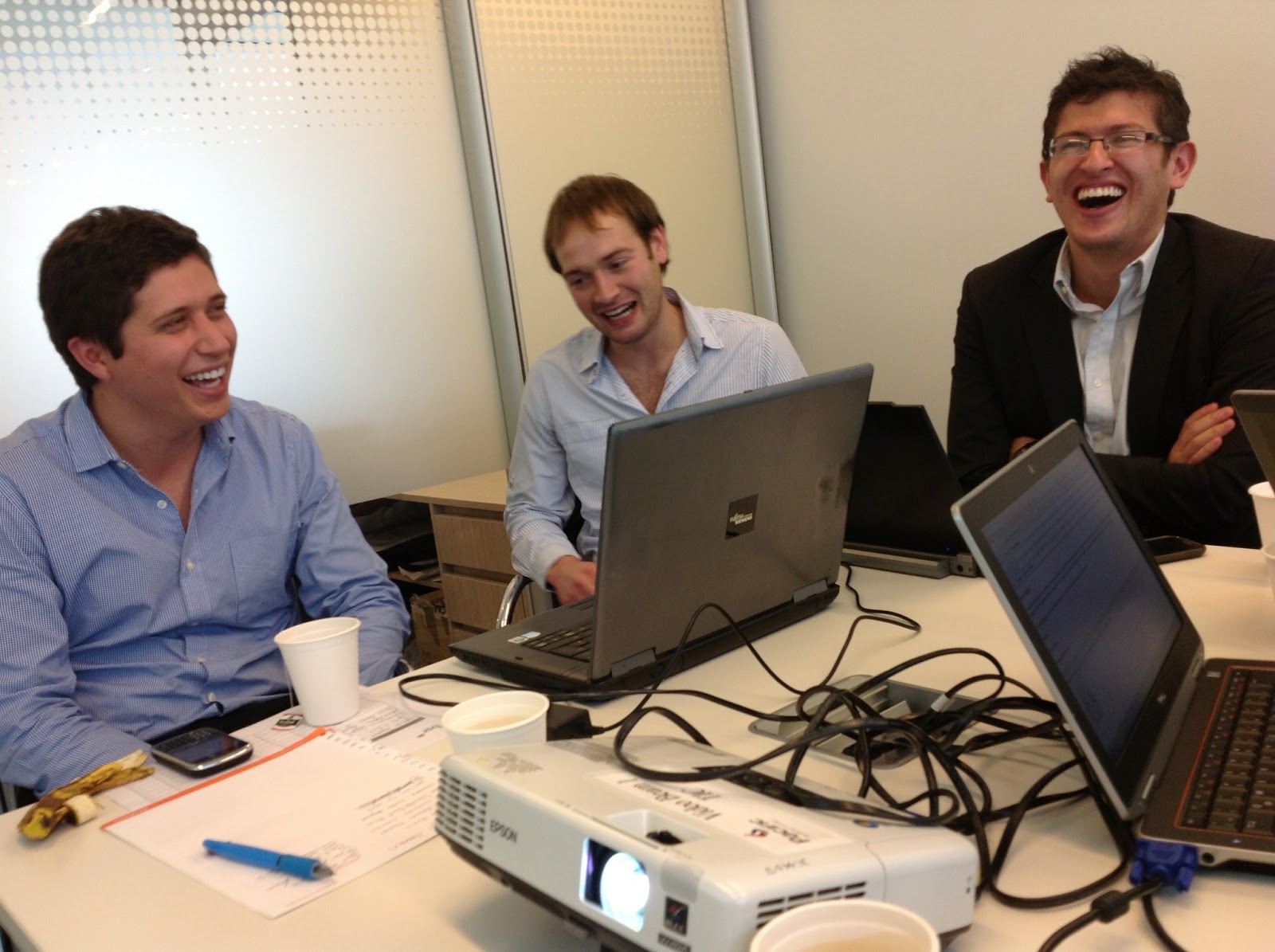
'Wrong Way' hard at work...
Hard at it; but whose is that banana skin?

Educating excellence

While we may have occasionally showcased our acting skills on Colombia’s small screen, the arguably more lasting, beneficial legacy we’ll leave behind has been our ability to pass on the English language – with an Irish twist, albeit (more detailed thoughts on our teaching talents can be read here http://bit.ly/V8ELH4). 

Whether any of our alumni actually learned anything is open to debate. At the very least, though, some of them have a better understanding of Irish history and culture, Wrong Way style. 

We'll miss imparting that knowledge; as well as all the free coffees and the odd free lunch. Heck, those latter treats are enough to entice us back (we're easily pleased here, you know). Time will tell on that one.

*Disclaimer: We would like to point out that some of these achievements may not be directly attributed to us. But ...

Tuesday, 9 July 2013

Bogotá's broken windows

Right, it's a question of where do we start with this one. Applying the Broken Windows theory to Bogotá might seem futile.* 

In brief, this is the idea that if a window is broken and left that way in a neighbourhood, this gives off a signal to others that nobody cares about the place. Thus, more windows are broken and a sense of disorder soon spreads throughout the area with a feeling that nobody is in control. 

In other words, the premise is that when trying to implement law and order, small, seemingly minor transgressions matter in a big way.
Bogotá's broken windows: A typical 'colourful' building in Bogotá's La Candelaria district
A cause for concern or not?
It is this thinking in operation that is credited by many in overseeing the dramatic reduction in crime levels in New York City in the late 1980s and '90s. 

For much of the '80s the city was going through one of the worst crime epidemics in its history. But by coming down hard on what appeared petty, insignificant unlawful behaviour in comparison to the daily homicides that were occurring at the time – a policy that started on the subway before later being introduced on the streets under the guise of zero-tolerance – the city’s crime levels plummeted.

So looking at Bogotá in this light, there are plenty of broken windows – in the literal sense and otherwise – which the authorities here could start making a concerted effort to fix. Below we take a look at the ones that cause us the greatest annoyance:

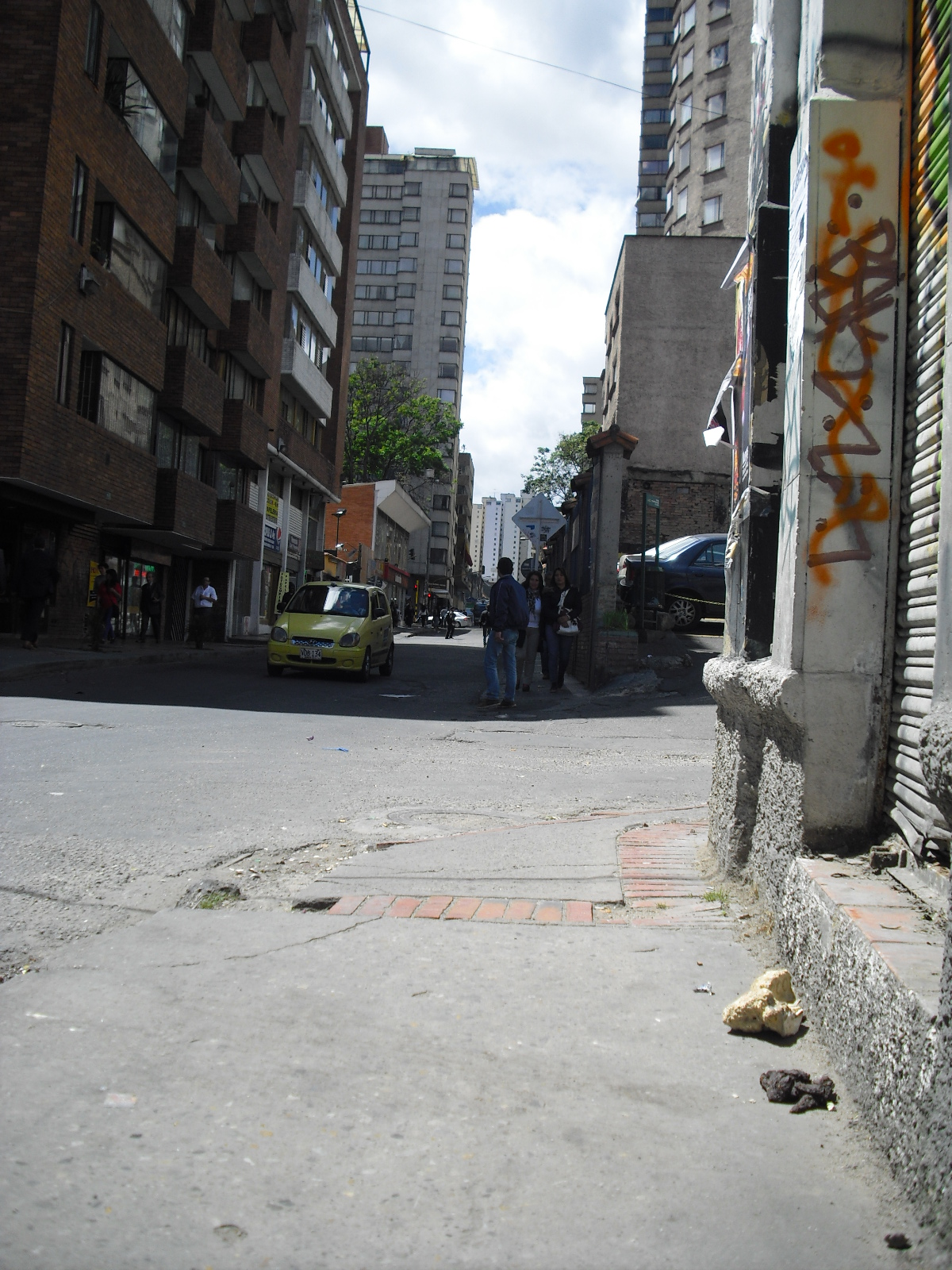
A Bogotá street replete with faecal matter
Watch your step ...

Faeces on the streets**

When we lived in working-class north Belfast, good practice on the main street outside our house was to walk with your head down so as not to step on the ubiquitous dog poo lining the concrete. The same advice goes for Bogotá; however, not only is it dog excrement you have to avoid but also human.

Yes, most of the latter faeces are the product of the homeless, but perhaps the introduction of some basic public toilets (we’re not asking for a shelter just yet) for these guys and gentle persuasion not to "decorate" the streets with their waste would be a start.

As for the dogs, fine owners who are caught not cleaning up after their canine’s mess, simple as. The unaccounted for street mutts? Round them up.

Aggressive beggars

In a city where a many live well below the poverty line, beggars are a sad fact of reality. When there is a lack of any meaningful social programme to help them it’s difficult to be critical. 

However, the in-your-face, give-me-money-now types need to be systematically tackled – it’s a thin line to cross from aggressively asking for money to aggressively taking it. Fining these types is obviously a waste of time but setting up some sort of community scheme where they are housed and put to work might be one solution.

Transmilenio delinquents

It was on New York’s subway where Broken Windows first hit, tackling fare-beaters for one. When these offenders were apprehended, it was often found that many of them were carrying weapons or had previous convictions. 

There are plenty of abusers of Bogotá’s main public transport system, Transmilenio, who no doubt would fall into the same category. Deal with them. Of course, to help in this you need a streamlined system where these crimes are punished quickly and effectively – in a country such as Colombia that could be the downfall.

Rubbish

This just adds to the overall environment of carelessness, and there’s plenty of it to be found blowing around the capital’s centre. 

Inadequate public bins, poor storage facilities for waste yet to be collected, a lack of litter awareness among the populace, and homeless people who rip open rubbish bags looking for hidden "delights" are all parts of the problem. 

Mayor Gustavo Petro’s coveted Basura Cero (‘Zero Rubbish') programme (see http://bit.ly/WFOPsW for background) has a long way to go.

Infrastructure issues, neglected buildings

A standard open manhole in Bogotá
"Holy" ground.
Footpaths and roads in perpetual states of incompleteness and/or disrepair, new buildings not finished or older ones lying decrepit, again like the rubbish and the broken windows themselves, these send out negative signals. 

It’s not just faeces that you have to avoid on Bogotá’s streets but also the risk of falling down a manhole – it’s normal for the covers of these to go missing and then rarely replaced. This goes for the highways and the pavements. At best some thoughtful person might place a stick protruding out of the hole to act as a warning. It’s a start anyway.

Graffiti

Another "crime" that came in for heavy treatment on New York’s subway; for many, of course, it’s just an expression of art. From that point of view, Bogotá has plenty of interesting, impressive murals that are now tourist attractions. 

So when graffiti brightens up an area and has a story to tell, then it's fine. But vandalising protected public buildings or transport with paint is not art – this is where heads should roll.

It must be pointed out that we’re not in favour of a zealous police state. For us, Broken Windows should be about implementing an attitude change. 

Therefore, to set an example you may have to be strict and unwavering at first, but over time people should come to know what’s acceptable and what’s not. Some, though, take longer than others to learn.

_______________
*See http://bit.ly/12r4YV2 for a more detailed explanation of broken windows.

**A good Dutch friend sent us this photo – the infamous shit-hand of Bogotá. Nice.

A human hand 'poo-print'
Toilet paper? What's that?

Monday, 24 June 2013

Bogotá's simple pleasures II: "Up the hill", "Nazi" and free beer

We’ve written before about the simple pleasures that we enjoy here in Bogotá.* In the last half year or so there have been two important additions to that list to which we must give due mention. Indeed, considering the time and money we’ve spent (well spent that is, most of the time) in both locations it would be remiss of us not to pay them homage.

They both fall into the tienda bar category – that is cheap-and-cheerful, rough-and-ready places to consume a few beers. Perhaps it’s an Irish trait, but no matter where we are in the world we always like to find a place (or two) we can call our local.
Bogotá's simple pleasures II: "Up the hill", "Nazi" and free beer. The camera shy Lucio in 'Nazi'
Elusive Lucio – keeping the beer flowing.
Initially, here in Bogotá’s La Candelaría district, we stumbled upon the popular, fairly reasonably priced Doña Ceci’s. It fulfilled its purpose for a while, but after devoting a nice chunk of time to the place, it became a little disappointing that we remained just another number, another ‘foreigner with money’ to the rather cold, tacaña owner

We don’t demand a lot, but a little appreciation and recognition from time to time that we’re good customers wouldn’t go astray – what a local should, at the very least, be about. Alas, with Doña Ceci, this was never forthcoming.

However, the tiendas where we now like to relax at the weekends (and the odd weekday) score high on those points and more. Both places are such bog-standard, Colombian drink holes that they don’t even have a name – at least not an obvious one that we’ve noticed. Thus, we’ve had to christen them ourselves (and regularly continue to wet the baby’s head at that).

So there’s Up the hill due to its location which is, predictably enough, at a bit of a higher altitude than where we live, on the borders of the supposedly not-that-safe barrios of Egipto and Belén south of the city centre. 

Then there’s Nazi bar which, perhaps not so predictably, has nothing to do with – in any meaningful sense anyway, as far as we’re aware or concerned – the fascist movement that found its home in Germany in the 1930s and 40s. 

It’s been dubbed that because the very affable twenty-something-year-old owner, Lucio, has for some reason that we’ve yet to ask him, a faint swastika tattoo on his hand. Considering he doesn’t exactly resemble nor have the ethnic background of a typical Nazi, we like to think that the symbol for him represents one of its non-violent meanings – ‘to be good’.

In any case, actions speak louder than words (or symbols) and Lucio has only ever been a complete gentleman to us. Indeed, of late he has adopted the Irish custom of the lock-in after hours. A free grande (that’s a 750ml bottle of beer, Poker being our preferred option) on our birthday was also very much appreciated. Small things, but they make a difference. 

Now, while Nazi’s grandes are a tad more expensive than our other local (3,000 pesos versus 2,500 pesos or €1.20 compared to €1 if you like – every little helps) Lucio’s friendly demeanour and appreciation to have us as patrons (how privileged he is) more than makes up for that. It also must be said he does benefit from a location advantage – he’s just a stone’s throw away from our residence.
Enjoying the crack 'Up the hill' - the way it should be...
Fun & games Up the hill. Is there anybody serving, though?
As for Up the hill, while the cheaper beer may have been the initial strongest pulling point, the treatment we receive, not just from the extremely friendly Paisa-blooded** owners and staff but the other Bogotáno regulars who drink there too, means that we feel bad if we don’t make a visit at least once a week.

Indeed, the chief owner is almost like a mother figure to us – in a good sense, that is. Not only was there free beer for our birthday, but a cake to boot. As for the other revellers who frequent the place, it’s rare we leave without getting at least one free drink landed on our table; all this from one of the city’s "poorer" regions, especially so when compared to the exclusive north.

So much have these places become what you might call our home from home, the constant salsa and vallenato music that’s played in them is almost becoming likeable for us. We’ve even been known to do a spot of salsa-ing once we’re merry enough (for a greater discussion about our Colombian dancing exploits, see http://bit.ly/S7A8eS).

All that’s missing in both places are a few prettier chicas from time to time – perhaps the ones that generally frequent the plush north could visit, just leave the attitude and arrogance at home. We can dream, can’t we?

______________________
*'Bogotá's simple pleasures' http://bit.ly/Uzc3lk.

**Paisa is the name given to a person hailing from north-west Colombia, specifically the departments of Antioquia, Caldas, Quindío and Risaralda. 

Thursday, 13 June 2013

All that you can't leave behind

Every now and again it’s a good idea to cut the crap from your life. To undergo a necessary pruning you might call it. This can be done in a number of ways and in different areas. 

For example, you can streamline your friend database – these days that might involve deleting from your mobile phone and/or Facebook the numbers and contact details of old acquaintances who might now be a source of negativity.* 

There are also the material things we build up over time – in some contexts, these could be seen as no more than clutter or rubbish but they can be hard to let go of all the same.
All that you can't leave behind
All that we can't leave behind?
It’s in that latter area where we often struggle – our penchant for holding on to various bits and pieces plays against us. 

Now, if you’re a settled person (whatever that means) with your own house or at least long-term accommodation, such a hoarding trait isn’t that big of a deal really. However, if you still have something of a backpacker lifestyle and mentality, as we generally do, then keeping hold of what are, objectively speaking, non-important things, is far from a convenient practice.

What we’re on about here is the ability to extend the travel light approach to living light. After almost two years of being based in Bogotá but with a necessary break (for how long, we’re not sure) from the city on the horizon, the dreaded time of gathering up our things is fast approaching.

At first glance and without really getting down and dirty in it yet, it appears that we haven’t done too bad in terms of a large accumulation of stuff compared to other places we’ve stayed in over the years. 

For one, we don’t own any big electrical equipment or cumbersome furniture – in any case, if we did, they’d have to stay put unless they were of incredible emotional value. As for everything else, the question is: Can we put what we want to bring with us into one bag that weighs no more than 20 kg? That’s the goal.
Unnecessary extravagance...
Many of us are guilty of having more than we need.

In theory, it shouldn’t be a problem. What more does one really need to travel with other than some basic clothes? Added to that, it’s not like we’ve got any expensive outfits in our wardrobe – a nice, not-that-heavy suit apart – that we can’t leave behind.

Indeed price-wise, the ‘Wrong Way’ set of clothes these days is very much in the value-for-money, practical department.

This is, however, where what might be described as emotion comes into play. What we do have is an assortment of football and rugby shirts of sentimental value. An ever-growing collection we like to have recourse to at any given moment. Individually, of course, these tops weigh next to nothing; collectively, though, is a different story, while they also occupy some valuable room in a backpack tight on space.

Alongside the shirts, but perhaps slightly more acceptable in terms of emotional attachment, we’ve the various little mementoes that we’ve built up over the last couple of years. ‘Important’ paper cuttings, various correspondence, thought-provoking books that we like to keep hard copies of for reference, stuff like that.

But if we’re being tough on ourselves, coupled with a potentially bulging bag, a lot of these things can be scrapped. Sometimes it’s best just to live with the memories – no more, no less. What’s going to be required is German-style efficiency and precision when we’re eventually packing things up.
For some, living light isn't a lifestyle choice ...
Living light, the extreme way.

It’s also worth bearing in mind that being in a position to have this as a problem shows the privileged place we’re coming from. There are plenty of people on this planet who are not and never will be able to accumulate a stash of material stuff. 

For them, it’s just about finding sufficient food to survive on from one day to the next. We don’t need to look too far for examples of this – here in Colombia, the gap between the haves and the have-nots is as wide and apparent as anywhere.

So while it’s a good idea to cut the crap from your life, when doing so it’s also wise to put things into an appropriate context. However, both can be quite difficult to do.

___________________
*For more on some of the ‘evils’ of Facebook and its ilk, see http://bit.ly/Rbh9lc. Also, for how some Colombian ladies deal with 'friend clearing' see http://bit.ly/NsJyB5.

Wednesday, 5 June 2013

The 'extranjero-files' — that is, not a xenophobe

Right, we’re admitting defeat. Or, to put it more correctly perhaps, we’re changing our angle of attack. It’s all to do with the word gringo and our sometimes laborious attempts to ‘correct’ numerous Colombians and other Latinos who refer to us as such. 

You see, for us the word has always referred to English speaking North Americans only (which we obviously are not) and, to be honest, most locals in these parts go along with that.
The 'extranjero-files' – that is, not a xenophobe: 'Wrong Way' with some fellow Colombian outcasts.
A bunch of foreigners.
However, at first glance some people here automatically think we’re from the US and hence call us gringo. We generally get a little uptight and politely tell them that we’re not gringos but Irish, so the word ‘extranjero’ (foreigner) is a more accurate label. 

Yet, the ‘g-word’ is theirs (Latinos) and some do use it to describe any foreigner. So in fairness, they can apply it as they see fit.

In terms of accuracy, though, and to avoid, heaven forbid, being mistaken as a Yank, if we are called a gringo in the future we will respond by saying that if you’re using it in its broader all-foreigners sense, fine, but if not, then we must clarify.

Then, of course, many of the people here who do call us gringo or extranjero or whatever are not that far removed from the Old Continent; that's Europe if you will, or more specifically Spain. 

So perhaps the only people here who have a real right to call us any of the above are the true indigenous – they could also call many of the Latinos they now share this land with the same.

In any case, they are just words, so should we really give them as much thought as we’re doing right now? 

Heck, Colombia is a country where the inhabitants regularly call their friends ‘gay’ (marica that is; for more on that see http://bit.ly/18eEfhd) and have no problem referring directly to people by their distinctive features: ‘gordo/gorda’ for a fat person; ‘negro’ for blacks; ‘mono’ for fair haired/skinned people and suchlike.

Supporting the forgotten - Laos lads standing up for Dublin
Supporting minorities.
As a Dutch friend mused, because of many other, real life-or-death problems this country has recently faced (and still does), what might be seen as offensive/racist words in some other places cause little fuss here (for more on not getting too worked up about words, read http://bit.ly/NNg2E8).

What is important in the above, though – and is the case the world over – is how those words are delivered and the actions that thus follow. 

That is to say, is there real meaning to what is uttered? Are they just throwaway, jovial remarks or is there more of, in the case of referring to people’s skin colour and the like, a racist element to it?

It will come as no surprise that we’ve witnessed racism here – you’ll find it in every corner of the globe. Very often it’s directed at the Afro-Colombians and/or the indigenous. That is, those on the peripheries, not generally part of the ruling class. They don’t quite fit in. 

Of course, for different reasons, you’ll also find some anti-US sentiment here which could be considered racist too – even though, politically speaking, Colombia is the most pro-US country in South America.

What might be seen as ironic is that many Latinos, when they depart for the Western world, will encounter discrimination, suspicion and racism aimed at them for no real logical reasons other than that they’re different.* Yet, surrounded in the comfort blanket of their own, they do the same to the minorities in their midst.

Together in death; as perhaps we should be in life...
At the end of it all, this is our lot ...
This, of course, is a global phenomenon, far from restricted to this region. 

Many Irish see no problem hurling, at the very least, generalisations at immigrants who seek refuge on the island – a practice that often influences government policy – while at the same time expect right of passage wherever they go in the world. 

OK, some will argue this isn’t a racist tendency and more to do with protecting a small, bungling economy but that’s not always the case.

You see at certain times and in certain contexts, we can all be part of the minority, the outsider. We found it interesting to read in a newspaper in Malaysia that they referred to the West as the ‘minority world’ – the ‘haves’ versus the ‘have nots’ that is.

It can be a good practice to think outside your group – try to place yourself with the outcasts from time to time. 

We all have prejudices – it’s part of being human. The trick is trying not to let them unduly and irrationally influence us; easier written than done, of course.

As the saying goes, ‘before you criticise someone, walk a mile in their shoes. That way, when you criticise them you’ll be a mile away and you’ll have their shoes.’ And if you’re lucky, they might be the right fit.

____________________
*Things may be changing on this front. Check out Latinos on the rise http://bit.ly/1784NCY for more on that.

You may also want to check out Phantom freedom at http://bit.ly/SOQUl0.

Wednesday, 29 May 2013

Clashes in the kitchen

Back in our younger, still-living-at-home days, the one thing that we were always encouraged – or forced, if you will – to do was to clean up after ourselves. 

We may not always have been the best at it or terribly enthused to do it on many occasions but over time (a long time, some may say) we came to realise that if we made a mess, it was up to us to clean it afterwards. A good rule of thumb for most things in life that, don’t you think?
Clashes in the kitchen: Pots and dishes left in the sink. Sure somebody else will clean them.
Self-cleaning?
There are still certain areas of housecleaning that we don’t get too worked up about – a bit of dust in some non-important corner is not a big deal as far as we’re concerned. 

Something very personal such as your bed doesn’t always have to be made each day either, although we’re getting into the habit of doing that one. Where we have little-to-no patience, though, when it comes to ‘cleanliness-slackness’ is in the kitchen.

Specifically, we’re referring to people who fail to clean up the utensils they’ve used after cooking some food. It is arguably one of the greatest causes of conflict in shared accommodation. 

For us, it’s the height of ignorance for people to leave their dirty dishes – ones that are meant to be for everyone’s use, that is – in the kitchen sink or on the dining table or even hoard them in their room, where no one else can use them, dirty or not.

Obviously, some people were spoilt a little too much by their parents when they were growing up. Of course, do what you like if you’re living on your own, but when you’re lodging with others, common courtesy is that you tidy up after yourself in the areas that are shared. For many, however, that appears to be a difficult thing to understand, let alone undertake.
Sometimes a cleaner does come - but her job isn't to clean dirty dishes
Mammy's not always around to tidy up.
Now, we’ve come face to face with kitchen pigs all over the world – it’s not something that’s confined to particular regions. But from a Colombian perspective, one potential reason why some people here seem reluctant to clean up their own mess could be to do with the housecleaner.

For many middle- and upper-class Colombians, having a family cleaner or maid (or slave the way we see some treated and, ahem, "paid") is the norm.

In such an environment (in whatever country), any children in these houses, from an early age, get used to somebody cleaning up after them. 

What’s more, the employed cleaner generally doesn’t have the power or right to tell these kids to tidy up their own mess in the same way as a parent or sibling does – it’s her (or his, perhaps) job after all, as well as doing generic cleaning, ironing, cooking and whatever else.

So this can leave a mentality in some that "slaving" in the kitchen is somebody else’s business – and usually a chore for a person who is not that important. 

Again, that’s fine (in a way) if you have a maid following you about for all your life. For many who think like that, though, this, unfortunately (unfortunate for those who have to live with them that is), tends not to be the case.
Mr. Cockroach - makes a good housemate, at least when it comes to doing his bit in the kitchen
If a cockroach can find the kitchen sink, anyone can, right?
Yes, it is more or less true that when we were living at home – there’s a risk of sounding sexist here but this is just how it was at the time – and coming from a farming background, very often cleaning up the dishes after eating was not one of our tasks. The boys did the outside work, the inside toil was the preserve of the girls.

Nonetheless, what we’ll put down to good parenting (and aggressive sisterly "persuasion") when we did fly the nest, we knew at least how to use a bit of washing up liquid and a scrubber to keep things in the kitchen clean.

Indeed, nowadays our policy is to clean up all the things we’ve used in cooking – save for the plate and cutlery that are going to be used in eating – before we sit down to feast. The meal often tastes more satisfying that way, we find.

Trying to inculcate such practices in a number of our various housemates over the years has proven quite difficult if not impossible.

Some day, perhaps, we’ll be able to afford our own place, free from such daily annoyances. We live in hope.